


Available in:


Critical issues
Endogenizing Humanitarian Aid: Knowledge, Practices, and ALDEPA’s Mobilization in Support of Victims of Boko Haram in Cameroon’s Far North Region
Yvan Hyannick Obah
Researcher at the Institute of Social Policies and Initiatives (IPIS)
Catholic University of Central Africa, Cameroon
issue:
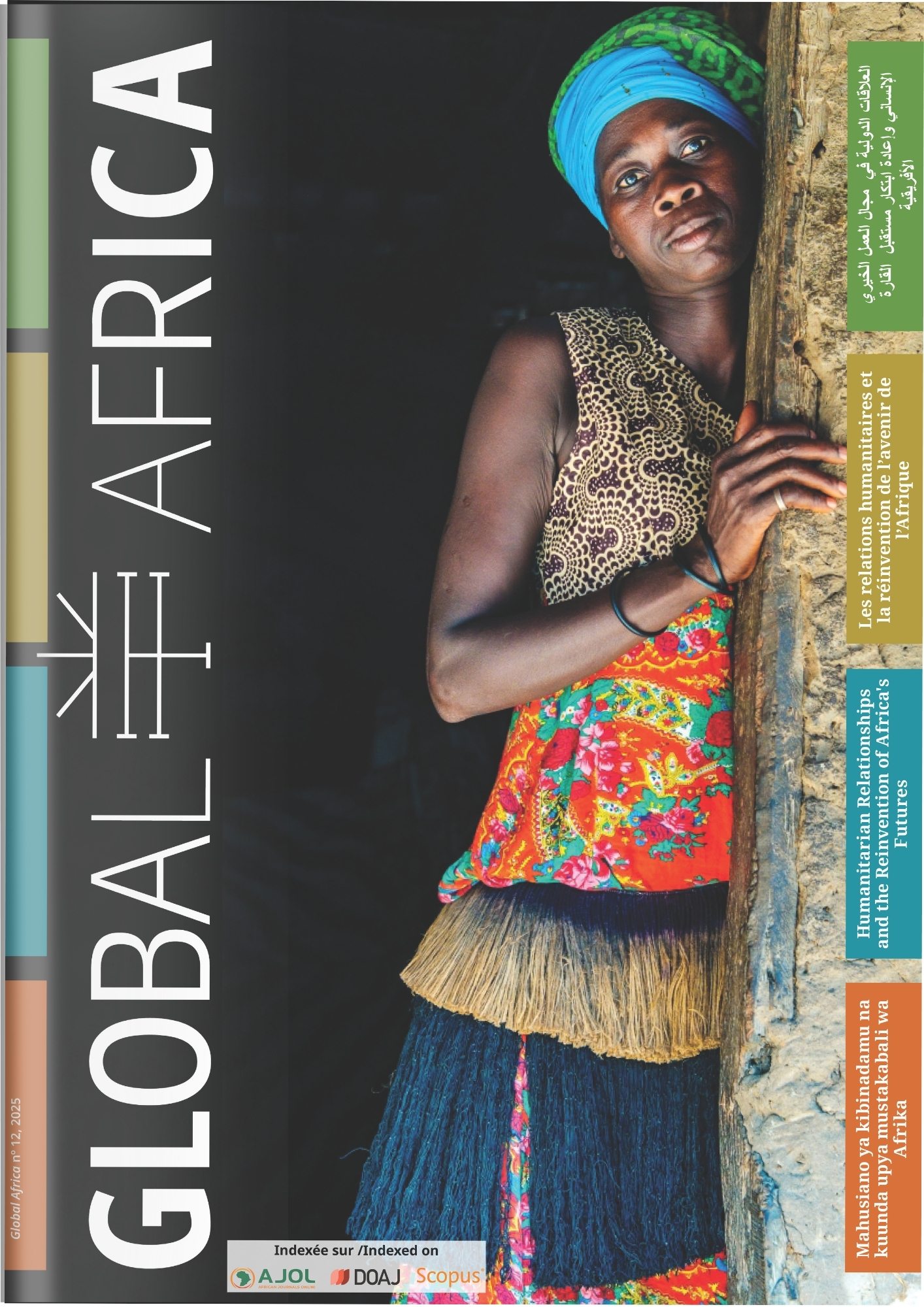
Les relations humanitaires et la réinvention de l’avenir de l’Afrique
Humanitarian Relationships and the Reinvention of Africa's Futures
Mahusiano ya kibinadamu na kuunda upya mustakabali wa Afrika
العلاقات الدولية في مجال العمل الخيري الإنساني وإعادة ابتكار مستقبل القارة الأفريقية
Published on:
December 20, 2025
ISSN:
3020-0458
12.2025
This contribution focuses on the endogenization of humanitarian aid, emphasizing the Local Association for Participatory and Self-Managed Development (ALDEPA), a non-governmental organization (NGO) active in the Far North region of Cameroon. As a process of integrating and adapting elements from an external system, society, or culture, endogenization here sheds light on the conditions under which decolonizing aid in the Global South is constituted. The study examines the ways in which moral considerations, rooted in the history, values, and culture of the populations in the Far North region of Cameroon, shape the logic of humanitarian assistance at the local NGOs level, and particularly within ALDEPA. The interaction between these local logics and those linked to the global context reveals North/South power relations as well as the structural asymmetries that pervade the humanitarian field. By mobilizing the concept of moral economy, the study aims to demonstrate that ALDEPA’s humanitarian action is structured by values, emotions, and moral judgments, interacting with political, economic, and social logics. It highlights how aid decisions, resource distribution, and the definition of beneficiaries within ALDEPA are guided not only by technical or economic imperatives but also by conceptions of the good, the just, and moral duty. Thus, the main argument of this contribution rests on the hypothesis that mobilizing endogenous knowledge and practices within ALDEPA introduces a (gradual) paradigm shift, breaking with the universalist logic of humanitarian action. Aid endogenization within this organization is achieved through a combination of knowledge, discourse, and practices that beneficiaries identify. These endogenous knowledges interact with exogenous knowledge, producing a hybrid form of local humanitarian action. The methodological approach is qualitative and inductive, employing interviews, document research, and direct observation as data collection techniques.
Keywords
Endogenous knowledge and practices, moral economy, humanitarian aid, Boko Haram, Cameroon
Plan of the paper
Introduction
From Social Aid to Humanitarian Action
Local NGOs: Born of Democratization
The “Boko Haram Crisis” and the Shift to the Humanitarian Field: A Focus on ALDEPA
The Foundations of Humanitarian Action in Cameroon’s Far North
Practices and Discourses Embedded in Endogenous Realities
Linguistic and Cultural Practices Incorporated into Assistance and Restorative Justice
Mobilizing Endogenous Entrepreneurs and Managing Cases Involving Women Formerly Held Captive by Boko Haram
The “Vernacularization” of “Child-Friendly Spaces” and a More Flexible Approach to Intervention Sites
Conclusion
Introduction
The Far North region of Cameroon is experiencing an unprecedented humanitarian situation. Since the end of 2012, it has become a stronghold for fighters of the Boko Haram (BH)[1] sect. Repeated attacks by Islamist militants, coupled with responses from national and international security forces (including the Multinational Joint Task Force [MNJTF]), continue to cause significant population displacements. The departments of Diamaré, Mayo-Tsanaga, Logone-et-Chari, Mayo-Sava, Mayo-Danay, and, to a lesser extent, Mayo-Kani, host numerous Nigerian refugees and internally displaced people (IDPs) under various arrangements.
Indeed, refugees are people who have crossed an international border, whereas IDPs have remained within their own country. The arrangements for accommodating these displaced populations differ. Refugees may be hosted in camps or integrated into host communities, often with the assistance of international organizations. IDPs, on the other hand, are primarily accommodated within host families or in spontaneous sites, as observed in the East and Far North regions of Cameroon (Mahamat, 2021; Lefort-Rieux, 2024, chapter 3).
According to the Displacement Tracking Matrix (DTM) for the Far North region of Cameroon, in August 2023, the number of IDPs was estimated at 453,661, while the number of refugees outside the Minawao camp was 48,165 (IOM, 2023). This situation has led to an intermittent presence of national and international actors engaged in initiatives that, since 2016, have been reshaped in line with the humanitarian-development-peace nexus approach.
However, as humanitarian needs grew, the actions of international NGOs and United Nations agencies revealed limitations in their capacity to meet the needs of an increasingly large displaced population. A lack of understanding of the realities specific to the contexts of intervention has often been a major obstacle to the harmonious implementation of these external initiatives (Olivier de Sardan, 2021). This situation accelerated the resurgence of endogenous assistance[2] dynamics, structured around discourses, practices, and mechanisms related to the contexts of intervention.
This study focuses on the Local Association for Participatory and Self-Managed Development (ALDEPA), an NGO[3] active in assisting victims of Boko Haram attacks. Due to its longevity (founded in 1998), experience, and strong local presence, this organization represents a paradigmatic case among local NGOs operating in the humanitarian field in the Far North of Cameroon. ALDEPA was also one of the first local NGOs in the region to engage in responding to the humanitarian needs arising from the Boko Haram security crisis. However, although this study is based on ALDEPA’s frameworks and experiences, it does not seek to defend the organization’s approach to humanitarian aid. Rather, through reflection on the concept of endogenization, it aims to contribute to the debate on the challenges, limitations, and dilemmas involved in aid decolonization.
The empirical approach relied on a qualitative and inductive methodology. The pre-survey phase, conducted in August 2022, allowed for the observation of the nature of assistance strategies implemented by ALDEPA. During the main survey, carried out between August and September 2024, participants were selected based on their degree of involvement in humanitarian processes. In total, 41 interviews were conducted with six officials from the Ministry of Territorial Administration, five social workers, seven local facilitators, four community leaders, nine NGO staff members (local and international), five refugees, and five internally displaced people. However, the focus of this reflection led me to give more voice to certain actors. The categories of analysis focused on endogenous knowledge and practices in humanitarian aid, perceptions of international/local aid initiatives, and the relationships between different actors in the humanitarian field in the Far North. Given the sensitivity of the context, I established contacts with people living in areas affected by armed conflict. Furthermore, scientific literature (books, articles, theses) and grey literature (reports from UN agencies and NGOs) were used to gather additional data needed for triangulation.
One observation remains: humanitarian[4] aid has evolved remarkably since the early 1990s. The triumph of capitalism, the rise of criminal networks, the surge of extremism, and the resurgence of inter-state wars have reinvigorated debates on compassion in both political and academic fields (Nouwen, 2004; Hours, 2010; Lainé, 2013; Savidan, 2018). However, the rise of “politics of pity” (Boltanski, 1993) in Africa has a more complex history. These dynamics are closely linked to the civilizing mission of colonialism, onto which development goals have gradually been added (Matasci & Desgrandchamps, 2020). International humanitarian aid thus emerged as an instrument to refine and extend the power relations of countries and agencies from the Global North (Atlani-Duault & Dozon, 2011). As a result, aid provided by Global North countries to the Global South has been subject to various conditionalities and was consequently assimilated into a form of neocolonialism (Micheletti, 2011).
The issue of aid decolonization[5] in Africa remains highly relevant. Indeed, it has been the focus of numerous academic gatherings in recent years[6]. Yet, this decolonization, one of whose major corollaries is the “localization[7]” of international aid, has struggled to take hold in Cameroon. Structural and circumstantial factors explain this situation: on one hand, the lack of financial resources and weak structure of local NGOs, which are often relegated to subcontractor roles by international NGOs (Wade, 2023, p. 86); on the other hand, the excessive dependence of national/local associations on external aid and the specific constraints posed by the country’s post-authoritarian and extroverted context (Pommerolle, 2008; Cazabat, 2016).
This study aims to contribute to research on transformations in humanitarian aid through a decolonial lens. By focusing on endogenization, the objective is to explore how it informs decolonization of aid and North/South power relations in the humanitarian field. Here, endogenization refers to the local appropriation of humanitarian action, reflecting a process of integrating and adapting elements from an external system, society, or culture. This process involves institutional actors, NGOs, and local communities. Assessing humanitarian aid in light of this reality requires situating the discussion within global conversations on both the ethical implications of humanitarian action (Mattei, 2014; Grünewald, 2007; Richey, 2018; Theodossopoulos, 2016) and the relationships between humanitarian actors and affected populations (De Torrenté, 2013; Rahmani, 2012).
The analysis emphasizes endogenous knowledge and practices, in relation to exogenous knowledge and practices perceived as belonging to another value system (Hountondji, 2019, p. 15). Referring to endogenous knowledge and practices means invoking a community’s intrinsic knowledge, shaped by its history, culture, and environment (Tourneux, 2019; Kane et al., 2025; Akaffou, 2023). Applied to the humanitarian field, endogenous knowledge refers to the knowledge, skills, and methods of assistance developed locally by a community, deeply rooted in its cultural, social, and environmental context.
Two main perspectives polarize the debate on humanitarianism in Africa. The first, more optimistic, view it as a dynamic that improves individuals’ living conditions and environment (Manga Kalniga & Ambe, 2021; Obah et al., 2021). The second perspective is critical, emphasizing the highly Northern or unilateral nature of humanitarian action (Pérouse de Montclos, 2009; Olivier de Sardan, 2011; Micheletti et al., 2010). Proponents of this view argue that humanitarian interventions in Africa are designed and implemented from the North, reproducing colonial patterns, albeit in a softer form, and preventing African beneficiaries from “emerging from the great night” (Murithi, 2009; Atlani-Duault & Dozon, 2011; Mbembe, 2013; Matasci & Desgrandchamps, 2020; Lynch, 2022).
The question I will attempt to answer is as follows: What changes are brought about by mobilizing endogenous knowledge and practices in humanitarian aid within the NGO ALDEPA in Cameroon’s Far North? The hypothesis advanced here is that such mobilization introduces a (gradual) paradigm shift, breaking away from the universalist logic of humanitarian action. The endogenization of aid within this organization unfolds through an engineering of knowledge, discourse, and practices in which beneficiaries recognize themselves. These endogenous knowledges interact with exogenous knowledge, producing a hybrid form of local humanitarian action.
The analyses carried out in this study are grounded in the theory of moral economy of humanitarianism. Informed by the reflections of Fassin (2009; 2012) and enriched by the work of Trémon (2024), this theory postulates that humanitarian actions are structured by values, emotions, and moral judgments, interacting with political, economic, and social logics. It examines how aid choices, resource distribution, and the selection of beneficiaries are guided both by technical or economic imperatives and conceptions of the good, justice, and moral duty. The study focuses specifically on the workings of this moral economy in the Far North of Cameroon and the participation of local humanitarian actors in it.
This reflection is structured around two main sections. The first situates the emergence of humanitarian action in the Far North by tracing the historical conditions that made it possible (I). The second examines the local appropriation of modern humanitarian practice, with particular emphasis on the NGO ALDEPA (II).
From Social Aid to Humanitarian Action
This section highlights three points that help introduce the foundations of the endogenization of humanitarian action and the paradigm shift it entails. These points are: the context in which associations and NGOs emerged (1), the outbreak of the Boko Haram insurgency and the shift of local NGOs into the humanitarian field (2), and the meanings underlying the desire to provide assistance (3).
Local NGOs: Born of Democratization
Analyzing the conditions under which NGOs emerged in Cameroon, particularly in the Far North region, reveals a dynamic resulting from the convergence of three factors: (i) the economic crisis of the late 1980s and the withdrawal of the state; (ii) the democratization of the 1990s, accompanied by a restructuring of institutional relationships between the state and civil society organizations; and (iii) the awakening of civil society, manifested in a proliferation of NGOs and associations engaged in development sector.
Indeed, the multiplication of NGOs in the Far North of Cameroon coincided with the awakening and strengthening of civil society within a context of growing poverty and inequality (Abega, 1999). Some also associate this period with state disengagement (Mercoiret, 1990). This dynamic dates back to the 1980s–1990s, a period marked by crises in African states, often concurrent with the implementation of neoliberal policies (Eboko, 2015). Inades-Formation[8] was the first NGO to initiate interventions in this region in 1973. At that time, the associative movement had no legal or formal recognition in Cameroon; only a few informal women’s groups and associations existed (Ndengue, 2016).
At the dawn of the 1990s, as part of the democratization process, Cameroon established an institutional framework governing relations between the state and civil society. With the adoption of Law No. 90/053 of December 19, 1990, on freedom of association, the associative movement experienced unprecedented growth at both local and national levels. At that time, local NGOs did not yet exist; only religious associations and those active in development were present. The same period saw the adoption of Law No. 90/056 of December 19, 1990, relating to political party activity. Apolitical associations then provided services to vulnerable populations. They were all non-profit, and remain so to this day in the vast majority of cases.
The economic recession at the end of the 1980s was also a decisive factor, for at least two reasons. First, it encouraged many local actors, particularly associations, to focus on development issues. Second, it led to a major shift in the modalities of aid provision to African countries, through the official introduction of political and democratic conditionalities (Robinson, 1995; Gibson et al., 2015). International aid to countries in the Global South thus became conditioned on compliance with principles established by Global North countries.
In December 1999, Law No. 99/014 of December 24, 1999, governing non-governmental organizations, came into force. It allowed associations that had operated for at least three years, were in compliance with taxation, and had certified activity and financial reports to evolve into NGOs. At that time, only international agencies conducted explicitly humanitarian operations in the Far North of Cameroon, primarily focused on emergency interventions (floods, droughts, epidemics, etc.).
The few existing local NGOs (notably ALDEPA) primarily operated in the realm of social assistance for disadvantaged populations and vulnerable groups. Issues related to gender-based violence (GBV)[9], child protection, early marriage, hunger, health, and nutrition received particular attention (interview on September 4, 2024, with an ALDEPA official in Maroua). This social assistance was already imbued with values of mutual aid, charity, sharing, and benevolence, as it aimed to support people in need. The emergence of Boko Haram would soon mark a decisive turning point.
The “Boko Haram Crisis” and the Shift to the Humanitarian Field: A Focus on ALDEPA
The surge of humanitarian action in various localities in Cameroon’s Far North is rooted in the “Boko Haram crisis.” Since the end of 2013, the region has been targeted by armed groups claiming affiliation with the jihadist movement. These recurrent attacks have caused numerous deaths and serious injuries. They have also led to significant population displacements at both local and international levels, resulting in a highly complex humanitarian crisis.
Moreover, the vulnerabilities generated by the violence between security forces and Boko Haram militias have led to a massive influx of foreign NGOs into the region. They have also encouraged the emergence of various local associations and NGOs engaged in assisting victims (Wade, 2023, p. 85). However, there are still relatively few local humanitarian NGOs in the Far North. Most associations are established by socio-professional groups ( students, academics, and various workers).
Initially, local NGOs primarily operated in the field of development (Zelao, 2023, p. 98). Most of them were not established as humanitarian NGOs. In the Far North, the Boko Haram phenomenon was the trigger for local NGOs to officially enter into the humanitarian sector. The example of ALDEPA[10] is particularly illustrative in this regard.
Founded in 1998 and legalized in 2002 in Maroua (the regional capital of the Far North) as an association, ALDEPA initially had “nothing to do with crisis or conflict situations” (interview on August 28, 2024, with the head of the NGO ALDEPA in Maroua). Its actions were mainly oriented toward supporting disadvantaged populations and vulnerable groups. The association also engaged in local development initiatives, focusing on specific areas such as poverty reduction and gender considerations, etc. Later, ALDEPA applied for NGO status under Law No. 99/014 of December 24, 1999, governing non-governmental organizations. By 2017 (the year it obtained official accreditation), ALDEPA became one of the first recognized local NGOs in Cameroon’s Far North.
From 2013 onwards, Cameroon’s Far North region has been plunged into a climate of insecurity, marked by the kidnappings of foreigners and attacks that killed hundreds of people (Crisis Group, 2016). In response to growing humanitarian needs in crisis-hit areas (Kolofata, Amchidé, Limani, Fotokol, Mora, etc.), local NGOs, previously focused on development objectives, adapted or redirected their interventions (interview on August 28, 2024, with the head of the NGO ALDEPA in Maroua).
At ALDEPA, humanitarian responses focused more on women and girls who were victims of gender-based violence (GBV), children whose parents were killed or went missing, injured children, and children detained for terrorism-related offenses. However, this transformation from social assistance to humanitarian action (Collovald, 2001) was not radical. Like other organizations (ALVF[11], ACEEN[12], etc.). ALDEPA maintained its initial areas of activity. It simply intensified its humanitarian interventions by providing various services to individuals whose vulnerability had been exacerbated by the crisis.
Furthermore, to better meet humanitarian needs and align with the requirements of international partners, ALDEPA gradually developed specialized expertise by recruiting professionals from diverse backgrounds: sociologists, lawyers, psychologists, economists, social workers, and others (interview on August 28, 2024, with the head of the NGO ALDEPA in Maroua). Initially, professional qualifications were not a decisive criterion in recruitment (interview on August 28, 2024).
In doing so, ALDEPA underwent a structural NGO-ization process, marked by a pursuit of professionalization and a neoliberal bureaucratization dynamic. Characteristic features of this process include increased individualization of power and authority, greater instrumentalization of relationships, adoption of a more competitive recruitment approach, and the establishment of a formal hierarchy and division of labor (Lang, 2012, p. 67). In this way, ALDEPA has developed as an NGO, and its current form contrasts with the decolonization project in which it seems to participate. One of the paradoxes of decolonization lies at this level. Despite often laudable intentions, NGOs in the Global North (frequently inspired by Western models, centered on external donors, and employing a discourse of misery) sometimes reproduce colonial dynamics, creating dependency and a “staging” of aid (Gwana Passa, 2024).
The Foundations of Humanitarian Action in Cameroon’s Far North
In the Far North region, many foreign humanitarian NGOs share the belief that humanitarianism is based on the principles of humanity, impartiality, neutrality, and independence (interviews on September 10, 2024, with two officials from the NGO Public Concern in Minawao). These principles, established by Henri Dunant in 1859, are now “universalized” within the humanitarian sector. However, the variation in the levels of interpretation is partly linked to the role attributed to beneficiaries in the conception and implementation of aid (Mattei, 2014).
Historically, beneficiaries were often perceived as passive victims, receiving aid decided and organized by external actors (Kovács et al., 2010). The emergence of the resilience paradigm, which positions local populations and structures as first responders in crises situation, introduced a notable shift by recognizing the agency of beneficiaries (Malkin, 2015). Yet, these changes have remained minimal, and their effects on the structuring of international aid interventions have been relatively marginal (Hilhorst, 2018).
At a more local level, however, the humanitarian action of local NGOs is rooted in mobilizations based on the values, norms, and socio-cultural obligations of communities, structured around compassion, solidarity, and human relationships. The moral dimension plays a central role. Fassin’s (2009) analyses have clearly highlighted the weight of norms and obligations systems on individuals’ judgments and actions in the structuring of humanitarian reason.
In Cameroon’s Far North, acts of humanity continue to play a prominent role, expressed through ordinary forms of care and mutual recognition. These acts are reflected in modest gestures offered by local communities, whether to a “brother” or “sister” in distress, whether from here or elsewhere: a glass of tea or a local drink (chai or arki), a handcrafted object, a traditional dish, stories (taali[13]), shared moments, and mutual recognition. This ethic of compassion is part of the recognition of the distress of others and the desire to alleviate it (Martinez, 1998). It is rooted in ancient customs and anthropological values. Expressed locally in the Fulani dialect (fulfulde), charity (sadaka), mutual aid (walliteego), sharing (sennduguo), assistance (ballal), aid (walliinde), benevolence (moyyere), and hospitality[14] are principles or values that structure the relational DNA of communities in the Far North of Cameroon.
Within ALDEPA, the practice of humanity is embedded in the Pulaaku (the Fulani code of honor)[15], where sharing and hospitality are central. It is also linked to symbolic exchanges, social balance, and aesthetics, with traditional and religious aspects influencing practices. As Fassin (2012) has shown, these moral registers determine the qualities and logics that guide individuals’ judgments, their assessment of what is considered good and just, and the normative mechanisms they use to act.
For example, in the case of economic support, in some communities, we cannot, for instance, provide economic support for pig farming because these populations do not eat pork. The same applies to clothing support; we cannot decide to dress girls in trousers, as it would not be accepted. So, even in our assistance, we put ourselves in the place of these communities and provide them with what they are accustomed to. (Interview on September 4, 2024, with an ALDEPA staff member in Maroua)
These statements highlight two realities. On the one hand, they demonstrate ALDEPA’s consideration of the knowledge, skills, endogenous practices, and customs of beneficiaries. Such an approach helps prevent the assistance provided by local humanitarians from being rejected by the communities they aim to support. On the other hand, and more strikingly, they reveal the integrative dimension inherent in taking these local knowledges and practices into account, in the sense that it aims to create an intervention environment that is more or less familiar, designed with and for the beneficiaries. Moreover, these knowledges and practices are embedded in logics of sharing and mutual recognition. Here, one observes an essential aspect of the moral economy, in which the system of values and principles, structured around respect for the thought frameworks of others (Trémon, 2024), guides the judgments and actions of ALDEPA staff.
This section has shown how the genesis and evolution of humanitarian action in the Far North of Cameroon shape the logics that govern the practices, discourses, and representations of the desire to assist among local actors. The suffering experienced by victims of attacks and armed confrontations has triggered a restructuring of local associative initiatives, fueled by a moral and social duty of solidarity. These categories, both emotional and political, are molded by the cosmologies, languages, and practices rooted in the daily life of communities.
Practices and Discourses Embedded in Endogenous Realities
The endogenization of humanitarian aid and the power relations it reveals in Cameroon’s Far North are perceptible through several realities:: 1) The use of linguistic and cultural practices by local NGOs; 2) The mobilization of endogenous practices in healthcare and the management of cases involving women formerly held hostage by Boko Haram; 3) The use of endogenous techniques in recreational activities for young beneficiaries, along with flexibility in procedures and engagement with the areas of intervention.
Linguistic and Cultural Practices Incorporated into Assistance and Restorative Justice
Humanitarian interventions by local NGOs in Cameroon’s Far North bear the imprint of the areas in which they operate. The use of vernacular languages and the respect for local customs occupy a central place. The systematic mobilization of distinct linguistic repertoires aligns with the diversity of sociological groups present in the region. These “endogenous technologies” (Hountondji, 2019; Aguessy, 1989) allow assistance to be anchored in the realities of the areas of intervention and integrated into the daily lives of the victims. They also consciously or unconsciously contribute to a process of decolonizing the thought or the mind (Ngũgĩ Wa Thiong’o, 2011), (re)connecting beneficiaries with the endogenous meanings of humanitarianism. Observations show that this approach leads to a gradual transformation in beneficiaries’ perceptions of themselves, their circumstances, and those who provide aid to them. Testimonies gathered during group interviews with internally displaced people (IDPs) in Zamay illustrate this:
When we arrived here in Zamay, it was hard because we didn’t know anyone. The local NGOs helped us a lot. They helped us with income-generating activities, food, and even healthcare. When they come, they speak to us in our languages. They speak in Kapsiki, or Moundang, or even Kanuri. They tell you that you will get through this, that this is your home too. It helps us, even though it is difficult. We consider them our brothers, and we feel at home when they come to see us. (Interview on September 2, 2024, with a group of IDPs at the Zamay IDP site)
This testimony confirms the decisive influence of using local languages on beneficiaries’ perception of local NGOs. Unlike some international NGOs, which sometimes rely on local staff as translators when meeting with communities, ALDEPA staff members systematically speak the local languages in the presence of refugees and IDPs, each mastering the dialect of their intervention area (Interview on August 28, 2024, with the head of the NGO ALDEPA in Maroua). This linguistic proximity fosters forms of attachment (Paugam, 2023), leading to a “cultural communion” between beneficiaries and local humanitarians.
ALDEPA’s mobilization of local cultural practices is also evident in resolving disputes related to early marriage and in strategies for reintegrating ex-Boko Haram fighters or associates into communities. In the first case, the beneficiaries’ lack of legal knowledge leads local NGOs to rely on endogenous dispute resolution mechanisms. The involvement of traditional and religious authorities is decisive:
From a legal perspective, early marriage is an offense that can implicate not only the perpetrator but also the parents of the victimized girl or boy. Rather than exposing all parents, who are often unaware of the law, we favor a more amicable approach, bringing all parties together under the traditional authorities. If the marriage was initially celebrated before the traditional authority, it is up to them to undo it. (Interview on September 3, 2024, with an ALDEPA staff member in Maroua)
Regarding reintegrating strategies for ex-Boko Haram fighters or associates, local humanitarians also favor endogenous mechanisms. These include rituals known as “ritual gimol[16] ” (Mohamadou, 1963), performed by elders, and ceremonies in which ex-fighters participate. Similar practices have existed in the North of Region Cameroon as part of the reintegration of people involved in highway robbery (Seignobos, 2011) and in Rwanda with the Gacaca courts, community-based justice systems implemented after the 1994 genocide (Allinne, 2022). Such engagements facilitate the reintegration of ex-fighters or associates and sanctify the forgiveness granted by communities, as explained by an ALDEPA staff member:
[…] We also have reconciliation initiatives because when these people [ex-Boko Haram fighters and associates] arrived, they were supposed to go through a DDR center, which did not happen. We identified all the cultural practices in the communities to help these people reconnect with their families. Sometimes your neighbor saw you cut their relative’s throat, but how can you live in the same community? There have to be rituals to ensure that you can live together. […] Rituals were conducted, for example, in Mayo Moskota. We brought together ex-Boko Haram associates and community members. There was a celebration, and a traditional dish was prepared. The ex-Boko Haram members ate along with community members. During the lamb sacrifice, people drank the blood as a sign of alliance for what had happened, and the ex-Boko Haram members carried out work to acknowledge the wrongs committed. (Interview on September 3, 2024, with an ALDEPA staff member, Maroua)
These statements highlight the need to assign a central role to endogenous approaches in restorative justice practices. The key challenge is to involve communities so that they become genuine actors in the reconciliation process. Although some tensions persist between ex-fighters and communities (interview on August 22, 2024, with an official from the Mora Sub-Prefecture; interview on August 22, 2024, with a community leader [neighborhood chief] in Mora), observations conducted in Mora nonetheless suggest that the nature of their relations and cohabitation is largely harmonious. The use of sacrificial practices for community reconciliation has long existed. The anthropologist Girard (1982), for example, showed that in so-called archaic cultures, the immolation of a scapegoat, whether animal or human, served as a means of restoring social order in contexts marked by intense rivalries.
Mobilizing Endogenous Entrepreneurs and Managing Cases Involving Women Formerly Held Captive by Boko Haram
Endogenous health entrepreneurs, also referred to as contextual health experts (Olivier de Sardan, 2022), develop solutions that are both innovative and adapted to local realities. When treating trauma experienced by war victims, local humanitarians sometimes call upon healers or traditional practitioners (mȃalam), who are mobilized to administer therapeutic rituals. The priority given to these healers, pastors, and traditional practitioners reflects a desire to valorize beneficiaries’ everyday practices and cultural reference points, while recognizing the social legitimacy of these actors in processes of care and reconstruction. When such cultural practices are not mobilized, the healing process may take longer, as explained by a community relay in Zamay:
We have certain practices. When a person is delirious, we can refer them to a pastor or a traditional healer. This initiates the healing process and facilitates recovery because the person knows these are the local mechanisms that exist. When there is a problem, we first take the person to a pastor or a traditional healer who performs an incantation or uses a water source to communicate with the ancestors, and so on. When these rituals are not performed, the person may heal physically, but psychologically, it can still be a problem. (Interview on September 10, 2024, with a community relay in Zamay)
These statements reflect beneficiaries’ strong attachment to medical practices derived from their immediate context. They invite a critical examination of the relationship between so-called “Western” medicine and “traditional” medicine in humanitarian assistance contexts. Faced with international health norms and models, local humanitarians appear to resist (in a veiled manner), (re)negotiate, and adapt their health practices (Lefort-Rieux et al., 2023). However, contrary to what Lefort-Rieux et al. (2023) demonstrate regarding the management of COVID-19 in Cameroon, such resistance, (re)negotiations, and adaptations are not fully embraced by ALDEPA staff members. The fear of losing the trust of donors largely explains this posture. It weakens efforts to bring to the fore assistance and care practices specific to Cameroon’s North regions. This observation highlights the complexity of the aid decolonization project, particularly the real conditions under which it can occur, given the asymmetric power relations structuring the humanitarian field.
The management of cases involving women formerly held captive by Boko Haram by local humanitarians is equally revealing of the place accorded to endogenous practices in assistance processes. Some women who were held captive by Boko Haram managed to escape from the forest, leaving their husbands behind. Years later, they experience significant difficulty rebuilding their lives and resuming marital lives due to uncertainty regarding the fate of their spouses, whose survival or continued captivity remains unknown. To address this situation, local NGOs call on the traditional leaders to examine the possibilities that would allow these women to rebuild their lives and remarry (interview on September 2, 2024, with an ALDEPA staff member in Maroua).
Pictures 1 and 2: Meetings of ALDEPA staff members in Mora and Koza to register women who were formerly held captive by Boko Haram and have no news of their husbands.

Source: Fieldwork, 2024.
This reality highlights the central role played by endogenous structures in processes of repairing injustices created by war. The use of specific rituals—walking barefoot, using dirty objects, bathing in a stream (backwater) to cleanse oneself of the spirits of the deceased, or sharing kola nuts at the market to signal a new social status—enables women who have no news of their husbands to rebuild their lives, should they wish to do so. These practices are part of the cultural heritage of communities in the Far North region, as shown by a study conducted by the International Circle for the Promotion of Creation (CIPCRE, 2006).
The “Vernacularization” of “Child-Friendly Spaces” and a More Flexible Approach to Intervention Sites
In caring for young beneficiaries, the items used for their leisure activities within “child-friendly spaces” are aligned with the philosophy of endogenous realities. Modeling clay, Barbie dolls, and electronic gadgets (such as miniature cars) are often favored by United Nations agencies (UNICEF, UNESCO, etc.) and foreign NGOs. However, children from crisis-affected localities in the Far North often struggle to appropriate or use these items. By contrast, they are far more familiar with items made from locally available materials. Local NGOs, therefore, favor substituting these items for those provided by foreign humanitarians, as explained by an ALDEPA staff member in Maroua:
We benefited from modeling clay from outside, like chewing gum that children could use to make elephants, lions, and so on. But it was difficult! The children were used to playing with mud; we ourselves had played with mud; that’s how we made animals. With the modeling clay, some thought it was chewing gum that should be swallowed or eaten. So, when dolls arrived, we replaced them with maize stalks for young girls. All of this shows that local knowledge allows beneficiaries to feel at ease, as they would in their own environment. (Interview on September 2, 2024, with an ALDEPA staff member, Maroua)
These remarks highlight the difficulty young beneficiaries face in appropriating toys distributed by foreign humanitarians when these toys do not correspond to their familiar worlds. This situation underscores a crucial issue of this reflection: the tension between the global standardization of humanitarian mechanisms and their adaptation to local practices. While the design of “child-friendly spaces” follows global protection standards promoted notably by UNICEF, their effective functioning depends on multiple factors, including material availability, local skills, and cultural representations of play. The globalized conception of childhood conveyed by certain UN agencies and Western NGOs does not always align with local modes of socialization.
Local NGOs not only adapt these mechanisms; they vernacularize imported humanitarian mechanisms, transforming “child-friendly spaces” into locally intelligible spaces (on vernacularization, see Levitt & Merry, 2009; 2011). These practices contribute to a hybridization of global norms (Comaroff & Comaroff, 2012), in which endogenization appears as a form of cultural translation. The relationship between local humanitarians and beneficiaries and intervention sites is equally revealing.
Unlike foreign agencies, local NGOs demonstrate greater procedural flexibility. The completion of forms and administrative records often occurs after assistance has been provided, especially when urgency so requires. This approach helps prevent aid shortages in emergency contexts, as was notably the case in Ethiopia between 1984 and 1985 during the food crisis that struck the country (Gill, 1986).
Similarly, local humanitarians show closer engagement with intervention sites, which they do not always fully control. The use of motorcycles and canoes (to cross the Maga or the Mayo rivers) reflects a logic of self-sacrifice and personal commitment prevailing within local NGOs. This posture contrasts with the more distant, and sometimes detached, attitude of foreign agencies toward intervention sites and even toward beneficiaries themselves. An ALDEPA staff member explains:
Let me give an example. When I was in Mokolo and worked in areas like Koza, we had motorcycles, and it was very practical. But when international NGOs go to the field, they travel by car. If the area becomes inaccessible, they turn back. They make a U-turn and act as if they are above others. When they go to communities, their only concern is to distribute items. But our approach aims to teach beneficiaries how to be independent tomorrow. (Interview on September 6, 2024, with an ALDEPA staff member, Maroua)
As this testimony shows, the flexibility of local humanitarians enables them to provide assistance in areas deemed difficult to access by foreign humanitarians. Far from reflecting simple improvisation, this flexibility speaks to the agency of local NGOs. It can thus be analyzed as a situated modality of humanitarian action: i) it enables local NGOs to act in emergencies without waiting for the validation of cumbersome protocols; ii) it constitutes a rational response to environments marked by insecurity, road inaccessibility, and volatile needs; iii) it may be understood as a form of organizational resilience (Hilhorst, 2018) acquired through experience. This flexibility is therefore structural rather than contingent, a competence intrinsic to local actors.
The power relations within the humanitarian field, as revealed by this ALDEPA staff member’s comments, are equally striking. The motorcycle/car contrast reflects material and symbolic inequalities: air-conditioned vehicles, often perceived as spaces of retreat or protection, become symbols of distance and even social superiority; motorcycles, on the other hand, signal engagement in local realities, endurance, and the capacity to truly reach beneficiaries. These practices create an internal hierarchy within the humanitarian field, where international NGOs control resources while local NGOs control access to, and knowledge of, the field.
Moreover, the self-sacrifice mentioned by this staff member (“getting wet,” crossing the Mayo, riding motorcycles, etc.) is not just logistical. It produces moral capital, fosters beneficiaries’ trust, and constitutes an identity marker of local humanitarian work. For local actors, being humanitarian implies embodying socially recognized values (courage, proximity, presence) as illustrated by the following excerpt and the accompanying images:
International organizations emphasize the support they provide, what they have given there, and so on. The important thing is not to distribute things, make donations, and leave without teaching beneficiaries how to become autonomous, without even sharing moments with them. It gives the impression of wanting to get rid of them, as if you were simply fulfilling a formality. You have to be close to beneficiaries; you have to be with them all the time. (Interview on September 6, 2024, with an ALDEPA staff member, Maroua)
Pictures 3 and 4: some ALDEPA staff members visiting villages in the Koza and Mogodé areas, where access (during the rainy season) can only be done by crossing streams.

Source: Fieldwork, 2024.
These statements and pictures reflect a certain moral dimension of “self-giving” or “self-sacrifice” that prevails in the humanitarian assistance practices of the NGO ALDEPA. These “ways of doing” and thinking have a performative character, insofar as they shape beneficiaries’ perceptions of local NGOs in comparison with foreign NGOs, as confirmed by the following remarks from an endogenous facilitator, who is also a beneficiary, met in Mora:
We understand each other well with ALDEPA because they are always here. It’s not the same with foreign NGOs, who only come maybe twice a year, give us kits, and then leave. We wait a long time before seeing them again. By contrast, ALDEPA, ALVF, or even CESOQUAR are with us all the time, and we are very close to them. (Interview on August 22, 2024, with an endogenous facilitator in Mora)
The use of endogenous modes of assistance fits within a broader logic of adapting humanitarian practice to the realities of intervention contexts. We can discern here a logic of disconnection in the sense described by Amin (1986), not implying isolation, but rather a withdrawal from the dominant logic of the global system, with a view to building models that take local contexts into account.
Conclusion
Endogenizing humanitarian aid is revealed through concrete practices, discourses, and operational mechanisms. This study sought to answer the question of what changes are brought about by mobilizing endogenous humanitarian knowledge and practices within the NGO ALDEPA in the Far North of Cameroon. The central argument was that this mobilization introduces a (gradual) paradigm shift, breaking with the universalist logic of humanitarian action. The aid provided by this organization is deployed through a system of knowledge, discourse, and practices in which beneficiaries identify themselves. Approaching the issue through the concept of endogenization enabled us to reformulate the issue of the relationship between endogenous knowledge and global humanitarian mechanisms, and to highlight how local NGOs negotiate their position within an asymmetrical humanitarian field.
The analysis shows that endogenizing humanitarian assistance in the Far North of Cameroon takes the form of localized practices of psychosocial care, restorative justice, widowhood relief, and child support within the framework of “child-friendly spaces.” These practices aim to adapt humanitarian responses to beneficiaries’ lived realities. Assistance provided by ALDEPA thus aligns with the core values of the region’s communities (hospitality, sharing, and humanity). However, the study also reveals deep tensions between global and local dynamics, shedding light on the North/South power relations that structure the humanitarian field. Persistent gaps remain between local and international NGOs in the ways aid is conceptualized and implemented. The financial dependence of local NGOs on international NGOs and United Nations agencies compels them to conceal certain endogenous practices. As a result, the expected changes associated with the decolonization of aid remain minimal.
This observation calls into question the aid decolonization project so frequently invoked in political discourse. While there is no doubt that the 2016 World Humanitarian Summit, which enshrined the Grand Bargain, played a decisive role in renewing ways of thinking about assistance in crisis contexts, the desired transformations have yet to fully materialize. Significant challenges remain. On the one hand, recognizing and valuing endogenous knowledge and capacities would, ultimately, enhance complementarity between local and foreign NGOs. On the other hand, access to funding and capacity-building for local actors is crucial to truly align humanitarian practice with the demands of aid decolonization. Moreover, while recourse to endogenous knowledge presents itself as an alternative for (re)thinking humanitarian assistance, it is essential to avoid essentializing such knowledge. This means not treating it as a monolithic, fixed, or “authentic” block, but rather as dynamic, historical, and constantly interacting with other forms of knowledge. The key challenge, therefore, is to situate endogenous knowledge within an ecology of knowledges, that is, to create bridges between local and global knowledge through dialogue and co-construction, with a view to more relevant and respectful humanitarian aid.
Notes
[1] Boko Haram is not the name by which the fighters of the Islamist sect identify themselves. Initially described as “the Nigerian Taliban,” they more readily identify under the name Jama’atu Ahlis Sunna Lidawati Wal Jihad (the Companions of the Prophet for the Propagation of the Sunnah and Holy War).
[2] These dynamics are expressed in terms of local community action, the role of culture as a source of support, solidarity, and mutual aid at the community level, and the mobilization of local resources and knowledge to help victims of the crisis.
[3] Within Cameroon’s legal framework, an association is a general structure governed by Law No. 90/053 of 19 December 1990 on freedom of association, whereas a non-governmental organization (NGO) is a specific type of association, formally approved by the administration to carry out missions of public interest and benefiting from a special regime (tax and customs advantages, etc.), in accordance with Law No. 99/014 of 22 December 1999 governing non-governmental organizations. The distinction between an association and an NGO is therefore legal and administrative, with the NGO constituting a subcategory of association accredited on the basis of its impact and its compliance with missions of public interest. An organization is referred to as a local NGO when it is rooted in a specific community (village, town, or region). Its members and activities are primarily local, and it is not a structured subsidiary of a national or international entity, focusing instead on the realities and needs of its immediate geographical area. An international NGO, by contrast, is a private, non-profit organization independent of governments, with a transnational scope, recruiting members and operating in multiple countries for humanitarian, human rights, or environmental causes, and coordinating actions across national borders.
[4] In the context of this reflection, humanitarian action is understood as a set of activities aimed at saving lives, alleviating suffering, and preserving dignity, guided by principles such as humanity, impartiality, neutrality, and independence (Agisilaou & Boz, 2025). The term nevertheless encompasses a diversity of interpretations depending on the actors and contexts involved (Lefort-Rieux, 2024).
[5] By the decolonization of aid, we mean the challenging and reorientation of deeply entrenched power imbalances within the structures that have long defined aid. This applies to intervention policies and procedures, as well as the behaviour of aid professionals (Gwana Passa, 2024).
[6] Among the most recent initiatives, we can mention The Junior Researcher’s Institute organized by Global Africa/CIHA from 27 October to 2 November 2024 on the issue: “Humanitarian Relations and the Reinvention of Africa’s Future: Genealogies, Current Practices, and Decolonial Imperatives”; the webinar held on 14 June 2024 by the Centre for Research, Training and Publications (CRTP), in collaboration with the Movement for Community-Led Development MCLD), entitled: “Decolonizing Humanitarian Aid in Africa.”
[7] The use of quotation marks reflects the caution required in employing this term, given the ambiguity surrounding both the objectives attributed to the process it refers to and the nature of the actors involved. The “localization” of aid presents numerous ambiguities, which lie mainly in the gap between discourse and practice, the blurred definition of local actors (who are heterogeneous), persistent power relations (with international NGOs dominating local actors), funding challenges (with financial flows directed toward the Global North), and the difficulty of transforming the system toward greater local autonomy (Magen-Fabregat et al., 2024; Audet, 2022).
[8] Inades-Formation represents a pan-African network of associations under Ivorian law working for equitable and sustainable development in Africa.
[9] This refers to domestic violence and any other form of violence against women.
[10] It should be noted that ALDEPA was initially a local NGO headquartered in Maroua (capital of Cameroon’s Far North Region). However, it has gradually taken on a national scope, as evidenced by the expansion of its activities into the East, North, and Adamaoua regions.
[11] Association de Lutte contre les Violences faites aux Femmes (Association for the Fight against Violence against Women).
[12] Alliance Citoyenne à l’Éducation pour le Développement et l’Environnement (Citizen Education Alliance for the Development and the Environment.)
[13] The taalol (singular of taali) is a classical type of tale found throughout Africa. Among the Fulani (Foulbé), however, it is reserved exclusively for children and ordinarily exists only in oral form. Nothing in particular distinguishes Fulani tales from those of other ethnic groups.
[14] In the Fulani code of honor (pulaaku), hospitality constitutes one of the cardinal virtues. During the time of Fombina (the southern periphery of the former Sokoto Empire), visitors and passing guests were warmly welcomed by the Fula people.
[15] The Fulani dialect (Fulfulde) is the most widely spoken in the North of Cameroon (Far North, North, and Adamaoua regions) and in certain areas in Chad and northern Nigeria. This reality is rooted in the political history of these areas, marked by the jihad launched by Usman dan Fodio, a Fulani preacher, in the 16th century. The “Fulani domination” that took hold following this war has left traces still visible in the social, political, and economic organization of communities in the northern regions of Cameroon, despite the specificities of the different groups (Seignobos & Iyebi-Mandjeck, 2000).
[16] The “ritual gimoll” is a type of Fulani poetry whose origins date back to pre-Islamic times. It recounts pagan rituals that are still practiced today among non-Islamized Mbororo communities. With the spread of Islam, this ritual was abandoned and lost its religious significance, becoming part of the secular repertoire.
Bibliography
Abega, S. C. (1999). Société civile et réduction de la pauvreté. Éditions Clé.
Agisilaou, V. H., & Boz, T. (2025). Humanitarian virtue: identifying ethics and values in humanitarian thinking. Disasters, 49(4), e70000. https://doi.org/10.1111/disa.70000
Aguessy, H. (1989). Technologies endogènes et développement de l’Afrique noire. Bilan de recherches déjà effectuées et perspectives d’avenir. In Actes de la XIVe Conférence biennale de l’association scientifique ouest-africaine (pp. 15-29).
Akaffou, Y. (2023). Savoirs endogènes africains et modalités adaptatives aux systèmes éducatifs d’émergence de compétences. Les Cahiers de l’ENSup, 1(7), 22–33. https://hal.science/hal-04763122
Allinne, J. P. (2022). Les gacaca du Rwanda : justice traditionnelles ou justices transitionnelles. Histoire de la justice, 1(33), 183-204.
Amin, S. (1986). La déconnexion. Pour sortir du système mondial. La Découverte.
Atlani-Duault, L., & Dozon J. P. (2011). Colonisation, développement, aide humanitaire. Pour une anthropologie de l’aide internationale. Ethnologie française, 3(41), 393-403.
Audet, F. (2022). La localisation de l’aide humanitaire : un chantier de recherche en pleine émergence. Revue canadienne d’études du développement, 43(4), 459-467.
Boltanski, L. (1993). La politique de la pitié. In La souffrance à distance : morale humanitaire, médias et politique (pp. 15-37). Éditions Métaillé.
Cazabat, C. (2016). Les stratégies de renforcement des organisations de la société civile en Afrique subsaharienne, nouvel éléphant blanc de l’aide au développement ? L’exemple du Cameroun. Mondes en développement, 1(173), 79-91.
Cercle international pour la promotion de la création (CIPCRE). (2006). Dot et rites de veuvage au nord Cameroun : pratiques sociales et illusions féministes [Bafoussam, Cameroun]. Centre de recherche en éducation, droits de l’Homme et sciences sociales.
Collovald, A. (2001). De la défense des « pauvres nécessiteux » à l’humanitaire expert. Reconversion et métamorphoses d’une cause politique. Politix, 4(56), 135-161.
Comaroff, J., & Comaroff, J. L. (2012). Theory from the south: Or, how Euro-America is evolving toward Africa. Journal of Social Anthropology and Comparative Sociology, 22(2). https://doi.org/10.1080/00664677.2012.694169
Crisis Group. (2016). Faire face à Boko Haram. Rapport Afrique (241).
De Torrenté, N. (2013). The relevance and effectiveness of humanitarian aid: Reflection about the relationship between providers and recipients. Social Research: An International Quarterly, 80(2), 607-634.
Eboko, F. (2015). Repenser l’action publique en Afrique. Du sida à l’analyse de la globalisation des politiques publiques. Préface de Patrick Hassenteufel. Karthala.
Fassin, D. (2009). Les économies morales revisitées. Annales HSS, (6).
Fassin, D. (2012). 1. Vers une théorie des économies morales. In D. Fassin & J. Eideliman, Économies morales contemporaines (pp. 19-47). La Découverte. https://doi.org/10.3917/dec.fassi.2012.01.0019.
Gibson, C. C., Hoffman, B. D., & Jablonski, R. S. (2015). Did Aid Promote Democracy in Africa? The Role of Technical Assistance in Africa’s Transition. World Development, 68, pp. 323-335.
Gill, P. (1986). A year in the death of Africa: politics, bureaucracy and the famine. Paladin Grafton books.
Girard, R. (1982). Le bouc émissaire. Éditions Bernard Grasset.
Grünewald, F. (2007). Morale, éthique et déontologie dans les contextes de la solidarité et de l’action humanitaire. Revue internationale et stratégique, 67(3), 113-120.
Gwana Passa, M. (2024). La décolonisation de l’aide : un processus complexe vers une solidarité internationale renouvelée. Humanitaire en mouvement, (26), pp. 60-63.
Hilhorst, D. (2018). Classical humanitarianism and resilience humanitarianism: making sense of two brands of humanitarian action. Journal of international humanitarian action, 3(1), 1-12.
Hountondji, P. (2019), Les savoirs endogènes : pistes pour une recherche. Star Éditions.
Hours, B. (2010). Les politiques de la compassion. In B. Hours & M. Selim. Anthropologie politique de la globalisation (pp. 101-114). L’Harmattan.
Kane, A., Seck, M., & Ndiaye, M. (2015). Étude des processus de production, de dissémination et de valorisation des savoirs endogènes par les peuples autochtones au Sénégal. Communication, technologies et développement, 17. https://doi.org/10.4000/1414c
Kovacs, G., Matopoulos, A., & Hayes, O. (2010). A community-based approach to supply chain design. International Journal of Logistics: Research and Applications, 13(5), 411-422.
Lainé, L. (2013). La compassion comme outil critique de la mondialisation néo-libérale. Éléments pour une théologie contextuelle. Revue d’éthique et de théologie morale, (273), pp. 77-10.
Lang, S. (2012). ONG, société civile et sphère publique. Cambridge University Press.
Lefort, C., Minfegue, C., Kojoue, L., Vidal, L., Mengue, M. T., & Atlani-Duault, L. (2023). La santé globale à l’épreuve du local en contexte pandémique. Réceptions et (re)négociations des normes et modèles de lutte contre le Covid-19 au Cameroun. Suds, 2(288).
Lefort-Rieux, C. (2024). Un art bien incertain : gouverner les migrations forcées en contextes camerounais [Thèse de doctorat en anthropologie sociale et ethnologie]. Université Paris Cité.
Levitt, P., & Merry, S. E. (2009). Vernacularization on the ground: Local uses of global women’s rights in Peru, China, India, and the United States. Global Networks, 9(4), 441–461. https://doi.org/10.1111/j.1471-0374.2009.00263.x
Levitt, P., & Merry, S. E. (2011). Making women’s human rights in the vernacular: Navigating the culture/rights divide. In D. L. Hodgson (ed.), Gender and culture at the limit of rights (pp. 81–100). University of Pennsylvania Press.
Lynch, C. (2022). Centrer en Afrique l’humanitarisme global. Global Africa, (1), pp. 132-142.
Magen-Fabregat, C., Aït-Aïssa, M., & Maiziere, P. A. (2024). Synthèse critique de la décolonisation de l’aide humanitaire et de la localisation. Humanitaire en mouvement, (26), pp. 28-36.
Mahamat, A. (2021). Déplacés et réfugiés au Cameroun : profils, itinéraires et expériences à partir des crises nigériane et centrafricaine. Canadian Journal of African Studies/Revue canadienne des études africaines, 55(3), 585-607.
Malkin, N. (2015). My brother's keeper: The double experience of refugee aid-workers. Journal of Peacebuilding & Development, 10(3), 46-59.
Manga Kalniga, J., & Ambe, S. (Eds.). (2021). Réfugiés et déplacés internes au Cameroun. Connaissances et Savoirs.
Martinez, R. (1998). An ethic of compassion in a world of technique. Laval théologique et philosophique, 54(1), 83-90.
Matasci, D., & Desgrandchamps, M. L. (2020). « Civiliser, développer, aider » : croiser l’histoire du colonialisme, du développement et de l’humanitaire. Histoire politique [Online], (41) DOI : https://doi.org/10.4000/histoirepolitique.284
Mattei, J. F. (2014). L’humanitaire à l’épreuve de l’éthique. Éditions Les Liens qui libèrent.
Mbembe, A. (2013). Sortir de la grande nuit. Essai sur l’Afrique décolonisée. La Découverte.
Mercoiret, M. R. (1990). L’émergence des dynamiques sociales, une réponse au désengagement de l’État. In L’avenir de l’agriculture dans les pays du Sahel. CIRAD.
Micheletti, P. (2011). Humanitaires : neutralité impossible ? Esprit, (7), pp. 39-45.
Micheletti, P., Larzillière, P., Hours, B., Jacquet, F., Kabanda, M., Sauquet, M., & Galy, M. (2010). Faut-il désoccidentaliser l’humanitaire ? Revue humanitaire : enjeux, pratiques, débats, (24), pp. 10-27. https://journals.openedition.org/humanitaire/688
Mohamadou, E. (1963). Introduction à la littérature peule du Nord-Cameroun. Abbia : revue culturelle camerounaise, 1(3), 66-76.
Murithi, T. (2009). Aid colonization and the promise of African continental integration. In H. Abbas & Y. Niyiragira (Eds.), Aid to Africa: Redeemer or Coloniser? Cape Town and Dakar (pp. 1–12). Pambazuka Press.
Ndengue, R. (2016). Mobilisation des femmes au Cameroun français dans les années 1940-1950 : l’ordre du genre et l’ordre colonial fissurés. Le mouvement social, 2(255), 71-85.
Ngũgĩ Wa Thiong’o. (2011). Decolonising the mind. East African Editional Publisher.
Nouwen, H. (2004). La compassion. Fidélité.
Obah, Y., Biango, L., & Mengue, M. T. (2021). Action humanitaire et urbanisation au Tchad : le cas d’Abéché et Goré. GARI. Recherches et débats sur les villes africaines, 1(1) https://dx.doi.org/10.46711/gari.2021.1.1.2.
Olivier de Sardan, J.-P. (2011). Aide humanitaire ou aide au développement ? La « famine » de 2005 au Niger. Ethnologie française, 41(3), 415-429.
Olivier de Sardan, J.-P. (2021). La revanche des contextes : Des mésaventures de l’ingénierie sociale en Afrique et au-delà. Karthala.
Olivier de Sardan, J.-P. (2022). « Compter sur ses propres forces » : face à l’aide, promouvoir les experts contextuels dans les politiques publiques en Afrique. Global Africa, (1), pp. 160-172.
International Organization for Migration (IOM). (2023). DTM Cameroon Far North — Displacement tracking dashboard R 26. IOM Cameroon. https://dtm.iom.int/sites/g/files/tmzbdl1461/files/reports/DTM%2026%20CMR%20Tableau%20de%20bord%20MT__.pdf
Paugam, S. (2023). L’attachement social : formes et fondements de la solidarité humaine. Seuil.
Pérouse de Montclos, M. A. (2009). Du développement à l’humanitaire, ou le triomphe de la com. Revue tiers monde, 200(4), 751-766.
Pommerolle, M. E. (2008). La démobilisation collective au Cameroun : entre régime postautoritaire et militantisme extraverti. Critique internationale, 3(40), 73-94.
Rahmani, R. (2012). Donors, beneficiaries, or NGOs: whose needs come first? A dilemma in Afghanistan. Development in Practice, 22(3), 295-304.
Richey, L. (2018). Conceptualizing “everyday humanitarianism”: Ethics, affects, and practices of contemporary global helping. New Political Science, 40(4), 625-639.
Robinson, M. (1995). Aid, Democracy and Political Conditionality in Sub-Saharan Africa. In O. Morrissey & F. Stewart (Eds.), Economic and Political Reform in Developing Countries. Palgrave Macmillan, London. https://doi.org/10.1007/978-1-349-13460-1_5
Savidan, P. (2018). Compassion et conflit des solidarités. Cahiers de recherche sociologique, (65), pp. 71-87.
Seignobos, C., et Iyebi-Mandjeck, O., (2000). Atlas de la province Extrême-Nord Cameroun. IRD Éditions.
Seignobos, C. (2011). Le puulaku, ultime recours contre les coupeurs de route. Province du nord au Cameroun. Afrique contemporaine, 4(240), 11-23.
Theodossopoulos, D. (2016). Philanthropy or solidarity? Ethical dilemmas about humanitarianism in crisis-afflicted Greece. Social Anthropology/Anthropologie sociale, 24(2), 167-184.
Tourneux, H. (2019). Les savoirs locaux : comment les découvrir et comment les transmettre. In C. Dili-Palaï (Ed.), Savoirs locaux, savoirs endogènes : entre crises et valeurs (pp. 15–29). Éditions du Schabel. ⟨halshs-03125127⟩
Trémon, A.-C. (2024). Chapitre 7. L’économie morale. Anthropologie contemporaine (pp. 230-260). Armand Colin. https://shs.cairn.info/anthropologie-contemporaine--9782200635534-page-230?lang=fr.
Wade, P. (2023). Entretien avec Damien Noma. In M. T. Mengue & V. Troie, (Eds), Transition humanitaire au Cameroun (pp. 83-88). Karthala.
Zelao, A. (2023). Crise sécuritaire et action humanitaire des ONG à l’Extrême-Nord du Cameroun : opportunités et limites. In M. T. Mengue & V. Troie (Eds), Transition humanitaire au Cameroun (pp. 89-112). Karthala.
To cite this paper:
APA
Obah, Y. H. (2025). Endogenizing Humanitarian Aid: Knowledge, Practices, and ALDEPA’s Mobilization in Support of Victims of Boko Haram in Cameroon’s Far North Region. Global Africa, (12), pp. . https://doi.org/10.57832/ehyg-2652
MLA
Obah, Yvan Hyannick. "Endogenizing Humanitarian Aid: Knowledge, Practices, and ALDEPA’s Mobilization in Support of Victims of Boko Haram in Cameroon’s Far North Region". Global Africa, no. 12, 2025, pp. doi.org/10.57832/ehyg-2652
DOI
https://doi.org/10.57832/ehyg-2652
© 2025 by author(s). This work is openly licensed via CC BY-NC 4.0