


Available in:


Critical issues
How Can we “Decolonize” the Humanitarian Image in Africa Through Visual self-Production (photography) in the Cameroonian Context?
issue:
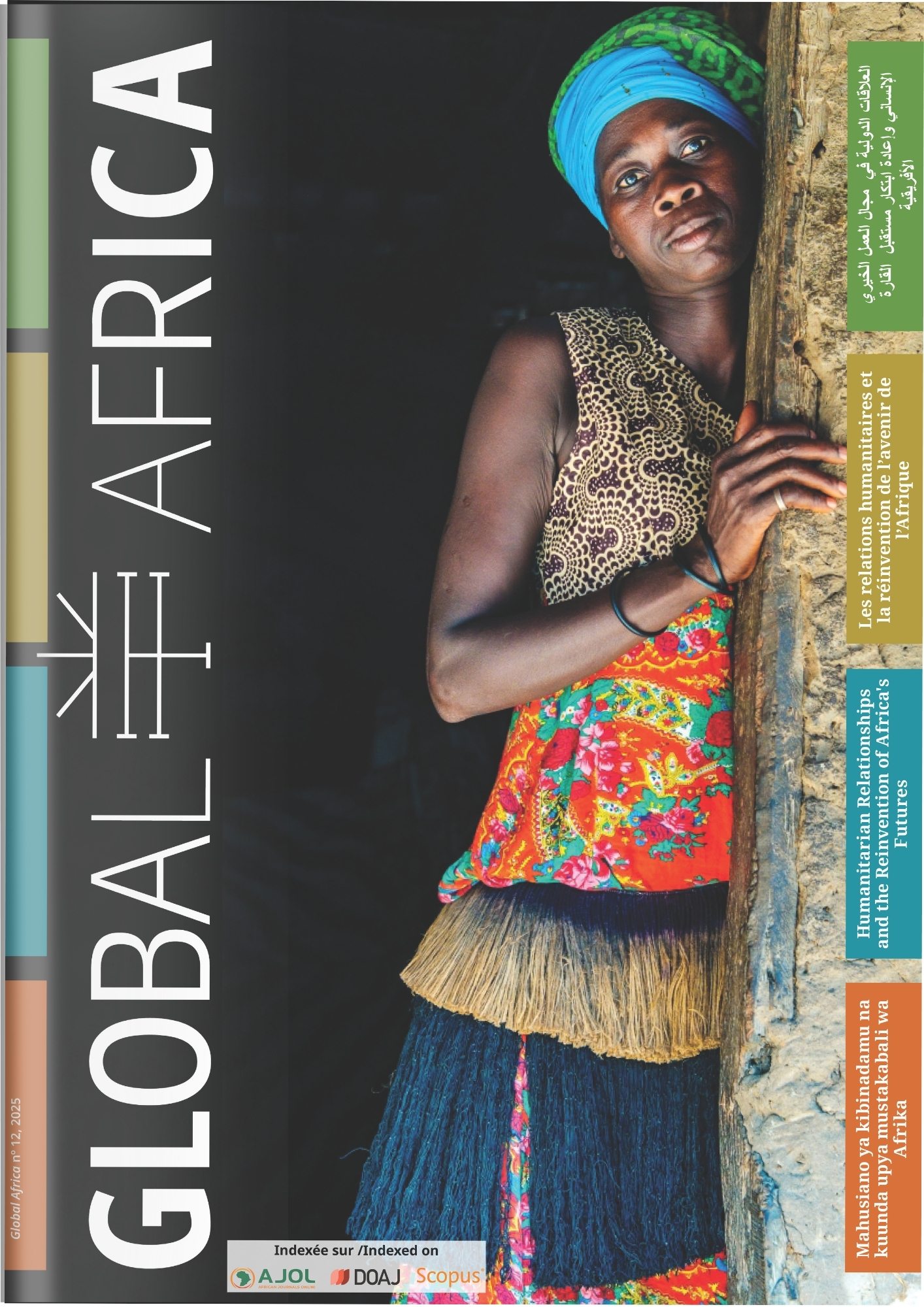
Les relations humanitaires et la réinvention de l’avenir de l’Afrique
Humanitarian Relationships and the Reinvention of Africa's Futures
Mahusiano ya kibinadamu na uvumbuzi mpya wa mustakabali wa Afrika
العلاقات الدولية في مجال العمل الخيري الإنساني وإعادة ابتكار مستقبل القارة الأفريقية
Published on:
December 20, 2025
ISSN:
3020-0458
12.2025
This article explores visual self-production (photography) by Africans south of the Sahara, presented here as a tool for emancipation in the face of the phenomenon of humanitarian aid. This visual self-representation constitutes a genuine form of communication that contributes to the deconstruction of prejudices and otherness in Africa. The criteria for selecting and analyzing photographers and photographs are aesthetic, historical, and geographical.
Originality of subject matter, representative corpus, concrete illustrations, vigorous and rigorous criticism: these are the qualities of the method adopted in this study. We ask the following question: how does photography constitute an irreplaceable instrument in the process of “decolonization” of humanitarian aid in Africa? To answer this question, we have structured this work around three parts: the first is devoted to the process of constructing the photograph; the second to the analysis of colonial photographs and those produced by humanitarian actors; and finally, the third deals with the photographs compiled in the African visual library.
Keywords
Self-representation, colonization, “decolonization,” emancipation, post-independence, humanitarian photography
Plan of the paper
Introduction
The processes involved in constructing a photograph
Colonial photography: production issues and instrument of colonial ideology
Definition and critical analysis of humanitarian photography
Definition of the concept
What characterizes humanitarian photography?
Endogenous Photography: Critical Analysis and Stakes of Production for Mental
Decolonization
Conclusion
Introduction
The humanities and social sciences have long relegated images to the status of secondary sources, far behind written documents. Yet images, in general, teach us a great deal about societies and their past: how they inhabit the world, how they see themselves and others, their desires and fears. The contemporary world is a world of images; everywhere we look, our gaze is drawn to advertising posters and graffiti on the walls of our cities, cinema, television, the internet, etc. Within this iconographic world, in less than two centuries, photography has carved out a place of choice (Van Ypersele, 2007, p. 133).
Its recognition as a historical source has considerably enriched the history of colonialism and contemporary wars (Van Ypersele, 2007, p. 133). However, many other areas remain to be explored. The analysis of humanitarian photographs, for example, offers endless possibilities for studying the representations of vulnerable people (children and women in particular) disseminated by humanitarian actors. This article raises the issue of the contribution of endogenous photographs to the process of decolonization of humanitarian intervention in Africa. The choice of this type of source challenges us in several respects. For us, these are specific materials in their own right, which we analyze from the perspective of their ideological and political functionality (Bensalah, 2007, p. 7). The value of such an approach lies in allowing memories to be compared, synchronized, and, potentially better understood. Photography has been the subject of several studies in various disciplines. An initial set of works comes from semiologists who focus on technical and aesthetic elements as well as the analysis of the image itself (Vettraino-Soulard, 1993, p. 123). Other research takes a historical approach, notably that of Gervereau (1994, p. 34) and Serre-Floersheim (1993, p. 17). To answer the following question—how does photography contribute to the process of “decolonization” of humanitarian aid in Africa?—we have structured this work in three parts: the first is devoted to the process of photographic construction. The second analyzes not only images from colonial photography, but also establishes the link between them and humanitarian photography. Finally, the third part deals with the photographs in the African visual library, i.e., those that are part of the logic of humanitarian decolonization.
The processes involved in constructing a photograph
Due to the incredible realism it produces, photography was quickly considered the ideal communication medium for all NGOs working to raise public awareness of major humanitarian causes. It is important to remember that, apart from its technical dimension, an image has a manipulative dimension that comes into play in the process of its construction. Totalitarian regimes have become masters at manipulating and falsifying images (Jaubert, 1986). Aware of the extraordinary power of images over the masses, these regimes were among the first to push the techniques of manipulation and falsification to their limits. Some humanitarian entrepreneurs also control the dissemination of images. They select and sometimes even manipulate documents to produce visual representations that serve their own communication strategies. Through systematic manipulation, humanitarian photographers have thus contributed to falsifying facts, manipulating consciences, and indoctrinating the masses in order to continue to subtly justify their actions on African soil.
Colonial photography: production issues and instrument of colonial ideology
The images analyzed in this section are not mere illustrations of the colonial period, but rather representations of the ideology of colonialism. From the 20th century onwards, photography became an important vehicle for the dissemination of this ideology (Blanchard & Chatelier, 1994). It was a powerful ally of colonialism as an ideological, economic, and political system, serving as a mirror in which the colonizer could admire his work while constructing it.The role of photography in shaping the collective imagination of Africa is clear. While our contemporary environment is marked by the omnipresence of screens, the colonial period was undoubtedly dominated by graphic and cinematographic images (Blanchard & Chatelier, 1994). These representations, conveyed through a multitude of media, became ingrained in both everyday and public life.
The role played by photography in colonialism is now becoming better known. Towards the end of 1839, French daguerreotypists set sail for Africa to photograph the local populations. The ships made stops at ports scattered along the coast of West Africa, introducing photography to the continent as early as 1840 (Vera, 1998, p. 35). The colonial imagination also responded to a number of iconic reflexes. For example, black and white are distinct signs, reference points in the mechanisms of color which, since they became established in the West in the 15th century, have formed a set of codes and specific reference points. Thus, black symbolizes the negative and evil, while white represents the positive and good. As a result, this code of interpretation is clearly found in colonial iconographic propaganda, where the relationship between white men / black masses naturally fits into this pictorial mechanism (Blanchard, 2001, p. 149).
These different elements of the image constitute a staging of the colonized and the white man, but also of the colonized among themselves, which would leave a lasting mark on colonial iconography. Very quickly, to reinforce the idea that the colonized are closer to the state of nature than to the state of culture, they are often depicted naked, except when they are supposed to be Christianized, or else ridiculed, clumsily dressed in Western clothing (Blanchard, 2001, p. 149). This “dreamed-of native” of the colonizer was very quickly symbolized by the colonial army's auxiliary, a military helper, devoted and loyal to the mother country, over-hyped by colonial iconography (Blanchard, 2001, p. 150), who accompanied the conquest and contributed with their physical strength to the subjugation of other peoples to colonial authority.
Furthermore, French exhibitions and displays were designed and organized for the benefit of a mass audience, mainly metropolitan (Photo 1). The French working classes who frequented the Jardin Zoologique d'Acclimatation acquired the feeling that they belonged to a powerful “race” capable of defeating and exhibiting “inferior races,” much as was the case with exotic animals. In doing so, one of the uses of photography by the colonial administration was to identify, categorize, and classify different peoples (Mac Dougall, 1992; Gutman, 1982; Pinney, 1997). To understand the colonial period, it is therefore essential to work with visual material. Clearly, this was a key vehicle for disseminating colonial and racial dogmas to the general public, but also the main medium for portraying “natives” (Photo 2) and stereotyping them among metropolitan populations (Blanchard, 2001, p. 149). Officially, Black people were often described in the same visual language as fauna and flora; represented as if in their natural habitat, for natural history specialists; or invariably relegated to the lowest rung of the species ladder when, on occasion, they were presented as belonging to the "great human family " (Mofokeng, 1998, p. 70). It should be noted that these photographs are an event in themselves. They are part of a despicable tradition of photographs that not only depict violence, but celebrate it. The joy displayed by the perpetrators in these photographs is a far more serious threat than the despicable acts depicted, as described in the analysis of image 3. A civilization relies less on the hope that people will never harm each other than on the implicit idea that people will be “ashamed of the acts of cruelty they commit and fear the consequences” (Kemedjio, 2006, p. 15). When this shame and fear are absent, we find ourselves threatened" (Lindfield, 2005, p. 68). In this regard, the absence of criticism from visitors to the zoo tells us that not only was the park's management in no way ashamed of these dehumanizing displays, but that the public accepted this shameful spectacle. To a large extent, humanitarian entrepreneurs have been the heirs to this way of representing Africa and Africans. Hence the importance of critically and analytically studying humanitarian photography.
Photo 1: Undated photograph, probably late 19th century. Acha/Arte Research Group

Photo 2: Photographer Gadmer Fréderic, 1918, Fulbé woman, Garoua (North Cameroon)

Photo 3: A young girl in the human zoo, Belgium, 1958

Definition and critical analysis of humanitarian photography
Definition of the concept
Humanitarian photography refers to the photographic genre considered to be the preferred means of communication for NGOs seeking to raise public awareness of major humanitarian causes (Dewaegeneire, 2013). These images are taken by photographers, amateurs, professionals, or employees of these organizations. They may also be commissioned by actors in the humanitarian sector (Pellen, 2023). Humanitarian actors use images as a visual marketing tool in various forms (Moles, 1987; Harper, 2003). These images are not neutral. They are neither spontaneous nor natural. They are a fragment of reality and carry with them significant cultural biases and codes linked to “Western culture” (Pellen, 2023).
Humanitarian photographers are required to make a number of technical choices regarding framing, lighting, angles, movements, subjects, and scenes photographed (Colleyn, 1990). While the photographer is in constant interaction with subjects and objects, the choice of photograph is also influenced by their culture and technical constraints. Similarly, the way we view a photograph is shaped by social context, cultural conventions, collective norms, and personal experience (Dion & Ladwein, 2005, p. 5). From this perspective, vision is not objective. Two people looking at the same scene do not necessarily perceive the same things (Hall, 1986). Each person learns to see what they need to see. For example, when the initiative to take a photograph comes from humanitarian workers, they are likely to photograph elements that elicit sympathy and emotion. Victims, on the other hand, focus their attention on representations that respect their dignity and human integrity, in order to make their urgent needs visible. Thus, although the subjective nature of the photographs produced by humanitarian actors suggests a purely constructivist approach, the validity of the research process based on photography must be addressed. At this level, it is important to clarify the logic behind the production of photographs that has prevailed in the implementation of research using photography.
What characterizes humanitarian photography?
In the 19th century, humanitarian photography was enshrined for posterity (Drot, 2022). It was presented as a pictorial tableau, staged. Thus, the nurse appears like a religious icon, leaning over a child. Photo 4 constitutes the perfect symbol of protection, care, and comfort. Photographic reportage was born with the First World War, illustrating volunteers in the trenches, on the battlefields, in hospitals, or in the streets, alongside civilians fleeing the war (Drot, 2022).
From the end of the 19th century (1888), the Kodak camera set in motion the revolution in photography (Drot, 2022), as Twain emphasizes in this passage:
The kodak has been a sore calamity to us. The most powerful enemy that has confronted us, indeed. In the early years we had no trouble in getting the press to "expose" the tales of the mutilations as slanders, lies, inventions of busy-body American missionaries and exasperated foreigners who found the "open door" of the Berlin-Congo charter closed against them when they innocently went out there to trade; and by the press's help we got the Christian nations everywhere to turn an irritated and unbelieving ear to those tales and say hard things about the tellers of them. Yes, all things went harmoniously and pleasantly in those good days, and I was looked up to as the benefactor of a down-trodden and friendless people. Then all of a sudden came the crash! That is to say, the incorruptible kodak -- and all the harmony went to hell! The only witness I have encountered in my long experience that I couldn't bribe. Every Yankee missionary and every interrupted trader sent home and got one; and now -- oh, well, the pictures get sneaked around everywhere, in spite of all we can do to ferret them out and suppress them. Ten thousand pulpits and ten thousand presses are saying the good word for me all the time and placidly and convincingly denying the mutilations. Then that trivial little kodak, that a child can carry in its pocket, gets up, uttering never a word, and knocks them dumb! (Twain, 1905, p. 22).
The photographs taken by missionaries criticizing Belgian atrocities in the Congo are framed within a humanitarian context. Humanitarian actors seize upon photography to showcase their actions, particularly during crises, wars, or natural disasters (Drot, 2022). In human zoos, as in these humanitarian images, the Black body remains a body whose difference fascinates. It remains the privileged site of colonialist or humanitarian intervention. The latter requires bodies with disabilities to mobilize the army of Western compassion. The marking of the body by the modern curse is reinforced by the testimonies of experts and the photographs of photographers (Kemedjio, 2006, p. 17). Thus, Figure 5 presents volunteers as heroes among anonymous victims. This means that the visualization of the horror of bodies ravaged by famine is not silent; it gives rise to a proliferation of humanitarian discourse, as can be seen in photo 6. Humanitarian photography is characterized by recurring symbols, codes, and images, but also by stereotypes that are no longer tolerated today (Drot, 2022). Photo 7, which depicts starving children, is also widely used to elicit compassion. The image becomes a means of communication and fundraising. It is in this context that posters with a propagandistic aim are created (Drot, 2022). “We are dealing with a narrative, not objective reality,” explains Pascal Hufschmid, director of the International Red Cross and Red Crescent Museum (IRCC).
In the 1960s, aid workers abandoned their cameras, entrusting them to professionals. The big names in photography were present at every major crisis. Thus, the Magnum agency, Robert Capa, Werner Bischof, Henri Cartier-Bresson, and, later, Sebastião Salgado and many others, fascinated by humanitarian missions, came to capture a piece of history (Drot, 2022). To this list of humanitarian photographers, we can add Désiré Danga Essigue, well-known in the Cameroonian context. Suffering, as seen through the lens of photographers, is staged. Pascal Hufschmid explains: “We are subject to the subjective gaze of photographers, imbued with aesthetic and narrative choices, which doesn’t necessarily tell the whole story of reality. [...] Humanitarian photography is not photojournalism. It is only a fragment of reality, captured at a specific moment.” It is therefore necessary to also consider what the images do not show.
Humanitarian photography offers the viewer, particularly in the West, a highly subjective, often biased and voyeuristic choice, always centered on the representation of vulnerable people (Bouttiaux, 1999, p. 9). Along these lines, Roberts and Roberts (1998, p. 17) specify that it is “about ‘taking’ photos and not about ‘making’ them.” In other words, it is about appropriating individuals and “their things,” what one believes them to be and what one believes they do, thus offering public opinion a distressing spectacle (Bouttiaux, 1999, p. 597). Photography is nevertheless a site of memory, situated between the personal and reality. Hence the interest we have in the issues related to the production of endogenous photography.
Photo 4: Terence Spencer, Nigeria 1968

Photo 5: Photo taken by Romano Cagnoni during the war in Nigeria (Biafra)

Photo 6: Terence Spencer, Nigeria May 1967

Photo 7: A. Abbas/Magnum, Nigeria 1970

Endogenous Photography: Critical Analysis and Stakes of Production for Mental Decolonization
One of the areas where the colonial situation has had the greatest impact in Africa and around the world is the production of a fundamentally negative image of Black people, an image which, according to Mongo Beti, explains their victimization throughout history (Kemedjio, 2006, p. 26). The last part of this study falls within this logic of restoring Black dignity, which is at the heart of the quest for independence, and refers above all to the protection of their physical integrity (Beti, 1978, p. 12). With independence, photographers emerged from the confines of portraiture imposed upon them by colonization. A new generation of photojournalists emerged, supported by new flash techniques and small and medium-format cameras (Behrend, 1998, p. 173). Among studio portrait photographers, some chose to focus on society by photographing parties, weddings, and baptisms. In the evenings, in bars and restaurants, these photographers presented a different side of Africa.
This is the case, for example, of Maurice Ledoux Tiectchack, the first photographer in the city of Garoua (Cameroon). He established the city's first photographic studio (Ibrahima, 2022, p. 6). Young people, eager to demonstrate their connection to the modern world, found photography to be the most suitable medium. The first photographs were primarily studio portraits. These portraits remain the preferred and masterful domain of many African photographers (Hooghe & Gary, 2003, p. 16). This production marks a stage in the process of renewing and decolonizing the self-image (Photos 8, 9 and 10). Other photographers also explored their country, its landscapes, and its traditions, aware of the urgent need to preserve their memory.
Photos 8–10 : Pascal Martin Saint Léon & Jean Loup Pivin, Photographer Mama Casset, Dakar (Senegal), 1955

Numerous official press agencies emerged or were revived from former colonial sources, such as the Malian Press and Advertising Agency (AMAP) and Syli-Photo in Guinea. These agencies were tasked with making decolonization a reality, showcasing the new nation and the policies that guided it for the common good. In the initial enthusiasm of independence, this official photography garnered widespread support from both photographers and the general public.
A structured network of photographers covered the events and official visits of heads of state, as well as those of political and administrative officials (Hersan, 1998, p. 197). The state and its new leaders needed to project their own image, not only as figures but also as key players in social life. For example, the advent of photography began to play an important role in the building of the Ethiopian state (Pankhurst & Gérard, 1998, p. 124). Before its introduction, a chief wishing to make himself known beyond his immediate circle would show off his mule, his horse, and especially his drum, the “negarit.” With the advent of photography, images of the monarch became a new means of increasing the sovereign’s renown (Pankhurst & Gérard, 1998, p. 124). A photograph taken during one of Menelik’s grand official banquets shows that it was customary to decorate the great hall of the palace with many images of the sovereign and his consort, Empress Taitou. From 1894 onward, influenced by these depictions, portraits of Menelik began to appear on national coins and stamps (Pankhurst & Gérard, 1998, p. 124). The image of the emperor and his successors, by penetrating the international consciousness in one way or another, served as an ambassador of Ethiopian genius (Pankhurst & Gérard, 1998, p. 124). State photography took on a new dimension after the death of Zawditu in 1930, when Tafari ascended the imperial throne as Haile Selassie I. His coronation was an international media event and resulted in numerous photographs, notably those taken by the renowned Armenian court photographer Haigaz Boyadjian, as well as by many foreign journalists. Images of the ceremony were published in various periodicals, such as Le Monde Illustré and L’Illustration in France, The Illustrated London News in Great Britain, and National Geographic in the United States. These images show the monarch and his consort, Empress Menen, the entire imperial family, the cardboard arches erected for the occasion, and scenes of the crowd (Pankhurst & Gérard, 1998, p. 128). The year 1960, coinciding with the independence of several African countries, notably French Sudan (Mali), marked, for the Bamako photographers' guild, the end of prohibitions and confinement to the role of "subalterns": hence the process of decolonization (Chapuis, 1998, p. 60). The European presence then diminished sharply, giving way to a new expression carried by Malian photographers, aided by the spread of new techniques, such as medium and small format, and above all by the use of flash, which became an essential ritual of the modern photographer. The fledgling Republic of Mali celebrates its birth, and the early years, under the leadership of Head of State Modibo Keïta, see the flourishing of photography in all its forms. Two new names will stand out: Abderramane Sakaly and Malick Sidibé (Chapuis, 1998, p. 60).
In Guinea, Sékou Touré regained control of the colonial administration's photographic service. With a team trained by a Czech technician, he created Syli-Photo, a press agency that would hold a near-monopoly on photography in Guinea for many years. The agency's mission was to document the actions of the government and its supreme leader (Hersan, 1998, p. 203). Syli-Photo operated as an agency permanently and exclusively at the disposal of the regime. The agency quickly took control of about ten studios located in Conakry and other major cities. These studios, confiscated from a Frenchman who had established them, became state-owned establishments whose role was to produce portraits and identity photos. They also held a near-monopoly on the sale of film and photographic products throughout the country (Hersan, 1998, p. 203). Thus, no official event in political, cultural, or sporting life escapes the photographers of Syli-Photo: large public gatherings, lavish receptions in honor of foreign heads of state, resounding inaugurations, or even the numerous public appearances of Sékou Touré (Hersan, 1998, p. 204). The agency also covers presidential trips and the travels of prominent figures abroad, as well as documentation missions within Guinea to assist foreign researchers and experts in building photographic collections for illustrating books and publications.
Furthermore, this photography has multiple facets: some stem from a militant and committed approach, while others are part of an aesthetic that embraces itself as a distinct art form. It thus imposes an African perspective (Bouttiaux, 1999, p. 9) that can, however, be manipulated by politicians. It is worth remembering that the perspective of the local photographer is not neutral either. On the contrary, it is partly shaped by Western influence. Indeed, in retrospect, we are tempted to say that photography, as a medium of light, is a European relic. This is all the more true given that pioneering African photographers were introduced to this activity by their European counterparts. They were influenced in their way of working, observing, and framing their subjects. However, the fundamental difference between these two groups of photographers lies in their relationship to the model (Bouttiaux, 1999, p. 15).
Photographic practices are emerging in Africa. Gradually, we are witnessing a form of reappropriation of the gaze (Bouttiaux, 1999, pp. 63-64). Indeed, in photos 11 to 16, we observe that these indigenous photographers and the models depicted are now on an equal footing. They are united by several factors, notably destiny and history. Once the African photographer has reclaimed their gaze, there is no longer any question of subjugation, submission, enslavement, condescension, contempt, or paternalism. For example, photos 17 to 19, taken by Maurice Ledoux, show subjects filmed in contrast to images produced by humanitarian workers in a context characterized by the pursuit of profit or the manipulation of public opinion. Where the gazes express misery, humiliation, or even defiance, photos 20 to 22 and 23 to 26 convey in their work a sense of complicity, self-esteem, serenity, and self-confidence. As in Europe, photography is for most professionals a means of earning a living. However, for a minority, it represents a means of expression and offers the possibility of projecting themselves into modernity (Chapuis, 1998, p. 60). When we look at these images, we give them credence because they reveal what their authors thought of themselves. We see these images under the conditions desired by the subjects themselves, since they have made them their own self (Chapuis, 1998, p. 60).
Photos 11–16

Source (11): Pascal Martin Saint Léon & Jean-Loup Pivin, Photographer Joseph Moïse Agbodjelou, 1950.
Source (12 and 13): Pascal Martin Saint Léon & Jean Loup Pivin, Photographer Daniel Attoumo Amichlii, 1950.
Source (14 and 16): Erika Nimis, Photographer Seyddu Kelta, Bamako, 1952.
Source (15): Erika Nimis, Photographer Mountaga Dembélé, Young Girl, Bamako, 1935.
Photo 17–19: Gaston -Paul Effa, Photographer Philippe Koudji, in a bar, at night in Niamey, Niger, 1965.

Photos 20–22

Source (20): Guy Hersant, Photograph by Amaf-Anim, Visite official visit of Kwame Nkrumah to Mali, 1960.
Source (21): Guy Hersant, Photograph by Amaf-Anim, Parade through the streets of Bamako, 1960.
Source (22): Guy Hersant, Photograph Syli-Photo-ONACIG, Presidents Léopold Sédar Senghor and Sékou Touré during the Senegal-Guinea Conference in Labé, Guinea, 1962.
Photo 23: Studio Photo Ledoux 12/9/1984

Photo 24: Studio Photo Ledoux 16/2/1974

Photo 25: Seydou Keita, Self-Portrait with his sons, 1941/1950, silver gelatin print

Photo 26: 1959/1960, Silver gelatin print, Studio Seydou Keita

Conclusion
This reflection focused on the contribution of endogenous photography—which we termed visual self-production or the African visual library—to the decolonization of humanitarian aid in Africa. Despite the inherent difficulties in using this type of source in the humanities and social sciences, we emphasized the importance of recalling the context of its production and the need to adopt an appropriate method of reading and analysis. Colonial photographic production simultaneously aimed to justify the ideology of colonialism and the supposed “civilizing mission” of the West. It was characterized by a representation of Africa as vulnerable and impoverished. This same visual tool now allows Africans to produce their own images according to their own aesthetic, ideological, and political channels.
Notes
///
Bibliography
Amar, P.-J. (1997). Histoire de la photographie. Presses universitaires de France.
Barthe, C. (2000). De l’échantillon au corpus, du type à la personne. Journal des anthropologues, (80–81), 71–90.
Behrend, H. (1998). Bilder einer afrikanischen Moderne: Populäre Fotografie in Kenia. In T. Wendl & H. Behrend (Eds), Snap me one! Studiofotografen in Afrika (pp. 24–28). Prestel.
Bensalah, M. (2007). L’iconographie et histoire : Le cinéma colonial de fonction en Algérie. In Actes du colloque international « Image, histoire, mémoire. Les représentations iconographiques en Algérie et au Maghreb » (Oran, 28–29 février 2004). Centre de recherche en anthropologie sociale et culturelle.
Beti, M. (1978). Peuples noirs, peuples africains. Éditions Peuples Noirs/Présence Africaine.
Blanchard, P. (2001). La représentation de l’indigène dans les affiches de propagande coloniale : Entre concept républicain, fiction phobique et discours racialisant. Université Paris 1 Panthéon-Sorbonne, Centre de recherches africaines & Association Connaissance de l’Histoire de l’Afrique Contemporaine (ACHAC).
Blanchard, P., & Chatelier, A. (1994). Images et colonies. Vingtième Siècle. Revue d’histoire, (42), 129–131. https://www.persee.fr/doc/xxs_0294-1759_1994_num_42_1_3055_t1_0129_0000_3
Bouttiaux, A.-M. (1999). Des mises en scène de curiosité aux chefs-d’œuvre mis en scène : Le Musée royal de l’Afrique à Tervuren, un siècle de collections. Cahiers d’Études africaines, (155–156), 595–616.
Chapuis, F. (1998). Les précurseurs de Saint-Louis. In Anthologie de la photographie africaine et de l’océan Indien (pp. 48–68). Éditions Revue Noire.
Dewaegeneire, V. (2013). La photographie humanitaire en question : Entre éthique du photographe et loi du tapage médiatique. L’Harmattan.
Dion, D., & Ladwein, R. (2005). La photographie comme matériel de recherche. In 10e Journées de recherche en marketing de Bourgogne (Dijon).
Drot, G. (2022). La photographie humanitaire, un genre à part. Croix-Rouge. https://www.croix-rouge.fr/actualite/la-photographie-humanitaire-un-genre-a-part-2717
Gervereau, L. (2020). Voir, comprendre, analyser les images (5th ed.). La Découverte.
Gutman, J. (1982). A means-end chain model based on consumer categorization processes. Journal of Marketing, 46, 60–72. https://doi.org/10.2307/3203341
Hall, S. (1986). The problem of ideology: Marxism without guarantees. Journal of Communication Inquiry, 10(2), 28–44.
Harper, R. (2003). Inside the smart home. Springer Science & Business Media.
Hersant, G. (1998). Au temps de Sékou Touré. In Anthologie de la photographie africaine et de l’océan Indien (pp. 202–206). Éditions Revue Noire.
Hooghe, L., & Gary, M. (2003). Unraveling the central state, but how? Types of multi-level governance. American Political Science Review, 97, 233–243.
Hufschmid, P. (2022). Photographie(s) – image de Philippe Thomas. Socio-anthropologie, 45. http://journals.openedition.org/socio-anthropologie/11837 https://doi.org/10.4000/socio-anthropologie.11837
Ibrahima, M. (2022). Contextes historiques pour le travail de Maurice Ledoux Tietchac (1930–2002). Vestiges: Traces of Record, 8(1). http://www.vestiges-journal.info/
MacDougall, D. (1992). Films of memory. Journal des anthropologues, 47–48, 67–86. https://doi.org/10.1525/var.1992.8.1.29
Mofokeng, S. (1998). Itinéraire d'un photographe de rue. In Anthologie de la photographie africaine et de l’océan Indien (pp. 264–288). Éditions Revue Noire.
Mole, S., & Waterman, P. G. (1987). Tannins as antifeedants to mammalian herbivores. In G. R. Waller (Ed.), Allelochemicals: Role in agriculture and forestry (pp. 263–275). American Chemical Society.
Pankhurst, R., & Gérard, D. (1998). Photographes de cour. In Anthologie de la photographie africaine et de l’océan Indien (pp. 118–134). Éditions Revue Noire.
Pinney, C. (1997). Camera indica: The social life of Indian photographs. Reaktion Books.
Serre-Floersheim, D. (1993). Quand les images vous prennent au mot ou comment décrypter les images. Éditions d’Organisation.
Tamale, S. (2020). Decolonization and Afro-Feminism. Daraja Press.
Twain, M. (1905). King Leopold’s soliloquy: A defense of his Congo rule. The P. R. Warren Co. https://msuweb.montclair.edu/~furrg/i2l/kingleopold.pdf
Van Ypersele, L. (2007). La photographie comme source pour l’historien. Recherches en communication, 27, 133–149. https://doi.org/10.14428/rec.v27i27.50443
Vernier, M. (2007). La photographie comme document historique : La représentation des femmes autochtones du diocèse anglican de Moosonee. In M. Tremblay & S. La Fortune (Eds), Actes de la 12e Journée sciences et savoirs (pp. 31–53). Acfas-Sudbury.
Vettraino-Soulard, M.-C. (1993). Lire une image. Armand Colin.
Viditz-Ward, V. (1987). Photography in Sierra Leone, 1850–1918. Africa, 57(4), 510–518. https://doi.org/10.2307/1159896
To cite this paper:
APA
Mohamadou, I. (2025). How Can we “Decolonize” the Humanitarian Image in Africa Through Visual self-Production (photography) in the Cameroonian Context?. Global Africa, (12), pp. . https://doi.org/10.57832/q0zg-pb83
MLA
Mohamadou, Ibrahima. "How Can we “Decolonize” the Humanitarian Image in Africa Through Visual self-Production (photography) in the Cameroonian Context?." Global Africa, no. 12, 2025, pp. doi.org/10.57832/q0zg-pb83
DOI
https://doi.org/10.57832/q0zg-pb83
© 2025 by author(s). This work is openly licensed via CC BY-NC 4.0