



Introduction
In West Africa, air pollution in large cities is a major public health issue. Over the past twenty years, measurement campaigns in West African urban areas (e.g. Abidjan, Dakar, Cotonou, Conakry) have shown that the populations of these cities are subject to high levels of air pollution, sometimes well above the limit values recommended by the WHO (Liousse et al., 2022). According to estimates, outdoor air pollution, particularly fine particles PM2.5 (diameter less than 2.5 micrometers), causes the premature death of one million people in Africa (pers. com., N’Datchoh et al., 2023). The mechanisms of action of fine particles on health occur at several points in the body (lungs, blood, heart, brain, vascular system) and can lead to serious illnesses (chronic obstructive pulmonary disease, neurodegenerative diseases, respiratory syndromes) (Medina et al., 2016). Biomass combustion is one of the main anthropogenic sources of air pollution in Africa (Lelieveld et al., 2015), along with motor traffic, industries, savannah fires and waste burning. These anthropogenic sources combine with other natural sources such as desert dust (Evans et al., 2018). The very significant population growth in the region is expected to further increase this pollution considerably (Liousse et al., 2014). In 1900, the population density in West Africa was five inhabitants per km², by 2010 it had risen to fifty, and projections show that it will be between ninety and one hundred and fifteen by 2030, equivalent to an eighteen-fold increase in twenty years[1]. According to estimates, the number of inhabitants should be 7.773 million in Abidjan, 6.046 million in Dakar, 24.239 million in Lagos and 3.362 million and 3.134 million for Accra and Conakry, respectively (Doumbia et al., 2018).
To reduce the degradation of air quality in West African metropolises, the interdisciplinary Franco-Ivorian scientific program APIMAMA is testing solutions for the mitigation of atmospheric pollutants in Côte d’Ivoire. It focuses on pollution from wood/charcoal combustion, and is carrying out micro-scale studies in Yopougon, the most densely populated commune of the Abidjan metropolis[2]. The use of wood resources for domestic cooking is in the majority here, and strongly structures the daily lives of residents and the local economy. Many professions depend on its production, transport and sale. According to a study carried out in 2021, wood/charcoal accounts for 86.4% of the country’s household energy consumption (African Energy Commission, 2021). As early as 1993, the Ivorian government introduced a “butanization” policy to reduce wood consumption and widely distribute gas within households (Ecowas, 2016) through subsidies (Kouadio, 2019). Bottled gas, known as “fait-tout[3]”, offered an accessible energy alternative, without however eliminating wood/charcoal in the capital, still used for economic, cultural or culinary reasons.
The APIMAMA program focuses on three cohorts of women who use bioresources on a daily basis for different purposes: domestic cooking or catering, smoking fish on traditional sites, and charcoal making.
The prospect of working on three different groups of women is explained, on the one hand, by the fact that the gendered distribution of domestic and professional tasks puts women in the forefront when it comes to purchasing, transporting and using resources (Coquery-Vidrovitch, 2013); on the other hand, by the fact that a previous study showed that belonging to an occupational group or social status had an impact on exposure to smoke and perception of risk (Becerra et al., 2020). Finally, APIMAMA opts for an “action research” study perspective, insofar as the aim is to test the effectiveness of improved stoves and ovens[4] offered by the research team in reducing smoke exposure, improving health status and reducing fuel purchase expenses for these women.
In this article, the APIMAMA project is approached from the standpoint of the sociology of science. Its research objects, methods, objectives and methods of producing results are reported and analyzed here in order to highlight what it embodies. First and foremost, the project is part of a recent scientific issue (air pollution in African capitals), in which the project coordinators have played a pioneering role through their participation and leadership of various dedicated research projects. The project’s guidelines are therefore those recommended by its predecessors, from whom it draws a certain heritage, but it also represents a major break with the past: it will no longer be satisfied with simply taking stock of the current state of air pollution, but will go on to understand how it is embodied sociologically, in order to then consider ways of reducing it. A collaborative, interdisciplinary and participatory Franco-Ivorian methodology was chosen, because only a cross-disciplinary and cross-sectorial approach could provide answers to the tangled issues of social practices, individual exposure to pollution and public health. The method is interesting for the possibilities it opens up for dialogue between cultures, sciences and social circles. This analysis is based on these various dialogues and on the progress of the scientific project, which are presented here and used as testimonials.
We discover, for example, that the notion of “atmospheric pollution” is, under this formulation, unknown to the respondents, which at first glance reveals a gap between the researchers’ representation of the problem and their own. But this unfamiliarity doesn’t mean that the meaning of pollution doesn’t exist in their daily lives, so the challenge becomes to overcome these translation difficulties and question the representations of the world that the concepts carry within them, and the limits of their use. It is through the women’s reappropriation of the subjects discussed during the interviews that we discover their relationship to pollution and bioresources, and the extent to which their social environment conditions the management of urban pollution. Finally, the article looks at scientific tools, in this case the air quality sensor, a prototype designed to measure women’s exposure to the fine particulate pollutants contained in the combustion fumes to which they are exposed. The characteristics of this sensor, as well as the protocol put in place to retrieve the data, have contributed to building the relationship between researchers and interviewees.
The information presented in this article comes from three sources: observations made during various field campaigns from May 2022 to the present day, extracts from semi-structured interviews conducted in May 2022 with women using wood/charcoal for domestic or commercial purposes, and an interview with Catherine Liousse, project coordinator, research director at the CNRS, and a physic chemist in West Africa for some twenty years.
APIMAMA, its scientific legacy, and its uniqueness: a reflective approach on the production of science
Genealogy of research on air pollution in West Africa
Research on urban air pollution in West Africa began to emerge in the late 1990s and early 2000s. Prior to that, research was mainly devoted to the chemical composition of the West African atmosphere in relation to desert dust and savanna fires in rural areas. This is what Catherine Liousse, a research director at CNRS and coordinator of APIMAMA, explained during an interview conducted in May 2023:
I went back to work in Africa in 2000. In 2005, we had a significant project called Amma[5] focused on the African monsoon and I was there precisely because of my knowledge of emissions. We developed a new emissions inventory from savannah fires and so on. We were always a long way from the cities, but in that same year, 2005, with my colleagues, we had to say to ourselves: we’re landing in cities, in this case Cotonou in Benin, and we can clearly see that there is a problem with air quality. We carried out a very timely experiment in those years […] and we weren’t disappointed with the results: very high concentrations, a specificity of African emissions with two-wheelers.
The team of physic-chemists working on the current project took part in the first major measurement surveys carried out in African cities[6], such as the Polca programme[7] (2004), which focused on the concentrations of gaseous and particulate pollutants in Bamako and Dakar. Its results showed PM2.5 and PM10 concentrations up to four times higher than WHO limit values. Catherine Liousse co-directed this programme, as well as a thesis (Doumbia, 2012) on the health effects of exposure to pollutants, which demonstrated inflammatory toxicological effects on human cells. She then began to alert the scientific community to the urban situation in Africa at international conferences.
The same team later collaborated on the DACCIWA project[8]. Funded by the European Union and led by laboratories in Central Europe and Africa, the programme will run for four years, between 2014 and 2018. Several field campaigns and data collections are being carried out in Côte d’Ivoire, Ghana, Togo, Benin and Nigeria. The research focuses on air pollution concentrations and sources, health impacts, meteorology and climate, and the long-term outlook for the atmosphere in southern West Africa (Evans et al., 2018). The results of DACCIWA directly influenced APIMAMA: PM2.5 measurements carried out in Abidjan and Cotonou at waste burning sites, along roadsides or near domestic fires, showed that all the concentrations measured exceeded the WHO-recommended limits values of 10 μg/m-3 as an annual average and 25 μg/m-3 as a daily average, with variability depending on the dry and rainy seasons. In addition, the team of sociologists who arrived during the programme (Sylvia Becerra, Alain Bonnassieux and Marie Belland) have shown that exposure is directly linked to women’s social status, with ownership of the means of production (the ovens) enabling wealthier women to relegate the tasks most directly related to pollution to salaried or unsalaried helpers of lower status (Becerra et al., 2020).
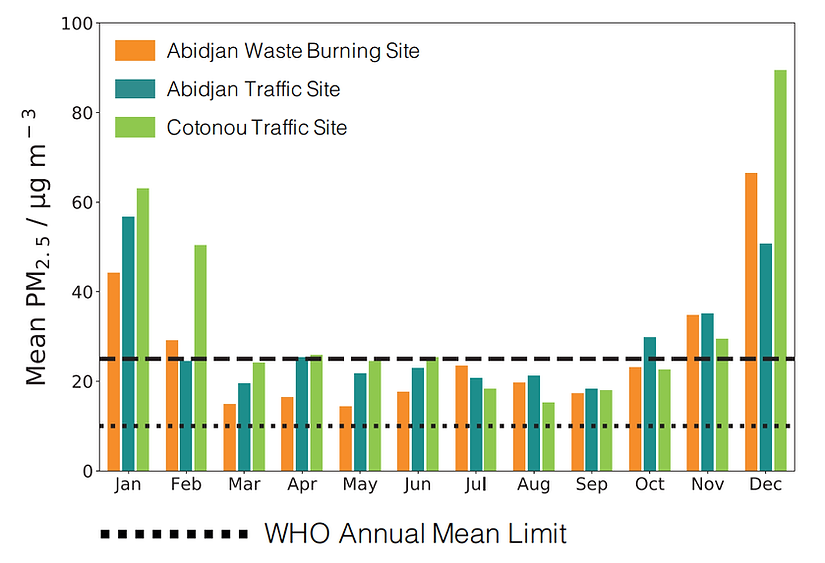
Figure 1: Average monthly PM2.5 concentration observed in Abidjan and Cotonou.
The dotted line indicates the concentration limit recommended by the WHO as an annual average. The dashed line indicates the concentration limit recommended by the WHO as a 24-hour average. Source: Evans et al., 2018 “DACCIWA project conclusion for policy makers”.
The idea to create APIMAMA, an interdisciplinary and participatory research-action program
In 2018, in the wake of DACCIWA, a number of researchers are planning to develop their research and are interested in the possibility of working on reduction strategies. The future APIMAMA project was then imagined and designed on the basis of an interdisciplinary and participatory methodology. When it was first submitted to funding institutes, the project was described by one evaluator as an “NGO project”. He explained that conducting work aimed at testing the contribution of solutions for populations was the prerogative of NGOs and not that of scientists. This criticism initially made the coordinator reflect on her status as a scientist. She was reassured, however, when the feedback from the second deposit was complimentary, precisely because of the interdisciplinary and participatory protocol proposed. On the choice of method, she explains:
In relation to the question posed, you can’t be the only physico-chemist to answer it, you can’t be the only sociologist to answer it, etc. I think it’s together that we can answer it […]. On the implementation of solutions: maybe a physical chemist will tell you that the [improved] fireplace/stove is better, but if it’s not being used and why, he doesn’t know. As for health, they say there’s a risk […], but in the end we’ve never done before-and-after blood tests to find out […] Now we’re really going to measure it in the blood.
The participation of the surveyed women is envisaged through several mechanisms: getting different women involved in the project (for mediation, popularization, logistics); running the project in partnership with a pilot group made up of representatives of civil society and various state institutions; questioning the participants on the interest of the technical solutions proposed and on their needs upstream, during and downstream of the provision of these solutions. A final dimension, not written into the ANR project, emerged as an important value: the desire to create a relationship of trust and proximity with the women surveyed. For the research director, this is essential to the success of the study. She believes that women appreciate feeling part of a united, supportive group, in which they are involved and have a role to play:
Interviewer: “Does the relationship between researchers and survey respondents affect the way science is done?”
Catherine Liousse: «Yes […] absolutely. We’re a group with the same feelings […]. When we distributed the [improved] fireplaces, you had this collective benevolence that was incredible. I’m [very] attached to it, I [thought]: “we’re a group and we have to show that we’re a united group”, and I think they appreciate that [a lot]. I’ve heard, “Why do you go at 6 a.m. when it’s a blood test?” Well no, it’s not like that, the ladies wait until you’re there. […] Even if you’re not the one drawing blood, and you’re going to come in a bit later. […] I think people are sensitive to that.»
The investment is also spontaneous, initiated by the women themselves. For example, at a meeting to present the study to the group who use wood to cook for their families and for catering, one of the women gets up, grabs an air analysis sensor, puts it around her arm and parades in front of the others in order to make them laugh (successfully). On leaving the meeting, when asked about her gesture and her aim to entertain the group she replies:
No, it wasn’t to make people laugh. In fact, I want to show my sisters, you know […] it’s Africa, eh. When there’s something, they say it’s very impressive. So I carried it to show them that it’s not something heavy […], it’s adaptable, you can do whatever you want with it. […] In fact, I want to encourage them to carry the device to see, for ourselves, our health.
These moments of listening to and observing informal situations, techniques for moving the project forward, all the adjustments, twists and turns, support and failures, make it possible to contextualize the results produced within a dynamic, a history, because, “there is nothing in the science made, that had not first been in the uncertain and alive science” (Latour, 2010).
Colonial and post-colonial studies on the production of Western knowledge in Africa
Colonial and postcolonial studies have taken up the question of knowledge production in Africa. Several critical postures, born of the emancipation that followed colonization, are discussed here. They highlight the need for scientists to question the scope of their studies, their objectives, their references and the conditions under which they are carried out. In the 19th and 20th centuries, “the development of scientific knowledge was closely associated with the process of colonization, the former having to ensure the effectiveness of the latter”. Nevertheless, “the deepening of knowledge of the terrain and the development of scientific networks generated a critical distancing from colonial representations and policies” (Blanc, 2022, p. 309). At the same time, African scientists, literary figures and thinkers rose up against the representations of Africa conveyed by Western science. They denounced these sciences as an obstacle to the emancipation and respect of African cultures. One of the criticisms levelled by the decolonization movements was the Western ethnocentrism of the knowledge produced: “The original contribution of postcolonial research is to call us to order: however lucid and rigorous we may be, it is almost impossible to rid ourselves of our own subjectivity, which also depends on the point of view from which we are situated in time and space” (Coquery-Vidrovitch, 2012, p.7). According to Florian Alix (2008), there is a filiation between the theses of Michel Foucault, who : “seeking to define the conditions of possibility of knowledge, […] shows that they are determined by a situation of the ‘epistemological field’, which is transformed over time” and Edward Wadie Saïd, insofar as: “one of the key arguments of E. W. Said’s research […] lies in the clash between scientific discourse and colonial power: not only do Orientalism and Africanism come to justify conquest and colonization, they are more profoundly what makes them comprehensible.” (Alix, 2008).
Knowledge is thus an entity dependent on an epistemological field, the result of collusion between scientific discourse and power, and it is very difficult (if not impossible?) to detach oneself from one’s own subjectivity when producing science. It was against this backdrop that it seemed essential to analyze the scientific project in which the sociologists were involved. The project is devoted to air pollution in Cote d’Ivoire, in a political and social context in which this subject does not have the same history as in the European or French contexts. If we take into account the studies cited above, situating knowledge enables us to highlight the forms of representation of the world they presuppose. Insofar as the APIMAMA project aims to promote concrete solutions to the problem of atmospheric pollution, it confronts African and Western scientists with the specific modes of representation of the populations to whom they wish to provide solutions. The confrontation of these orders of representation gives rise to situations of incomprehension, where words do not name things in the same way, and a discrepancy between the problems that need to be tackled (in this case, pollution) and those that are most urgent for the populations concerned (precariousness, insecurity). Overcoming these paradoxes then becomes a means of communication between these worlds – those of research and civil society, those of Africa and Europe, those of affluent and precarious backgrounds – who draw from the effort of having sought a translation, a testimony to the fact that their own knowledge is situated according to the position they occupy. The challenge that follows is to give representativeness to the knowledge of others, in the constitution of one’s own knowledge.
Questioning one’s own knowledge, representing that of others and evaluating one’s tools
Knowledge about atmospheric pollution: linguistic issues and the quest for meaning
The first sociology campaign took place in April 2022. Around thirty interviews were conducted with women living in various districts of Yopougon in Abidjan. During the interviews, various questions were asked: “For you, what is air pollution?”; “Where do we breathe the worst in Abidjan?”; “What are the main causes of pollution?”; “What are the possible effects of pollution on the environment?”. Soon, questions about pollution and the environment seemed inappropriate. The word “pollution” was often unfamiliar to them, and many were confused and embarrassed, sometimes even feeling at loss. They said they hadn’t “mastered the language of white people” or “heavy french”, the kind of french they felt was spoken in France or in the upper echelons of Abidjan. They saw us as white skin researchers detached from their world[9]. We decided to conduct the interviews in both french and ivorian, to avoid these misunderstandings. This strategy proved effective and facilitated dialogue. Air pollution” gave way to “spoiled air”: “spoiled” being a word commonly used to describe things in poor condition.
The use of translation stratagems didn’t solve the more complex challenge of getting these women to talk about issues or findings with which they were unfamiliar. For example, many of the questions dealt with the impact of ambient and urban air[10] on health in general. Almost none of them knew that ambient air was a chronic health hazard, or that their city was affected. On the other hand, they felt that smoke was a danger for them and for others, and they suffered from several effects: discomfort, physical pain, relational consequences, illness[11]. They complain above all of chest pain and eye problems, which are characteristic symptoms of exposure to the particles present in combustion fumes according to the scientific literature (Kafando et al., 2019). One testifies to the long-term consequences, visible in the elderly: “It’s in the village that I can make an example because our moms, their kitchens it’s smoke, so smoke makes that it breaks their eyes. […] Smoke gives you a cough, it can kill you, it means that our moms don’t age, and that’s it, [it’s] death[12]”.
The main approach used in these surveys was an interview grid designed to produce a “risk culture index” (RCI) on the subject of air pollution (Becerra et al., 2020). The risk culture analysis approach is a frequent feature of institutional work with populations (Girard, 2013). The index, in this case, is a score assigned to individuals and groups that reflects their knowledge, representations, protection strategies and visions of the future regarding certain risks or issues, gathered in detailed interviews. Interpersonal and intergroup comparisons can then be made, and socio-cultural determinants can be used to explain the risky or preventive attitudes of groups and individuals. In view of the discrepancies explained above between the purpose of the questions in the ICR interviews and the responses obtained (lack of knowledge of urban air pollution and its health consequences, among other things), we have adapted the initial approach. Rather than persisting in asking them questions which they didn’t understand, we decided to let the exchanges take new directions, more focused on the pollutions they consider important and towards which they act, along with the rules of their immediate environment.
The main sources of pollution cited are: the upwelling of dirty water and water stagnation (these are bacteria and mosquito breeding habitats, posing a risk to health), garbage dumped on the ground and overflowing containers due to lack of pick-up (garbage attracts undesirable animals : flies, rats, insects, while giving off bad smells, clogging drains and preventing wastewater drainage), ageing vehicles (especially those emitting black fumes) and crime, insecurity (risk of muggings and robberies). They also evoke the traumas experienced during the Ivorian civil war of 2002-2011, Yopougon having been the scene of clashes and killings between the Gbagbo and Ouattara camps (Palé, 2017):
Interviewer: “Do you know anyone who has fallen ill because of air pollution?”
Interviewee: “When there was the war there […] I had a disease of corpses, the smell overwhelmed me, I was coughing. I still cough, my entire head smells like the decay of bodies, flesh. I sense the odor of the man who entered me. […] Yopougon was insecure. During the crisis, they killed people, there were decaying bodies everywhere. There were smells rising. They didn’t collect the corpses.”
They often use the expression: “We’re in it”, as if to refer to an overall situation: living in a precarious neighborhood, having to use wood/charcoal because they lack the money to buy gas, engaging in activities that offer no hope of escaping precariousness. The expression used shows that this situation is experienced as a whole in which each part influences the other:
We can’t permanently be around and [someone will come to rob us]. Often we buy gas cylinders… in any case the equipment we work with, someone’s going to come and steal it from us. Who are we going to complain to? We don’t have anywhere to go to get help. The gas bottles, we got two of them, they were stolen, that’s why we [use] wood. If we had a second bottle of gas, we could have moved on real fast[13], but they stole the other one.[14]
This local cook/restaurant owner explains that because her gas bottle has been stolen, she is forced to cook using wood. This is a situation she finds unpleasant, as the wood is inefficient and she is restricted in the amount of food she can produce. She doesn’t want to invest in a gas bottle again as she is convinced it will eventually be stolen. What’s more, she has nowhere to turn to report the theft.
Urban pollution regulation and prevention strategies
Pollution sources in the urban environment are tackled by local residents. Each household is responsible for cleaning up in front of their door and around the home to keep the neighborhood clean. In cases where “a corner is dirty”, some women in the neighborhood may approach nearby residents to ask them to clean up, although the majority of them avoid doing so because they don’t want to “make palavers” [create quarrels]. Cooking smokes are also considered a neighborhood nuisance, when lighting the stove produces too much smoke. Cleaning up in front of the house, not pouring water all over the place, disposing of garbage in appropriate places – these practices are considered by the women who apply them to be good manners[15].
Women who make smoke fish have no means of protection or equipment to spare them from oven smoke. They try to alleviate the symptoms and prevent the risk of illness by drinking condensed or natural milk. During interviews, milk produced by the “Bonnet Rouge” brand was frequently mentioned. This was already reported by Becerra et al (2020) in their article based on sociological surveys conducted during the DACCIWA project. To date, it is difficult to know where this belief about milk comes from, as no promotional campaign mentioning therapeutic properties towards smoke has been found (Belland, 2017). For these women, the reason for using milk is that it “washes the heart” (Belland, 2017) and “makes the cough stop” (Jossinet, 2021). In the course of this survey, sociologists noted another strategy, that of “risk transfer”. The female fish smokers who owned ovens and were already well established in the profession, employed female contract workers and apprentices who smoked the fish for them. This enables them to spend less time working above the oven, and devote more time to other activities, such as selling smoked fish.
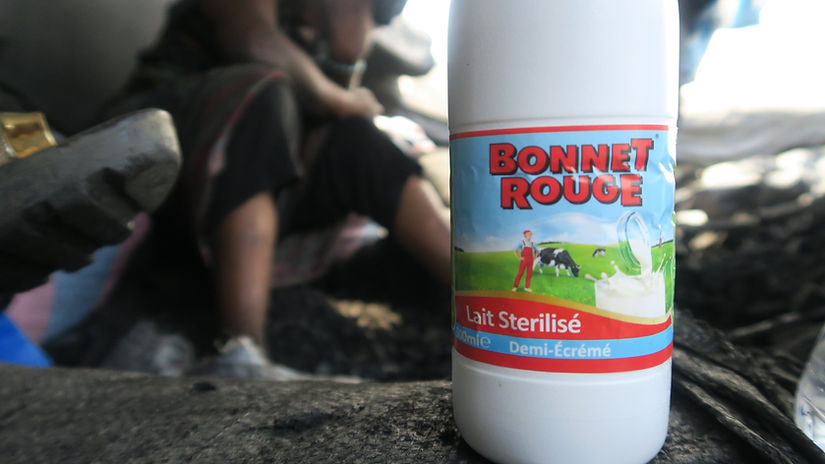
Photo 1: “Bonnet Rouge” milk brand.
Crédit: Marine Scandella, December 2022. Yopougon, Sipores market
Economic insecurity as a factor of exposure to urban risks and dependance on bioresources
In Yopougon, as elsewhere in Abidjan, the reasons for using wood and charcoal are very varied: among the most privileged classes, wood and charcoal, replaced on a daily basis by gas, can be used punctually to prepare certain African traditional dishes; in the lower class groups, some families use only gas, others use both in combination, choosing gas for short term cooking and charcoal for longer ones; and for the poorest people, the cost of a bottle of gas represents too great an investment which they cannot afford. Wood and charcoal are also crucial resources for a number of artisanal, catering and retail businesses (Diarrassouba & Tahoux Touao, 2006). The use of these resources therefore takes place in different social spheres, each of which attributes very different properties to it. In the case of the disadvantaged women of Yopougon, wood and charcoal are both symbolic of their precarious situation and essential to their survival. But they are also a strong cultural feature: their mothers used wood to prepare their daily meals, they would buy it in the markets where the community used to gather, and so on. In this sense, the perspective of providing improved stoves could be a way of not cutting them off of these cultural roots; all it would do is allow reduce their household expenses so that they can spend money on purchases they would otherwise be unable to make.
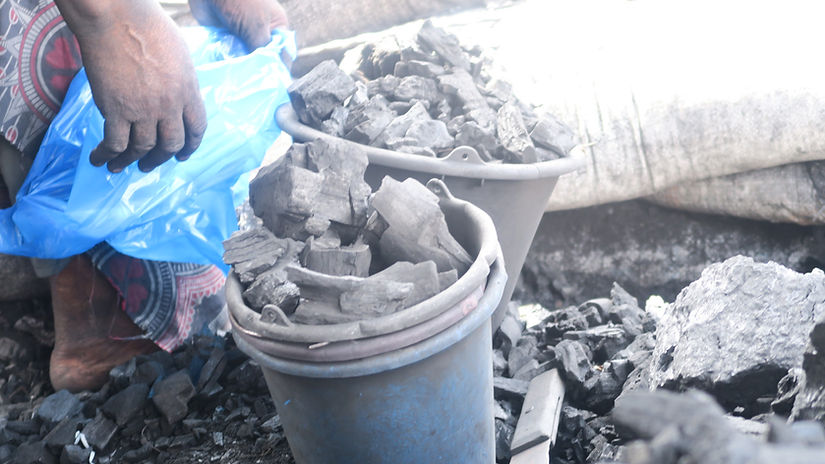
Photo 2: A charcoal saleswoman packing one bag of a 500 CFA franc worth. This is enough to prepare a couple of meals.
Crédit: Marine Scandella, December 2022, Yopougon, Sipores market
The scientific tools that make up the relationship between scientists and the surveyed women
During a field campaign in December 2022, the women carried out the first cycle of the interdisciplinary research protocol: health examinations and questionnaires, physico-chemical measurements, sociological surveys. All the experiments will be reconducted one year after the women have received the improved stoves, to compare whether the quantity of pollutants to which they are exposed has fallen, whether their health has improved, whether the introduction of new cooking equipment has modified their practices, and how taking part in the survey has impacted on their perception of the dangers of cooking fumes. On the same occasion, they received the individual air quality sensor, to be worn on the arm for one month, which enables continuous measurement of the quantity of PM2.5 inhaled.
These types of sensors are usually connected to the Internet for their activation, for data retrieval and so on. The scientific team developed specially adapted sensors for the APIMAMA project, considering that most of the women had neither smartphones, nor credit, nor a reliable network in the areas they frequently stayed in, conditions which were essential for data transfer. Practically speaking, this meant that the scientists had to make frequent visits to the sites for two reasons: to check that all the appliances were working properly, and to download the data. An “APIMAMA permanence” was therefore set up, open every Monday and Thursday morning for a period of one month in the chiefdom’s common room.
During these periods, the women were questioned about their daily activities and enquired whether the sensor had any indication of malfunction[16]. They also received compensation for their participation in the study. Initially considered a cumbersome procedure by the team, there was a concern that these “permanences” would not be well perceived by the women. On the contrary, one of the physical chemists who took part in the sessions said that asking the women about their daily activities was seen by many as a sign of our interest in them. The frequency of the exchanges helped to strengthen the bonds and create forms of sympathy. For some other women, and according to the same researcher, systematically recounting their day in detail could be somewhat difficult, especially for the elderly.
Thanks to this narrative, we can see that the tools are also representative of the knowledge they produce. They have the capacity to build relationships between researchers and respondents, and influence the latter’s perception of the study in which they are taking part.
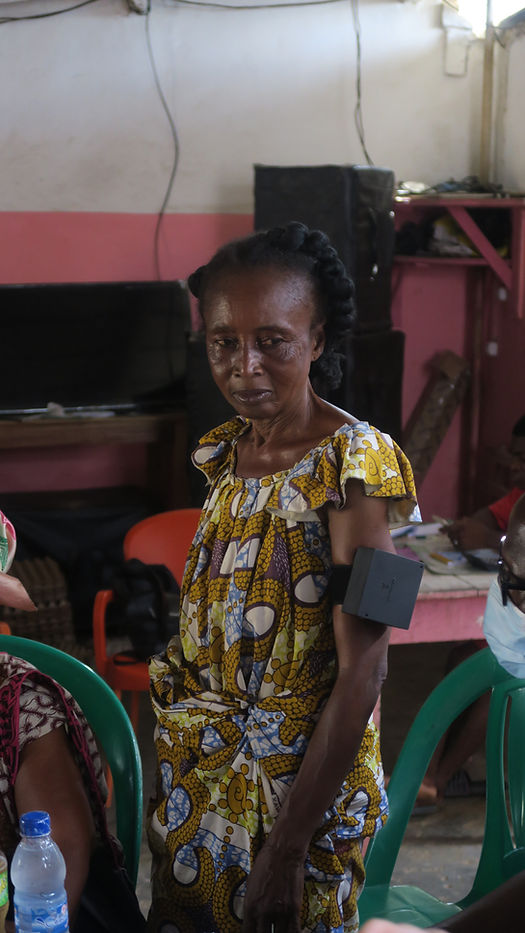
Photo 3: Kouadio Antoinette, district representative in the commune of Yopougon, presents the air analysis sensor at an assembly.
Crédit: Marine Scandella, December 2022, Yopougon.
Conclusion
Reducing energy consumption in the context of climate change is a central issue, because energy shapes the societies that depend on it and conditions their existence. What do the women of Yopougon contribute to this debate? This survey of wood and charcoal in Abidjan shows that in West African urban societies, energy is not completely disembodied. It plays an important role in people’s daily lives. Women travel to fetch coal, they pay a high price for it, they expose themselves to long-term dangers by cooking, and many are dependent on these resources because they are economically vulnerable. This West African perspective is invaluable for thinking about the future of energy in a context of global change.