
Return(s) to Africa
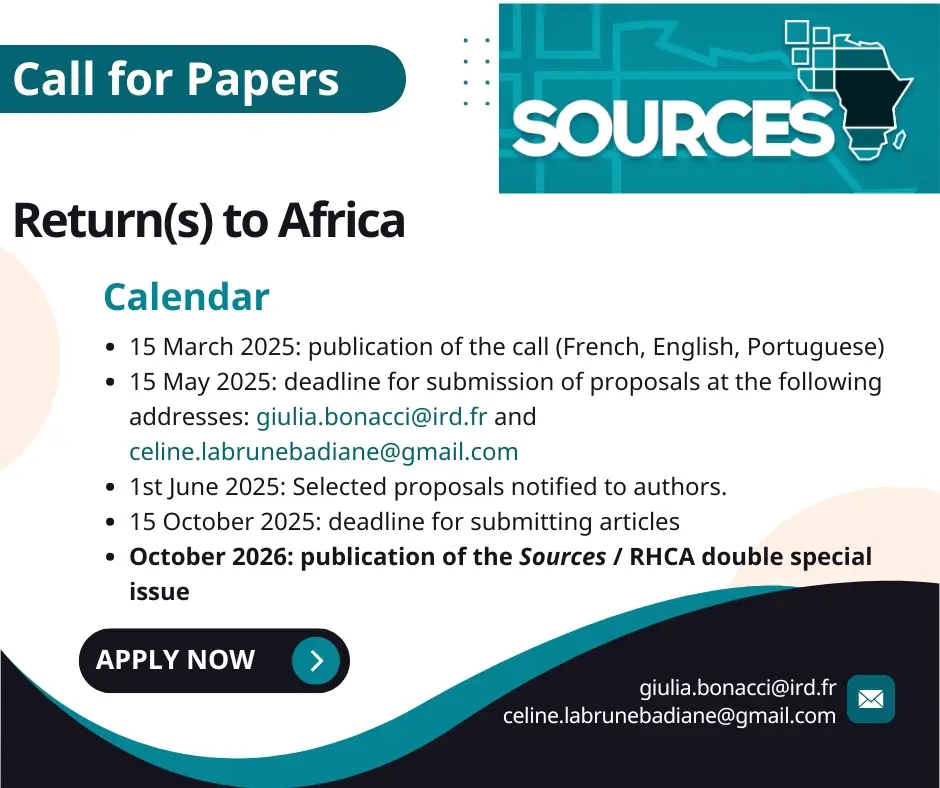
Call for proposals for the journal Sources. Materials & Fieldwork in African Studies and the Revue d’histoire contemporaine de l’Afrique (RHCA) Find out more..
𝐆𝐥𝐨𝐛𝐚𝐥 𝐀𝐟𝐫𝐢𝐜𝐚 | 𝐈𝐬𝐬𝐮𝐞 𝟗 𝐍𝐨𝐰 𝐀𝐯𝐚𝐢𝐥𝐚𝐛𝐥𝐞!
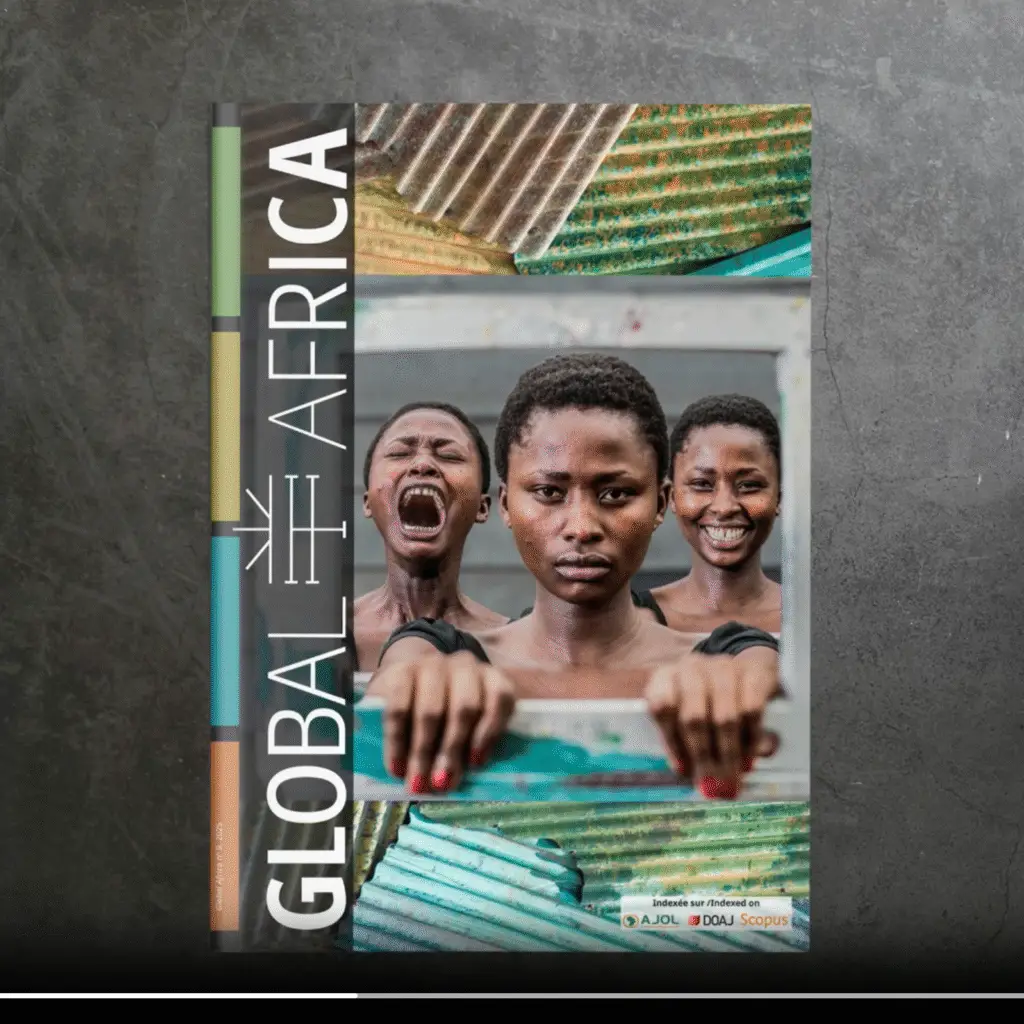
We are delighted to announce the release of Issue 9 of Global Africa. Discover an engaging collection of articles authored by researchers offering insightful analyses on critical African and global issues. Happy reading! #GlobalAfrica #Research #Africa #Issue9 #AcademicPublishing #Multilingualism #IRD #AFD #UGB #UCAD #AUF #LASPAD #CIHABlog #IIAS
Global Africa reaches a new milestone: Indexed in Scopus and Issue 9 coming soon!
We are delighted to share two significant milestones for Global Africa! Firstly, following our indexing on AJOL (African Journals Online) and DOAJ (Directory of Open Access Journals), our journal is now indexed in Scopus! This recognition highlights the quality and rigorous scientific standards of Global Africa and significantly boosts our international visibility. Why is this indexing important? Secondly, we are pleased to announce the upcoming release of Global Africa Issue 9, available in open access starting March 20. This issue continues our commitment to diversity and scholarly richness, featuring stimulating contributions across a broad spectrum of humanities and social science topics related to Africa. We extend our heartfelt gratitude to everyone contributing to the journal’s success: authors, reviewers, editors, readers, and partners. We warmly invite you to explore this new issue upon its release, submit future articles, and widely share this exciting news! Stay connected! The Global Africa Team
The AU@20: Progress, Problems and Prospects Towards Agenda 2063, Symposium
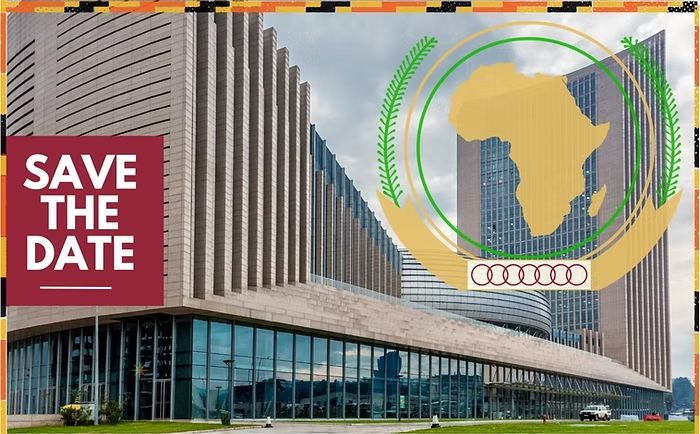
Sheraton Hotel in Pretoria, South Africa The event aims to commemorate the 20th anniversary of the African Union (AU) and offers a critical assessment of the milestones that the regional institution has registered thus far. It becomes important to reflect on the challenges the AU has encountered and its future direction. This symposium is timely and pertinent, particularly in relation to the attainment of Agenda 2063-The Africa We Want. The symposium will bring together the AU community, leading scholars, policy practitioners, and civil society actors to engage the themes: African Renaissance and Regional Integration; AU Organs and Institutions; Governance, Democracy and Elections; Africa’s Peace and Security Architecture; Women and SDGs; AU External Relations; and Climate Change and Humanitarian Assistance, amongst many others. This continental symposium is co-organised by the University of Johannesburg’s (UJ), the Institute for Pan-African Thought and Conversation (IPATC), the Council for the Development of Social Science Research in Africa (CODESRIA), based in Dakar, Senegal and TrustAfrica, also based in Dakar. [Hybrid symposium] For more information : https://ipatc.joburg/64-au20-progress-problems-and-prospects-towards-agenda-2063/ Registration : click here
WANIDA Symposium
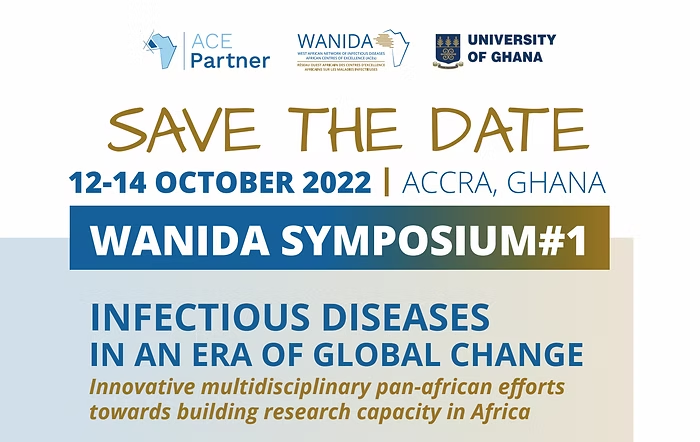
Accra, Ghana We are pleased to share with you the “Save the date” for the first edition of the symposiums of WANIDA (West African Network of Infectious Diseases ACEs”), which will be hosted by WACCBIP, the University of Ghana in Accra, from October 12th to 14th, 2022. Please find the attached visuals for more information.
Global Scientific Francophonie Week

Cairo, Egypt The 2nd edition of the Global Scientific Francophonie Week will be marked by significant events: 1) the 1st Congress of Francophone Student Youth, 2) the 2nd Conference on Scientific Francophonie, with a focus on artificial intelligence, 3) the 6th Francophone Ministerial Conference. For information: https://www.auf.org/news/the-2nd-edition-of-the-global-scientific-francophonie-week-will-take-place-from-october-25-to-28-2022-in-cairo/
Dakar Biennale 2022
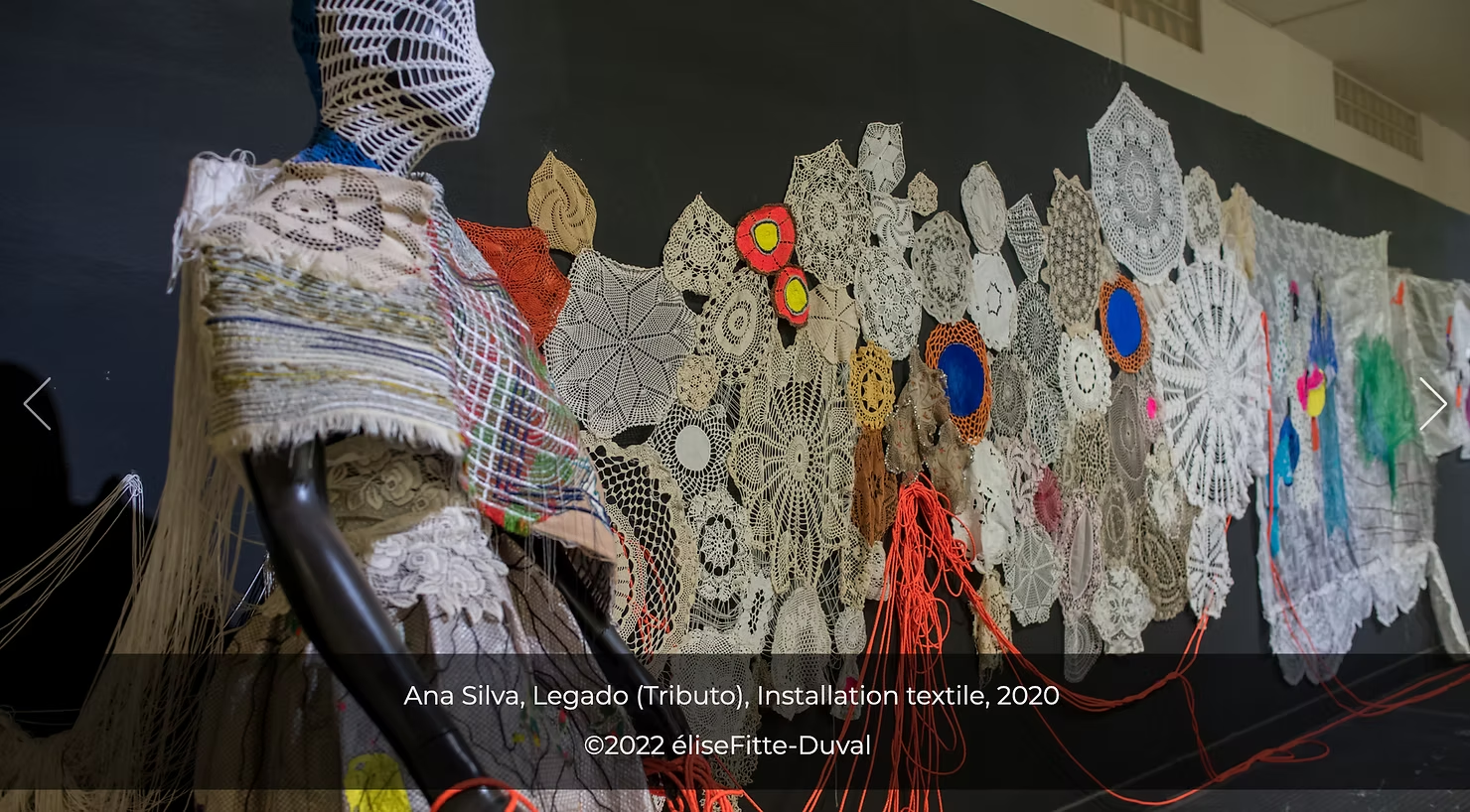
Dakar Biennale 2022: a call for expanding horizons for contemporary African art. The fourteenth edition of the Dakar Biennale of Contemporary African Art (Dak’art) took place from May 19th to June 21st, 2022, in Cap Manuel, the former court. This major cultural event featured the participation of 59 visual artists and artist collectives from Africa and the diaspora. The exhibition, centered around the concepts of creation, imagination, and invention, embraced the theme of Ī Ndaffa (in Serer), which translates to “to forge” or “Out of the fire,” inviting the forging of a shared destiny. To forge a new world Organized for the first time in 1990, the Bienniale of Contemporary African Art (Dak’art) is one of the largest African cultural events dedicated to visual arts, design, and digital arts. This Bienniale represents the ultimate framework for exchange, exhibition, promotion, and expression for actors in African culture. It is also a space for meeting and collaboration between cultural actors from the African continent and those from other continents. Hence the theme “Ĩ Ndafa,” which means “to forge” in Serer. Through this verb, the emphasis is placed on creation, kneading, and fusion. It is about invoking the spirit of innovation and creativity in artists to create a new world. An official selection highlighting various artists from diverse backgrounds For this fourteenth edition, the 59 visual artists and collectives chosen for the official selection mainly come from West Africa (14 visual artists), Southern Africa (12 creators), North Africa (6 artists), and Central and East Africa (6 artists). The Indian Ocean is represented by a Seychellois creator. The remaining 19 artists are from the diaspora. Furthermore, the most represented countries include South Africa with eight artists, Senegal with seven visual artists, Cuba with five creators, France and the United States (four artists each). Benin and Cameroon, on the other hand, are represented by three artists each. Finally, Tunisia and Morocco each have two artists. Highlighting the art economy The art economy is also emphasized during this fourteenth edition. In this regard, the first official edition of the Dakar International African Art Market (MIAD) was held at the site of the African Renaissance Monument, following the one organized in 2016 by the visual artist Kalidou KASSE, the project’s first initiator. Indeed, MIAD aims to be a platform for exchanging artworks both physically and virtually. To this end, the site of the African Renaissance Monument will serve as a sales showcase for works of artists from several countries (Senegal, France, Morocco, USA, Jamaica, Nigeria), as well as for partnerships.
7th Meeting of African Studies in France
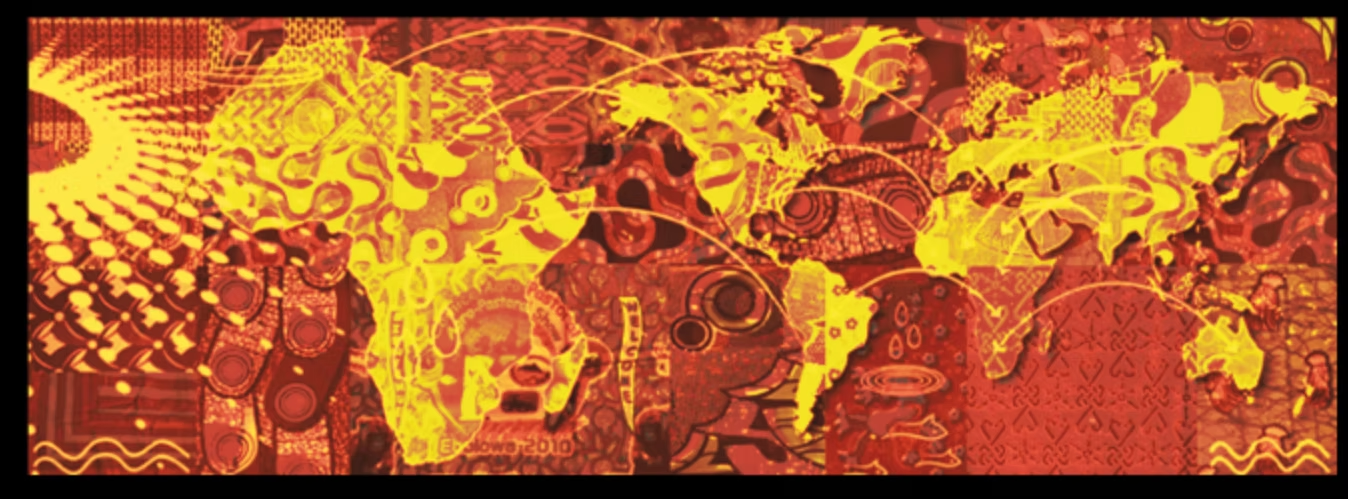
Date: June 28th – July 1st, 2022. Venue: Toulouse, France The 7th edition in 2022, which will take place in Toulouse for the first time, will be an opportunity to bring together these specialists around a transversal theme (“Circulations in the Africas, Africas in circulation”) and non-theme workshops. NATIONAL YOUNG RESEARCHERS CONFERENCE IN AFRCAN STUDIES The REAF (Meeting of African Studies in France) and the National Young Researchers Conference in African Studies (JCEA) will take place on the same dates and at the same location, with a partially shared program. The JCEA have the particularity of being entirely conceived and organized by doctoral students and young researchers. A separate call for papers is launched by the JCEA network.
Third Salon of Alternative Writings in Social Science
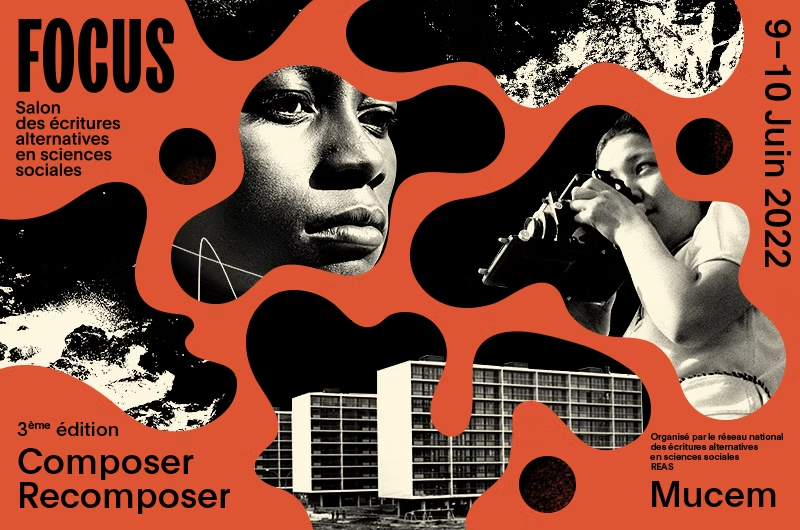
Venue: Marseille, France The FOCUS – Salon of Alternative Writings in Social Science promotes new forms of storytelling in the humanities and social sciences. Research films, audio documentaries, comics, and museum installations bring a fresh perspective to the analysis of social life by harnessing the expressive power of images and sounds. The salon encourages interdisciplinary meetings between researchers and professionals from the creative industries and facilitates collective discussions on production and dissemination challenges. For further information: https://centrenorbertelias.cnrs.fr/seas3_2022/
Apocalypse Tomorrow – Main Stage of the French Institute on March 18, 2022, Starting at 8 PM

Date: 18 mars 2022 Venue: Senegal’s French Institute in Saint-Louis, Villa Saint-Louis Ndar Marcia Higelin, living in Villa Saint-Louis Ndar in March 2022, will share the fruits of her musical encounter with musician and composer Manu Nzolani Nkounkou, a promising young Congolese trumpet player, and multi-instrumentalist pianist Lucas Maminiaina. “Apocalypse Tomorrow,” her debut album, is an anthem to Marcia Higelin’s personal history, intimately connected to Africa, and to these talented musicians. With a joyful obligation, Marcia embarks on a fascinating musical narrative that combines her African influences with her magnificent artistic heritage. Free admission! Photo Credit: Olivier Allard !
The CRAC Department of UGB Celebrated the Centenary of Sembène Ousmane.
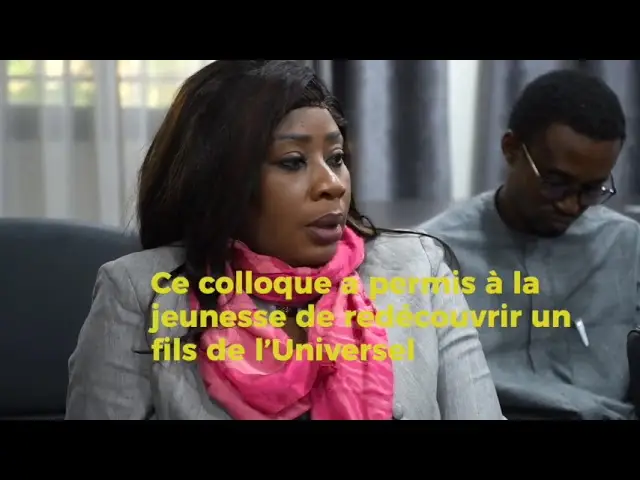
Under the distinguished presence of Professor Aliou Sow, the Minister of Culture and Historical Heritage, the CRAC department, in collaboration with the Cinematography Directorate, FOPICA, and the Photography Museum of Saint-Louis, organized the international centenary symposium of Sembène Ousmane from May 18th to 20th, 2023, held at CEA-MITIC and in Saint-Louis. The symposium centered on the theme “Heterotopia of Possibilities.” Eminent figures such as Professor Magatte Ndiaye, the Rector and President of the Academic Council, Dr. Patrice CORREA, the Director of the CRAC department, Dr. Delphe KIFOUANI, the Head of the Arts and Culture Professions department, were in attendance, along with a delegation from the Ministry of Culture and Historical Heritage, a representative from the Sembène family, faculty members (PER), non-academic staff (PATS), and students who actively participated in the colloquium. The remarkable presence of researchers and cinema specialists from 22 countries worldwide distinguished this high-caliber international symposium.
Universities and Students in Africa: Dynamics, Discourses and Representations

International symposium Universities and students in Africa: dynamics, discourses and representations, January 11 – 13, 2024, Université d’Abomey-Calavi, Benin In choosing to reflect on “Universities and students in Africa: dynamics, discourses and representations”, the symposium raises a number of questions: what are the significant contributions of students’ “creative lives” to the original and successive configurations of African universities? How do they influence the design and content of knowledge-building and dissemination policies and strategies in African universities? In what artistic or discursive forms are the various aspects of life on African campuses expressed, and the interrelational dynamics of which they are the starting or deployment points? For more information: https://afriuniproject.blogs.bristol.ac.uk/events/colloque-abomey-calavi-benin-2024/