

Introduction
Current debates on scientific predation tend to lump a wide variety of situations into a morally charged category where the label often amounts to a condemnation (Mills & Inouye, 2021). This reductionism is particularly problematic for many journals published in the Global South, which may exhibit signs of low professionalization (procedures, transparency, standardization, archiving, etc.) without necessarily acting with fraudulent intent. Starting from this distinction allows us to shift the analysis away from the hunt for “bad actors” toward an examination of the material, cognitive, and institutional conditions that create (or prevent) editorial credibility (Azilan, 2025).
A symptom that is both commonplace and revealing encapsulates these tensions: the display on the websites of journals—particularly those published in Africa—of a patchwork of “indexes,” badges, and diverse logos, some prestigious, some obscure, and some merely administrative, presented as a mark of international recognition. We see ResearchGate, Index Copernicus, Academia, HAL, DOAJ, all grouped under the heading “index.” What these sites reveal is a grammar of recognition under constraint where technical indicators are reinterpreted as markers of scientific value. This shift reveals a deeply unequal publishing landscape where the legitimacy of a research work depends less on its intrinsic quality than on its ability to circulate within the right systems and appear in the right directories. What is at stake here is more fundamental than a mere lack of formatting and design. In a context marked by the race toward internationalization and conformity to dominant standards, access to scientific visibility remains structurally unequal, and it is often journals from the Global South that suffer most from these infrastructural asymmetries.
The central hypothesis is that many French-language African journals are caught in a fundamental confusion between three distinct categories: first, indexing as a technical process of inclusion in a database; second, search engine visibility as a traceable presence in search engines or catalogs that sort journals according to established relevance criteria and finally, listing as a simple entry in a directory without any review of the journal or its content. This confusion is not merely a lack of information. It reflects a tension between the aspiration toward internationalization and the unequal access to the standards that actually determine it.
The central issue is a shift—common in institutional discourse and local practices—between indexing as infrastructure and indexing as a label. In other words, a system designed to organize access to information is gradually being repurposed as a quality certification, and this transformation redefines editorial strategies, journal communication practices, and, ultimately, authors’ publishing behaviors. To analyze this shift, this article combines a political economy approach to evaluation with a decolonial perspective on the production of recognition. By “political economy of evaluation,” we mean here the analysis of the power relations that structure the production, circulation, and recognition of knowledge by examining who sets the standards, who controls the instruments, and how academic value is distributed. Current international debates on evaluation reform specifically emphasize the need to decouple the value of research from reputation proxies based on form rather than content and the actual diversity of contributions. In Africa, this dynamic aligns with an older constraint described by Paulin Hountondji using the term “extraversion.” Consequently, the display of logos and symbols can be interpreted as a response—sometimes clumsy, sometimes opportunistic—to a system of unequal global visibility, rather than as a mere strategy of deception.
The article has two objectives. First, it aims to provide a conceptual clarification of the concept of indexing. Second, it also demonstrates how the pursuit of publication in indexed journals functions as a misleading catchphrase that reveals the power dynamics shaping scientific communication on a global scale, as well as in French-speaking sub-Saharan Africa.
What is a scientific index?
First, it is necessary to understand what the term “indexed” refers to. A scientific index is, in fact, much more than a simple list of publications. It is a system for analyzing, cataloging, and structuring the content of research articles within an organized database (Rostaing, 1996), the foundations of which were laid by Garfield (1955). Indexing enables the classification of academic outputs by extracting content to ensure its dissemination and facilitate searching. Its primary function is therefore to allow researchers to more efficiently locate relevant literature within a given field. One can conceive of the scientific index as an infrastructure for exploring the literature, where each article is locatable via a standardized identifier (title, authors, affiliation, keywords, abstract, DOI, etc.). Citations, for their part, constitute traceable links that make it possible to reconstruct intellectual lineages. In other words, to be indexed is to be integrated into an infrastructure that organizes scholarly literature.
What sets these indexes apart from other databases is their ability to generate methodological value. They do not merely record articles; they also track citation relationships—specifically, who cites whom, how many times, and even in what context. This network of links makes it possible to calculate bibliometric indicators such as the impact factor or the h-index, and allows for the assessment of a research study’s relative influence within its discipline.
In contrast, indexing refers to the most basic process of listing a journal in a catalog, directory, or list without analyzing its content on an article-by-article basis. In most cases, indexing directories do not verify the scholarly nature of journals which are often listed alongside other similar publications such as newsletters, magazines, or media outlets. Directories such as the Directory of Open Access Scholarly Resources (ROAD), Mir@bel, EZB, Miar, or Ulrichsweb thus list thousands of titles, indicating their editorial characteristics, but without analyzing the relationships between publications. In this sense, listing constitutes a minimal form of visibility; the journal exists in the eyes of the community but its influence remains unmeasured. Finally, indexing occupies an intermediate position. An indexing database such as the Directory of Open Access Journals (DOAJ) or the Diamond Discovery Hub (DDH), lists journals according to quality criteria defined by a scientific community, a consortium, or an institution without necessarily conducting systematic tracking of articles and their citations. Indexing constitutes a form of editorial and disciplinary validation that demonstrates that the journal is recognized as scientifically rigorous and relevant.
The Origins of the Citation Index
To understand why citation indexes became so widely adopted, we must go back to the postwar period. In the mid-1950s, information scientist Eugene Garfield (1925–2017) faced a concrete and urgent problem: the explosion of scholarly output and the breaking down of disciplinary boundaries which made manually identifying relevant sources increasingly difficult. At that time, traditional indexing systems relied on human indexers who had to manually assign descriptors and keywords to each article. This system had three flaws: it often lagged behind published literature by several months, or even years; its cost remained high; and its results depended largely on the indexer. Two indexers working on the same article rarely assigned the same descriptors (Garfield, 1984; Guédon & Loute, 2017; Wouters, 2017).
Garfield then came up with an innovative idea. Rather than letting humans decide what is relevant, why not let scientists themselves indicate this through their citations? According to this logic, a citation is much more than just a reference. According to Garfield’s hypothesis, it constitutes a signal that the author considers the cited article relevant to their own research—a hypothesis whose limitations and strategic uses were later demonstrated by the sociology of science, since citations can be ritualistic, obligatory, strategic, negative, or erroneous. In 1955, Garfield published his manifesto “Citation Indexes for Science: A New Dimension in Documentation through Association of Ideas” in which he explained that by automatically capturing all citations published in journals, one creates a topology of knowledge that emerges from scientific practices themselves, without requiring a priori human judgment. In 1964, the Institute for Scientific Information (ISI) produced the Science Citation Index (SCI). For the first time, it became possible to systematically track the number of citations and to evaluate what is now called a journal’s “impact,” which is calculated for year (a) by dividing the number of citations received by articles published in the journal during the two years preceding year (a) by the total number of articles published by the journal during the same period.
Web of Science and Scopus as Pillars of Legitimacy
Over the decades, two major players have come to dominate and legitimize this system for evaluating the relevance of journals. Web of Science (WoS), managed by Clarivate Analytics (formerly Thomson Reuters), and Scopus, launched in 2004 by Elsevier, have become the two giants of international scientific indexing. Their authority rests on several pillars. First, a selection process presented as rigorous, but whose effects prove to be structurally discriminatory. The indexes do not automatically accept all journals. Garfield gradually established a principle of selectivity based on “core journals,” that is, a limited corpus of journals deemed particularly influential in their field according to bibliometric criteria (Guédon & Loute, 2017).
Clarivate, for example, currently relies on 28 formal criteria—24 related to editorial quality and 4 to bibliometric impact—but retains discretionary authority over the inclusion, retention, and removal of journals. Several dimensions of the evaluation process remain non-explicit, notably the citation thresholds required for progression from ESCI to the main indexes, as well as the qualitative assessment of the alignment between a journal’s stated scope and its published content.
Subsequently, a form of global institutional recognition has taken shape within the ecosystem. Universities, research funding agencies, and governments have gradually adopted the metrics produced by these databases into their policies—the impact factor for WoS and the CiteScore for Scopus—to evaluate researchers, allocate funding, and rank institutions. This systematic adoption creates a cycle of legitimacy: the more institutions use these metrics, the more objective and indispensable they appear; the more indispensable they appear, the more institutions use them (Bernard, 2017; Gingras, 2018b; S. Piron, 2008).
Geographic and Linguistic Selectivity
Originally conceived as an infrastructure for identifying and mapping knowledge, indexing in selective databases (and the metrics they generate) has thus gradually become a tool for evaluating researchers and their host institutions. In many contexts, indexing in WoS or Scopus has thus shifted from focusing on a journal’s visibility and discoverability to serving as a proxy for quality, to the point of sometimes supplanting qualitative review. One transformation brought about by this logic is that metrication encourages the optimization of what can be quantified, rather than what matters scientifically. It reinforces authors’ publication strategies, which are then dictated by the criteria of major databases rather than by the needs of research communities (Gingras, 2018a).
Behind this façade of universal legitimacy lies a well-documented structural bias. Academic critiques, notably the works of Asubiaro et al. (2024), Gingras and Khelfaoui (2025), Larivière (2019), Maddi et al. (2024), and Mongeon and Paul-Hus (2016) show that Web of Science and Scopus have never been truly universal. On the contrary, they are deeply selective in favor of Anglo-Saxon science from the Global North, at the expense of other regions on the periphery that are largely rendered invisible. Journals published in Europe are 30–40% more likely to be indexed in Web of Science and Scopus, whereas journals from other regions—particularly Sub-Saharan Africa—are 50–60% less likely to be included, according to Asubiaro et al. (2024).
Indexing criteria discriminate against young journals or those rooted in local scientific communities. However, to maintain its indexing in Scopus, a journal must meet stringent criteria; failure to do so triggers a review by the selection committee, which may result in de-indexing. These requirements are difficult for young journals to meet, or for those focused on topics that the core of the global research (Demeter, 2019) system deems irrelevant—which is the case for the vast majority of African journals published by researchers.
The EIFL study (2024) on free-access African journals sheds light on the main obstacles these journals face during the indexing process. This research helps explain how they find themselves caught in a vicious cycle. Their low visibility in international databases limits their citations, which, in turn, justifies their continued exclusion. This discriminatory mechanism disadvantages local research, which is nonetheless essential for understanding and resolving issues specific to African contexts. Journals are thus trapped in a paradox where their marginalization forces them into an involuntary insularity—for which they are criticized—fueling a vicious cycle that perpetuates their scientific invisibility. “One can’t get indexed without international authors, but authors are disinclined to publish in a journal that isn’t indexed… it is a chicken-and-egg kind of thing… you see the loop; nobody can break it,” a Nigerian publisher confided in the article by Mills and Branford (2022). Asubiaro et al. (2024) showed that journals published in Europe are 30–40% more likely to be indexed in Web of Science and Scopus, while those from Central and South Asia, East and Southeast Asia, and Sub-Saharan Africa are 50–60% less likely to be included.
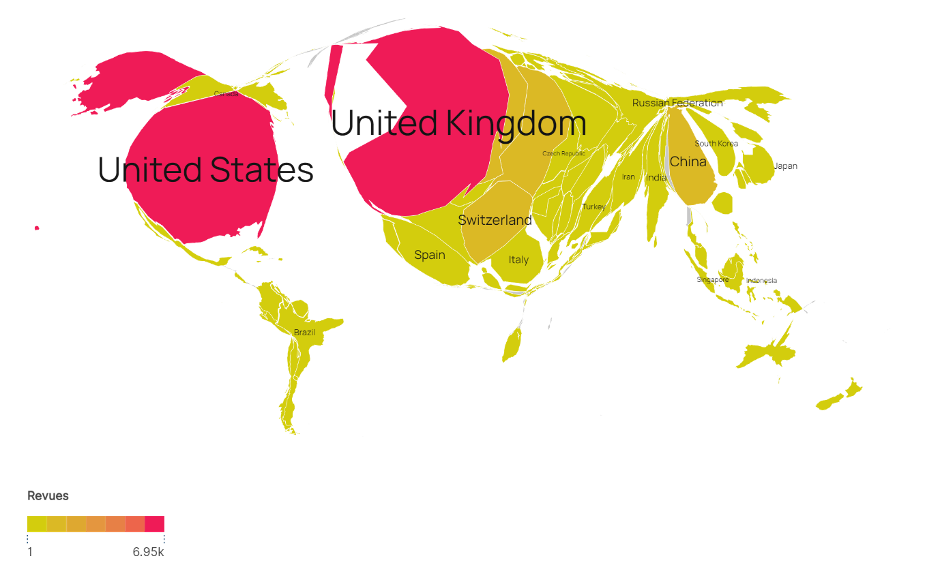
Source: SCImago Journal Rank
In response to the coverage biases of these databases, several regions have developed their own indexing systems to highlight high-quality journals and works that remain marginalized. In Latin America, Latindex (a network launched in the late 1990s) specifically aims to identify and disseminate information on scientific journals from Latin America, the Caribbean, Spain, and Portugal through a cooperative and regional approach. In the Arabic-speaking world, the Arabic Citation Index (ARCI) was launched in 2020 on the Web of Science platform, with the explicit goal of better mapping scientific output in Arabic and improving its discoverability and use in research evaluation. In the same vein of deploying alternative infrastructures, SciELO/Redalyc in Latin America can also be cited as structural responses to international visibility that is overly conditioned by dominant indexes.
More recent initiatives offer a way forward. OpenAlex, launched in 2022, provides democratized access to bibliometric metadata, reducing the monopoly held by Elsevier and Clarivate (Priem et al., 2022). But for African researchers to regain control of their own informational visibility, an African citation database would need to be built with its own selection criteria and institutional legitimacy. What is at stake is not simply indexing but intellectual sovereignty and the ability of African communities to define the quality criteria for their own research. This is the logic defended by Nwagwu (2007, 2008), who long advocated for an African Citation Index. Nwagwu describes his proposal as an Afro-centered citation infrastructure aimed at correcting persistent invisibility. Due to a lack of stable funding and support from local institutions—which themselves suffer from funding issues—the project was halted. Converging accounts also indicate that the search for external support and certain proposals for integration into commercial databases may have conflicted with the very spirit of the project, making its trajectory politically and strategically difficult (Mills & Asubiaro, 2024).
Today, this structure remains in place. However, as Le Roux (2006) explains, a journal, in its early stages, faces a major initial challenge: recruiting high-quality authors and building a readership. Once this launch phase is over, other challenges emerge that are just as important for its growth trajectory. These secondary challenges rest primarily on two pillars: the journal’s visibility—that is, its recognition within its discipline and geographical context—and its credibility within the scientific community. This second challenge often hinges on the journal’s indexing or listing. In this context, publishers are driven to obtain proof of indexing—sometimes from predatory actors—to meet authors’ expectations. Even if it means paying predatory actors to get “indexed.”
Databases: The Blind Spot of Predatory Science?
Over the past fifteen years, predatory science has generated a wealth of academic literature. From Jeffrey Beall’s pioneering work to empirical studies on the motivations of authors who fall into traps, and analyses of fraudulent business models, the scientific community has gradually mapped out the mechanisms by which certain journals exploit the pressure to publish (Berger & Cirasella, 2017; Boukacem-Zeghmouri et al., 2021; Demir, 2018; Eriksson & Helgesson, 2018; Mills & Inouye, 2021).
In the same vein, part of the literature has focused on misleading metrics. These refer to the strategic use of deceptive bibliometric indicators to create an appearance of quality. The studies describe an ecosystem of companies specializing in the production of fake impact factors and labels that mimic metrics recognized by the scientific community in order to exploit publication pressure and indicator-based evaluations. These fake indicators mimic recognized metrics such as the impact factor, CiteScore, and SJR. In practice, these actors promote alternative indices such as the Index Copernicus, the Global Impact Factor, or other obsolete or non-existent metrics (Universal Impact Factor, Arab Impact Factor, Advanced Science Index, etc.). More than 50 fake metrics have been identified to date (Dadkhah et al., 2022; Koçak, 2023).
The rise of predatory journals has significantly amplified this phenomenon. Today, it has become a sub-ecosystem that fuels a gray economy in which publishers charge publication fees in exchange for fictitious visibility and a processing speed that is scientifically untenable. The literature links these misleading metrics to other forms of editorial fraud, such as hijacked journals or editorial phishing, where credibility is built through imitation (Dadkhah et al., 2016). Faced with this challenge, the academic community relies on tools such as Beall’s List (since retracted, but updated by anonymous groups), PubPeer, DOAJ, and verification protocols such as Compass to Publish or “Think Check Submit.”
The Predatory Ecosystem: An Infrastructure of Legitimacy
To understand the role that dubious indexes play in the ecosystem of scientific communication, we must first acknowledge that predation does not operate as an isolated phenomenon but as a system. This system is based on a chain of legitimacy in which each element reinforces the others. A predatory journal may indeed publish any article for a fee but its effectiveness depends on its ability to simulate the attributes of a legitimate journal: an editorial board (often fictitious), a peer-review process (often nonexistent or ineffective), and above all, (pseudo) indexing in databases that lend it the appearance of institutional recognition (Azilan, 2025). This is where predatory indexes come into play. They offer fraudulent journals a veneer of credibility. By displaying indexings, these journals shift from the status of obvious predators to that of actors who are certainly marginal but apparently legitimate. For a researcher unfamiliar with international standards, this pretense may be enough to dispel doubts.
The effects are twofold, at the very least. First, predatory indexes blur the lines. In an environment where scientific legitimacy still relies heavily on quantifiable indicators, the proliferation of false metrics creates widespread confusion. Second, a market is forming where speed and cost are gradually supplanting quality as decision-making criteria. When a publisher discovers that instant indexing can be purchased for a few dozen dollars, or that it is easy to display an impact factor without meeting actual editorial and technical requirements, the temptation to take the fraudulent route can be overwhelming. Predatory practices, therefore, do not merely exploit the flaws in the academic system. They deepen them, institutionalize them, and transform them into de facto standards. However, it should be noted that predatory indexes do not target only inherently predatory journals and publishers. In their quest for legitimacy at any cost, many legitimate local journals also fall victim to this scheme.
Portrait of a (Potentially) Predatory Actor: Index Copernicus
Index Copernicus illustrates a kind of gray area where a system of visibility and parametric ranking can be deployed as a substitute for scientific evaluation with detrimental effects on journals from the Global South. The central issue is not the existence of an alternative indicator in and of itself but the way it is socially reinterpreted as a seal of quality and then incorporated into local economies of recognition.
At the heart of Index Copernicus’s offering is the Index Copernicus Value (ICV), presented as an evaluation result based on 41 criteria grouped into two components: “quality of the journal” and “journal’s impact.” In its official presentation, the “quality” component of the ICV revolves around criteria such as “standards, stability, digitalization, and internationalization,” thereby anchoring the tool in a logic of functional compliance. Index Copernicus specifies that the ICV is based on parametric data reported by publishers via questionnaires and not on a citation count.
This framing is not entirely without merit. Assessing a journal’s stability or editorial structure can help publications that are in the process of consolidation. The problem arises when this framework is presented—or simply perceived—as a measure of scientific quality in the strictest sense, that is, as a guarantee of methodological rigor, the robustness of the peer-review process, or even editorial integrity. This confusion is all the more risky because it makes heterogeneous journals comparable on the basis of criteria whose primary function is organizational, not epistemic (Mondal & Mondal, 2019; Watson & Zhang, 2025).
Index Copernicus is, in fact, explicitly listed among the misleading indexes identified on websites dedicated to predatory journals (Mondal & Mondal, 2019). For journals from the Global South, the effect is particularly harmful. The quest for international recognition is already hampered by resource disparities, and the temptation is strong to turn this scarcity into a strategy for self-promotion. In such a context, an easily accessible parametric metric can then steer investments toward superficial displays at the expense of more fundamental—but also more resource-intensive—efforts, such as the quality of peer review, the production of rich metadata, and policies on ethics and archiving. This dynamic fuels an economy of appearances that undermines serious but under-resourced journals and offers symbolic shelter to opportunistic actors. In practical terms, this can trap journals in the process of consolidation in a dependency on peripheral labels that neither improve their integration into reading circuits nor their credibility with demanding bodies. The result is a double penalty in the sense that these journals expend energy and resources on contested markers of recognition, while the mistrust associated with misleading metrics reflects negatively on the African publishing landscape.
CAMES: An Unintended Catalyst?
Officially, the reform of the evaluation system of the African and Malagasy Council for Higher Education (CAMES) for the 2024–2028 period is part of the objective of ensuring the quality of research through an “objective peer evaluation,” based on a “framework validated according to international standards” (p. 6). The evaluation guide states that indexing makes it possible to ensure that a journal meets high standards, including the existence and composition of an editorial board, peer review, the rigor of bibliographic references, regular publication schedules, article citation practices, the impact factor, and the overall visibility of the journal (p. 55). The note specifies that indexing databases provide abstracts and bibliometric indicators that allow for a “qualitative assessment of journals,” published texts, as well as authors and researchers.
This reform is therefore a political move toward alignment with international scientific standards, an adherence to dominant academic norms in order to strengthen the institution’s global legitimacy. It can equally be analyzed as a case of institutional isomorphism, insofar as CAMES reproduces evaluation models in use at the center of the world research system, without necessarily having tested their epistemic relevance for the local context. Finally, it can also be read as a technocratic decision, driven by internal experts convinced of the superiority of bibliometric indicators as tools for measuring scientific quality, independently of any political calculation.
In any case, by making indexing in paid databases—often inaccessible to African researchers—a priority criterion, the institution explicitly adopts a strategy of upward alignment toward the global level. The decision is framed as a rationalization of excellence and international visibility; it can also be seen as a way of preventing journals from turning to dubious indexing services. However, it must also be questioned as an operation that translates academic objectives into market-based mechanisms. This shift redefines what counts as valid science for the concerned community, namely francophone sub-Saharan Africa.
The paradox is all the more striking given that, in several key areas of the global scientific system, institutions are in fact beginning to dismantle the dependencies on the indexing industry that have developed since the 1960s. To varying degrees, we are seeing a shift away from proprietary metrics and rankings toward initiatives for more qualitative reforms in research evaluation (DORA, Leiden Manifesto, CoARA), and an investment in open infrastructures such as open bibliographic data, open citations, repositories, community software, etc. In France, the CNRS, for example, has strongly structured its open science policy around tools aimed at reducing the hegemony of commercial databases in the observation and description of scientific activity, and at re-establishing some of the functions of evaluation within information commons, and moving away from an overly quantitative assessment of research. The announcement, at the end of 2025, that this research institution—one of the largest in the world—would be canceling its subscription to WoS is a particularly significant milestone in this initiative.
In this context, the trajectory of CAMES can be interpreted as an attempt by the institutions of the old world of scholarly communication to catch up, at a time when these institutions are being challenged at the very core of their historical legitimacy. The question, therefore, is not merely how to make African research visible. It arises more in terms of visibility according to which value systems, for whose benefit, and at the cost of what reconfigurations of research priorities and orientations? By making WoS/Scopus mandatory for researchers, CAMES is reviving a political economy of visibility based on scarcity, competition, and rent-seeking, rather than on the circulation and sharing characteristic of a commons-based logic, to which the ecosystem of knowledge production in Africa is more closely aligned.
This choice automatically creates a threshold effect whereby the survival and viability of local journals depend on their ability to gain entry into the exclusive club of WoS/Scopus. The most troubling consequence is not merely exclusion but the increased vulnerability of an entire ecosystem that is already out of balance. When institutional recognition is converted into access to a selective database, an economy of intermediation takes shape, involving consultants, reputation brokers, promises of indexing, opportunistic optimization, and an inflation of badges of legitimacy. Thus, the “badge collecting” observed among local journals is an expression of a constraint that drives the production of signs of conformity in an environment where such conformity is a condition for survival. But this proliferation blurs the lines between registration, indexing, and certification, and creates a market of appearances ripe for the emergence of predatory practices.
This is where decolonial problematization becomes crucial. Reform can be understood as a form of governance through extraversion in which, in order to exist, one must be validated elsewhere—by mechanisms whose criteria and economic frameworks have been shaped outside the continent. Hountondji’s (1990, 1995) notion of “extraversion”—that is, an external orientation of knowledge production toward the expectations, interpretive frameworks, and needs (both theoretical and practical) of dominant centers, to the detriment of the development of horizontal debates and endogenous agendas—helps shed light on this tension. Research finds itself compelled to speak the language of dominant arenas, to choose exportable objects and subjects, and to adopt the formats valued by global circuits, at the risk of treating local relevance as a peripheral specialization, less accountable, and therefore less symbolically profitable. This extraversion is above all epistemic, in addition to being editorial and linguistic. The Epistemologies of the South (Santos, 2015) offer a framework for thinking about the symbolic violence of knowledge hierarchies—what Santos calls cognitive injustice—and, ultimately, the epistemicide suffered by all knowledge not aligned with dominant standards (Nkoudou, 2016; F. Piron, 2018). In the social sciences, Bhambra’s proposal regarding “connected sociologies” (Bhambra, 2014) calls for a reconceptualization of knowledge and its canons by placing the global colonial history that shaped these disciplines and their norms at the center, rather than treating Eurocentrism as a peripheral bias.
CAMES thus finds itself at an ambiguous crossroads with regard to decolonial struggles. On the one hand, the argument for international visibility may appear as a rejection of the marginalization of local journals. On the other hand, the chosen approach tends to perpetuate the very mechanisms that decolonial critiques identify as producing epistemic inequalities. The tension faced by researchers is that they must both address local issues and make themselves visible in spaces where recognition depends on externalized conventions. This dual constraint risks creating a lasting dependence on the commercial infrastructures of the Global North. At this very moment, more than ever, the horizon of the commons offers another possible direction for the political economy of scientific communication. The main question, therefore, is not whether CAMES is right to aim for the international stage, but how it chooses to achieve this: through the consolidation of proprietary standards, or through a visibility strategy based on the commons, open databases, and a diversification of quality criteria adapted to the ecosystems of African journals? As it stands, alignment with WoS/Scopus acts as an unintended catalyst that offers commercial actors a market that has often resisted them. This therefore reinforces their power and the North-South hierarchies that already characterize the global research system, and creates an environment ripe for exploitation where the pretense of legitimacy risks becoming a rational response to the pressure to be visible—even when such visibility serves neither local nor global scientific communities, much less efforts to decolonize knowledge.
Conclusion
The distinction between indexing, referencing, and listing—where indexing refers to the integration of a journal into a database with automated extraction and processing of metadata, referencing denotes a simple mention or entry in a directory without systematic processing, and listing corresponds to minimal, occasional, and non-standardized visibility—proposed here as a conceptual tool, is more than just a terminological clarification. It reveals that this confusion stems from the unequal structural conditions in which African journals operate. This clarification helps us understand how a tool for accessing literature is transformed into a proxy for legitimation, then incorporated into local recognition regimes, to the point of reshaping editorial practices and researchers’ publishing behaviors. Above all, the analysis has highlighted that when institutional recognition relies on instruments, the fear of invisibility and the scarcity of access create space for intermediation and the economy of appearance, which foster illegitimate practices. In this context, misleading indexes contribute to the normalization of low-cost, instrument-based legitimacy. Finally, situating these dynamics within a decolonial framework leads to a rethinking of the issue. It is not merely a matter of making African science visible but of choosing the mechanisms of visibility that govern it. The text thus suggests a way forward that is consistent with the principles of evaluation reform promoted, in particular, by the San Francisco Declaration (DOORA, 2012) and the Coalition for Advancing Research Assessment (CoARA, 2022), which aim specifically to decouple evaluation from journal rankings alone in favor of a more direct assessment of scientific contributions. Thus, visibility should no longer be the product of compliance with external standards, but the result of effective scientific governance.