
Meeting with Mary Teuw Niane, Member of Senegal’s National Academy of Sciences and Technologies
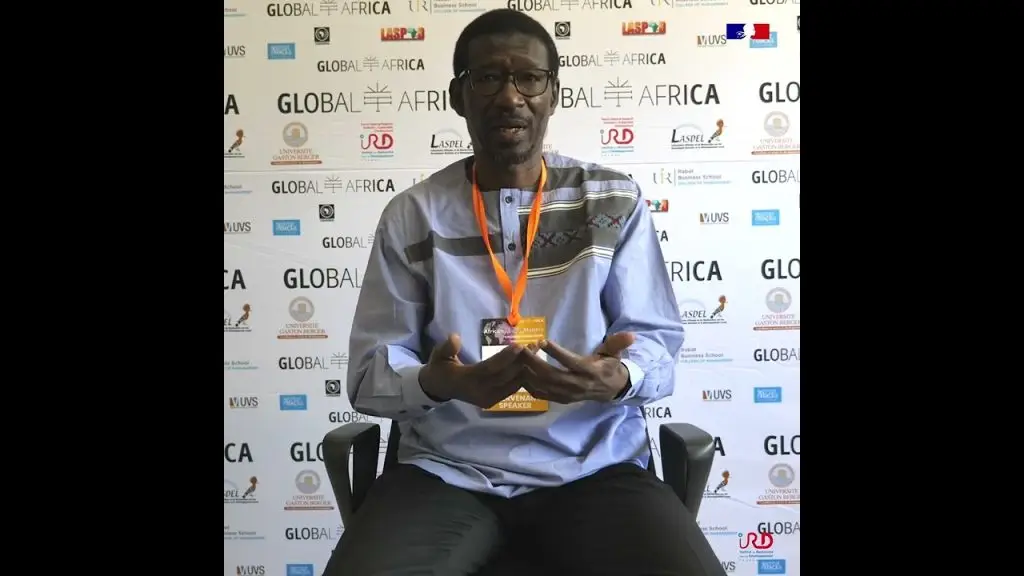
The African Research Matters symposium, organized by the Global Africa program, is scheduled to take place from March 15th to 18th, 2022. This event coincides with the release of the inaugural issue of the journal with the same name. The symposium will host various meetings where numerous participants will gather to contribute to the discourse on the impact of Pan-African research in addressing global challenges. Production and editing: Carole Filiu-Mouhali – IRD 2022.
International Conference: Global Africa Aims to Promote African Research.
On the sidelines of the publication of its eponymous journal’s first issue, Global Africa held the opening ceremony of its International Conference on Tuesday, March 15, 2022, at the CRAC amphitheater of UGB. The conference revolved around the theme “Thinking African Futures in Response to Global Challenges.” The inaugural session was led by Mr. Godwin MURUNGA, Executive Secretary of CODESRIA, Mr. Régis DANTAUX, representative of the French Embassy in Senegal, Ms. Valérie VERDIER, CEO of the Institute of Research for Development (IRD), and Professor Ousmane THIARE, Vice-chancellor of Gaston Berger University. Spanning four days, the conference brought together esteemed figures from the scientific community and academics from Africa. In his opening remarks, Mr. MURUNGA expressed his delight at the involvement of Gaston Berger University in this transformative process of African scientific research and its dissemination on the international stage. In this regard, he emphasized that Global Africa promotes a new conceptualization of Africa to boost African research by reconnecting the continent with the new challenges of the postmodern world. Under this perspective, this new paradigm marks the beginning of a transformation of Africa that is open to the world and its disruptions. “The decolonization of knowledge is a necessity that will enable the popularization of our researchers and the training of intellectuals capable of changing the perception of Africa,” asserts Mr. Godwin MURUNGA. Addressing the issue of Africa’s position in global scientific research, the Executive Secretary of CODESRIA noted that African researchers undoubtedly have ideas that will influence the destiny of Africa and the world. It is obvious from his analysis that Global Africa aims to refocus the African continent on current debates, specifically the sustainable development of Africa through the dissemination of research. En savoir plus
International Conference COMSEN2023: “Information and Communication Sciences…”

International Conference COMSEN2023 “Information and Communication Sciences: Perspectives from Elsewhere, Perspectives from Africa” November 22, 23, and 24, 2023 Dakar & Saint-Louis (Senegal) 1. Argumentation The lack of visibility of African scientific work in the field of Information and Communication Sciences (ICS) poses a serious obstacle to the institutionalization of the discipline on the continent. It is therefore necessary to create spaces for exchange that facilitate knowledge and experiences sharing in order to address this situation. It is in this context that the Communication Senegal Conference (COMSEN) was conceived. This first multisite edition of the COMSEN Conference will be jointly hosted by the Center for Information Sciences and Technology (CESTI) at Cheikh Anta Diop University (Dakar, Senegal) and the Unit of Training and Research on Civilizations, Religions, Arts and Communication (UFR CRAC) at Gaston Berger University (Saint-Louis, Senegal), two important centers for Francophone training, research, and scientific production in communication on the African continent. Titled “Information and Communication Sciences: Perspectives from Elsewhere, Perspectives from Africa,” the conference will be held simultaneously in Dakar and Saint-Louis on November 22, 23, and 24, 2023. The COMSEN Conference aims to become a key event in the research agenda of the social sciences, particularly in the field of ICS on an international scale. It seeks to bring together researchers in Information and Communication Sciences, as well as those working in related disciplines of the humanities and social sciences, who are interested in the study of communication phenomena. The conference will also be open to artists, communication and information practitioners, and the general audience. The goal is to engage in broad discussions on the informational and communicational challenges that are central to contemporary societies, while giving ample space to African perspectives and realities. This unprecedented event provides an opportunity for interactions that showcase the richness and uniqueness of ICS and allows for the convergence of knowledge, visions, and perspectives in order to adequately understand the multiple dynamics (technological, legal, cultural, economic, etc.) of communication in today’s societies. 2. General objective The main objective of the conference is to showcase the diversity of Information and Communication Sciences (ICS) in the Senegalese context, particularly by promoting research rooted in African contexts and fostering dialogue with works from other contexts and different fields of study. The aim is to facilitate sustained exchanges around important disciplinary themes, allowing for cross-pollination of perspectives, subjects, fields, and epistemologies. 3. The conference’s focus Given the interdisciplinary nature of Information and Communication Sciences (ICS), proposals in the field of communication or more broadly rooted in the social sciences and humanities are welcome, as long as they address information and communication phenomena and processes in their various dimensions. Therefore, the conference is structured around seven thematic reflection axes. 3.1 The contribution of social sciences and humanities to communication studies The process of rethinking the communicative object extends beyond the realm of information and communication sciences and is particularly relevant within the context of social sciences. Within this axis, the goal is to further explore the extensive discussions (Laflamme, 2002) surrounding the interconnectedness of disciplinary cross-fertilization between the study of communicative phenomena and the research traditions of the social sciences. 3.2 Fields, theories, methods, objects This axis aims to shed light on how different forms of knowledge (including science and traditional knowledge) manage to structure themselves and interact with each other. In other words, it seeks to complicate the relationships to the world by avoiding the conception of traditional knowledge as deficient, but rather as forms of knowledge capable of providing equally valid, albeit different, insights into the world, its functioning, and the meaning attributed to it by social actors (Mudimbe, 1982; Hountondji, 1990; Diagne, 2013). 3.3 Reflecting on the information-communication object through professional practices. This axis challenges researchers and practitioners who are confronted with the reality of connections between theoretical reflection, conceptual work, and professional action in their organizational environments. It notably involves considering the continuities and changes that affect practice environments from the perspectives of both actors and institutions. Technological, legal, ethical, economic, and other issues can be addressed in terms of their implications for professional practices, particularly in journalism and the media sector. 3.4 Communication and ecological challenges The United Nations has recognized the right to a healthy and sustainable environment as a fundamental human right. However, obstacles to ecological awareness and behavior change face numerous challenges (such as psychological, cultural, economic, etc.). This axis focuses on the communication challenges related to environmental issues (governance, risks, stakeholders, strategies, challenges, best practices, etc.) at all levels of intervention. 3.5 What the digital era does to communication (and vice versa) In a media and social environment that is undergoing significant transformations, to the extent that we now speak of a “general digitization of society” (Selim, 2012; George, 2019), communication needs to be examined to gain a better understanding of the new dynamics that affect contemporary societies for better or for worse. This axis therefore invites contributions that explore these dimensions or certain related aspects. 3.6 Communication and international development This axis focuses on the conceptual junction between communication and development, which dates back to the famous Truman’s State of the Union speech on January 20, 1949, marking the beginning of communication for development. The aim is to problematize the new questions and challenges that arise from technological and societal changes specific to the information society and economic globalization. 3.7 Media, Human Rights, and Democracy Media and democracy maintain a close relationship, as it is difficult to envision pluralism of opinions without a free and independent press (Gingras, 1999). If the press serves as the barometer of democracy in a country, it must be acknowledged that the emergence of social media has contributed to the proliferation of platforms for expression, further challenging the role of journalists, key actors in the realization and consolidation of the democratic ideal (Wolton, 2000). The rise of digital communication thus brings significant issues related to the virality of content, the reliability of information, and more broadly, the issues of
3rd African Philanthropy Conference
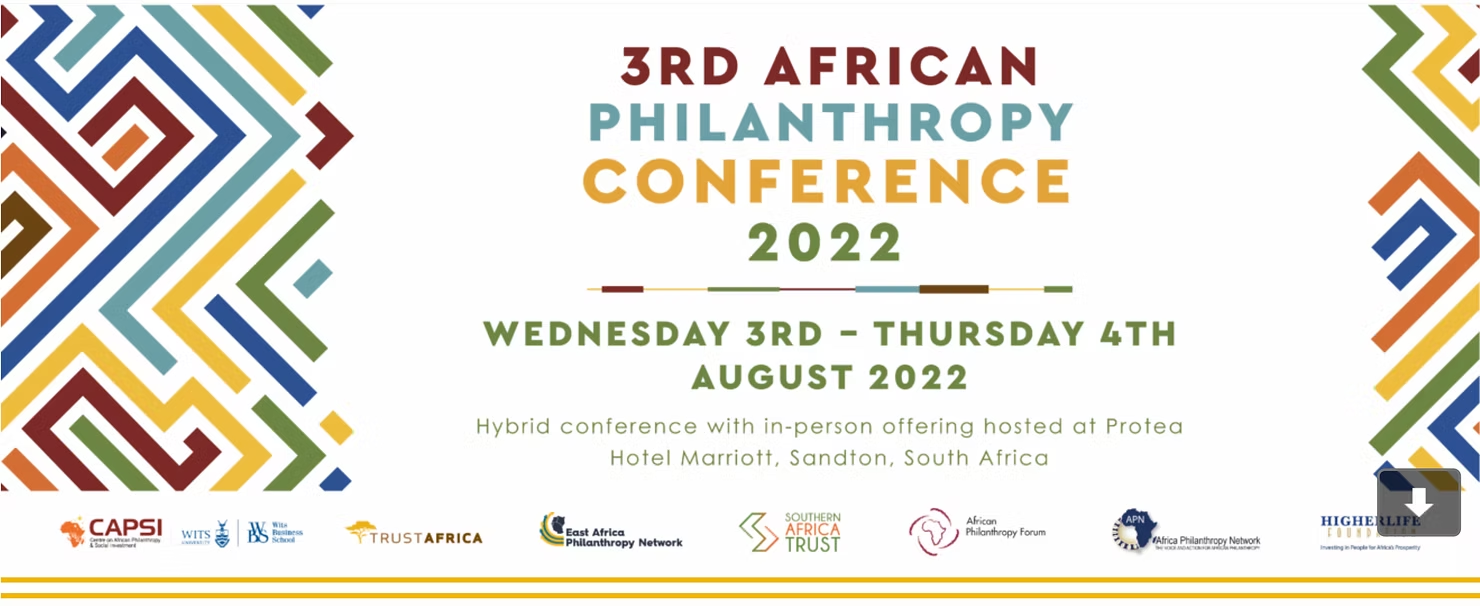
Sandton, South Africa The African Philanthropy Conference is an annual gathering of the continent’s leading philanthropic institutions. It is a platform for sharing of experiences, collective reflection, as well as the curation and development of philanthropic and social investment practices of the continent’s people and partners. The 3rd African Philanthropy Conference will be hosted with the objective of addressing system changes that are required in philanthropy in the new normal especially, as these changes relate to the continent’s institutions, policies and practices. Simultaneous interpretation will be available in English, Portuguese and French. On behalf of fellow partners, we invite you to join us as we nurture networks and support research to accelerate the understanding of the complexities of practices that aid the maturity of the field of African philanthropy and social investment.
Research Capacity Strengthening in Africa – Perspectives From the Social Sciences
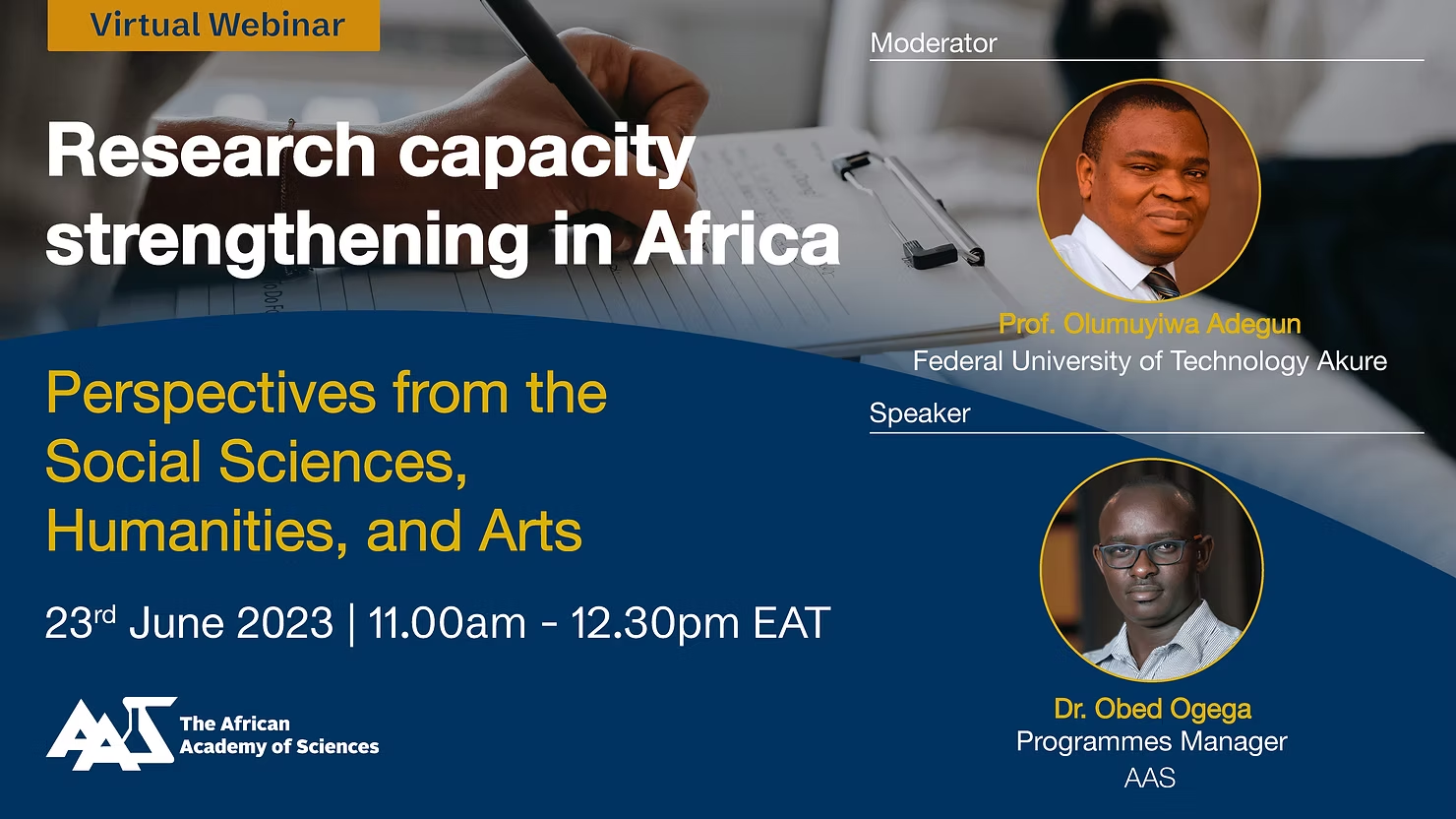
African Academy of Sciences Webinar Invitation: Research Capacity Strengthening in Africa – Perspectives from the Social Sciences, Humanities, and Arts We are excited to invite you to a thought-provoking webinar on “Research Capacity Strengthening in Africa: Perspectives from the Social Sciences, Humanities, and Arts.” In 2020, the African Academy of Sciences (AAS) initiated a study to assess the research support available to researchers in the social sciences, humanities, arts, and related fields (SSHA) in Africa. The study aimed to provide insights for future research support programmes by the AAS, taking into account the significant impact of SSHA scholarship on sustainable development in Africa. The study’s outcomes were published in a journal article highlighting key findings and recommendations that will be presented during our upcoming webinar. The webinar will focus on lessons learned, opportunities, needs, and priorities for supporting SSHA research in Africa. Date: 23 June 2023 Time: 11.00am – 12.30pm Nairobi time (GMT +3) Duration: 90 minutes Location: Online (Microsoft Teams) During the webinar, esteemed panelists from diverse backgrounds will share their insights, experiences, and expertise in strengthening research capacity in Africa with a focus on SSHA fields. Key expectations from the discussion are: 1. Increased awareness of the current state of play in terms of the research support provided to researchers in the SSHA and related fields in Africa 2. Ideas for a comprehensive SSHA research support programme at the AAS informed by feedback obtained from the webinar. ………………………………………………………………………………………………… In attendance will be: Speaker Dr. Obed Ogega, Lead Author, The African Academy of Sciences, Kenya Moderator Prof. Olumuyiwa Adegun, Federal University of Technology Akure, Nigeria Panelists ………………………………………………………………………………………………… We encourage researchers, policymakers, practitioners, and anyone interested in the advancement of SSHA research in Africa to join this enlightening conversation and/or kindly cascade this invitation to colleagues or individuals who might be interested in attending. To secure your spot for the webinar, please register using the following link: Webinar Registration. We look forward to your presence and active participation in this engaging webinar.
The CRAC Department of UGB Celebrated the Centenary of Sembène Ousmane.
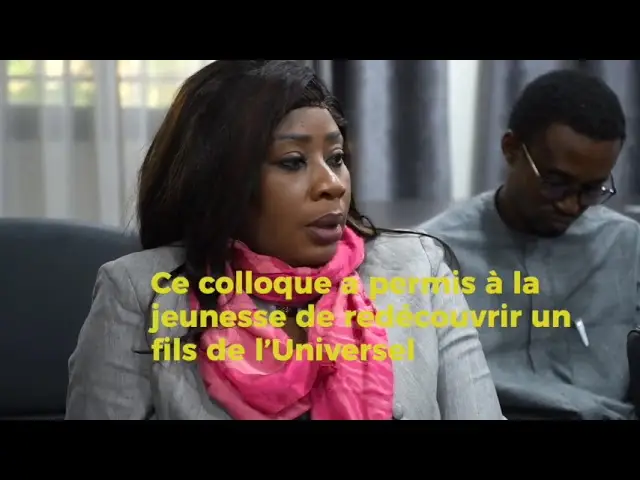
Under the distinguished presence of Professor Aliou Sow, the Minister of Culture and Historical Heritage, the CRAC department, in collaboration with the Cinematography Directorate, FOPICA, and the Photography Museum of Saint-Louis, organized the international centenary symposium of Sembène Ousmane from May 18th to 20th, 2023, held at CEA-MITIC and in Saint-Louis. The symposium centered on the theme “Heterotopia of Possibilities.” Eminent figures such as Professor Magatte Ndiaye, the Rector and President of the Academic Council, Dr. Patrice CORREA, the Director of the CRAC department, Dr. Delphe KIFOUANI, the Head of the Arts and Culture Professions department, were in attendance, along with a delegation from the Ministry of Culture and Historical Heritage, a representative from the Sembène family, faculty members (PER), non-academic staff (PATS), and students who actively participated in the colloquium. The remarkable presence of researchers and cinema specialists from 22 countries worldwide distinguished this high-caliber international symposium.
Africa Confronting the Anticipated Aging of Its Population
The AFD (French Development Agency) is organizing the following event: Africa Confronting the Anticipated Aging of its Population Challenges for public policies In Africa, the elderly represent a still small portion of the population, but ongoing demographic transitions are accompanied by an anticipated aging. We will explore how this aging process and its dynamics differ from country to country, as well as the varying levels of preparedness in each context. Additionally, we will discuss emerging social protection policies that supplement the traditional reliance on family support for the majority of elderly individuals. Nous verrons aussi à quel point les statistiques sanitaires sont défaillantes pour les plus de 60 ans, ne permettant pas de mettre en place des politiques sanitaires ciblées. Furthermore, we will examine the inadequacy of healthcare statistics for individuals aged 60 and above, which hampers the implementation of targeted healthcare policies. Wednesday, July 5, 2023, from 2:00 PM to 3:30 PM. SPEAKERS Moderated by Serge RABIER Senior Researcher in Demography and Gender, AFD Géraldine DUTHÉ Research Director, National Institute for Demographic Studies (INED) Jasmine LAURELLE KAHOU NZOUYEM Lecturer-Researcher, University of Ngaoundéré See here : https://www.afd.fr/fr/news/agenda/Africa-confronting-the-anticipated-aging-of-its-population
The Constitution Abu Mayanja Wanted for the Uganda Postcolonial State
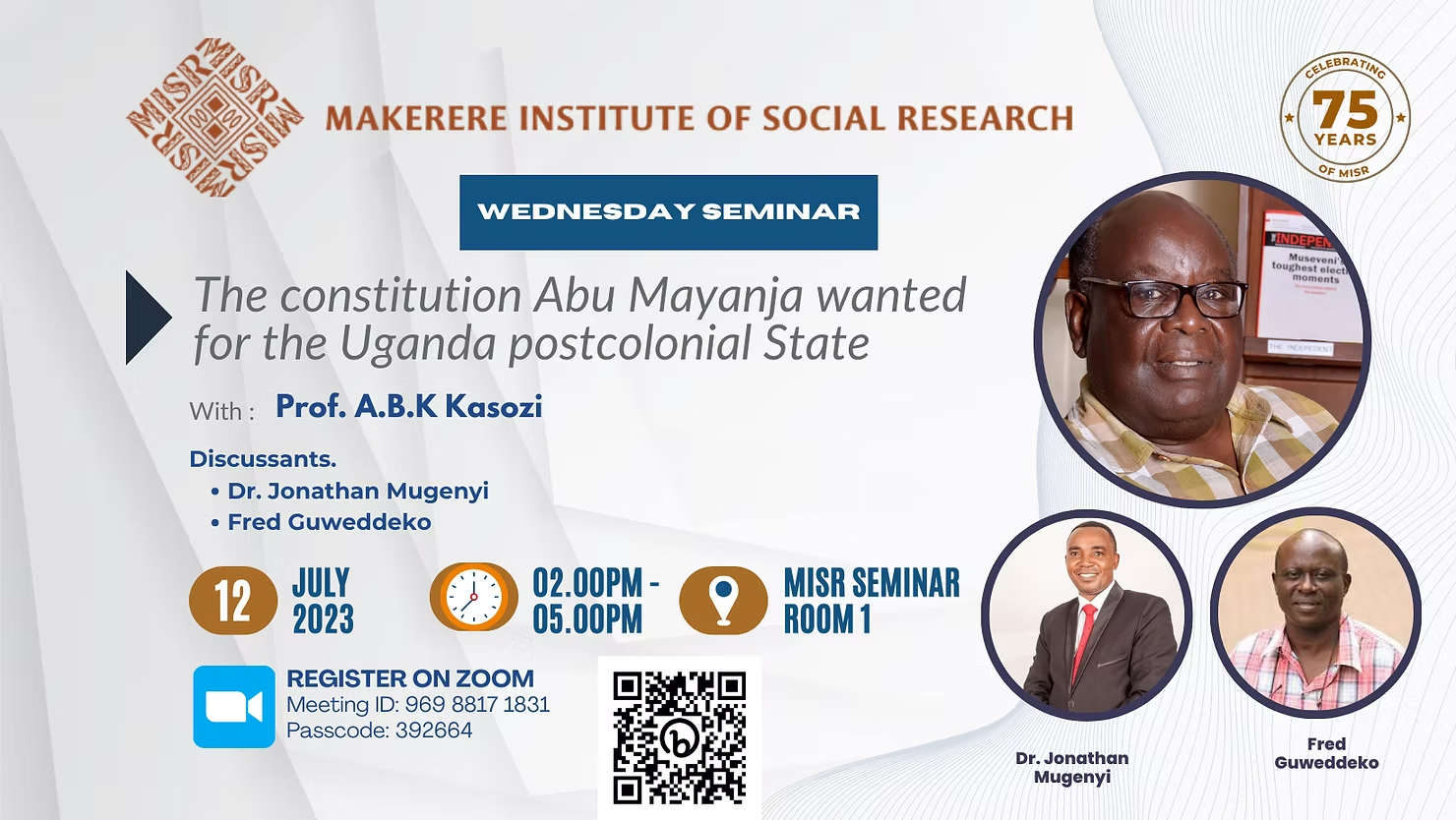
MISR organize an insightful Wednesday seminar on the topic “The Constitution Abu Mayanja Wanted for the Uganda Postcolonial State.” The seminar promises to be an engaging session with Prof. A.B.K. Kasozi, and prominent discussants Dr. Jonathan Mugenyi and Fred Guweddeko. The seminar will be held at the MISR Seminar Room 1 and virtually on Zoom. Here are the details of the seminar: Date: Wednesday, 12th July 2023 Time: 2:00 PM – 5:00 PM Venue: MISR Seminar Room 1 Required Reading for Seminar: https://drive.google.com/file/d/1z7pYdSqMu2KombgwgLI46FwXTg7TcyaJ/view?usp=sharing Register in advance for this meeting: https://zoom.us/meeting/register/tJIkf-GpqToiGdUT4ZGuH7w6hllOHnoompVm During the seminar, A. B. K. Kasozi will present his research on the constitution that Abu Mayanja envisioned for the Uganda postcolonial state. The presentation will shed light on Mayanja’s ideas, principles, and vision for the nation’s governance structure, providing valuable insights into the historical context and aspirations of our country. Following the presentation, we will have an interactive discussion with Dr. Jonathan Mugenyi and Fred Guweddeko, who will offer their perspectives on Mayanja’s constitutional ideals and their relevance to contemporary Uganda. You are all invited to attend this seminar and actively participate in the discussion. Your presence and valuable input will greatly enrich the discourse and create a stimulating intellectual environment. Refreshments will be served after the seminar, providing an opportunity for further networking and informal discussions. Kindly mark your calendars for this event, and we look forward to welcoming you on Wednesday, 12th July at 2:00 PM in MISR Seminar Room 1.
The Challenges of Democratization and Human Rights Protection in Africa
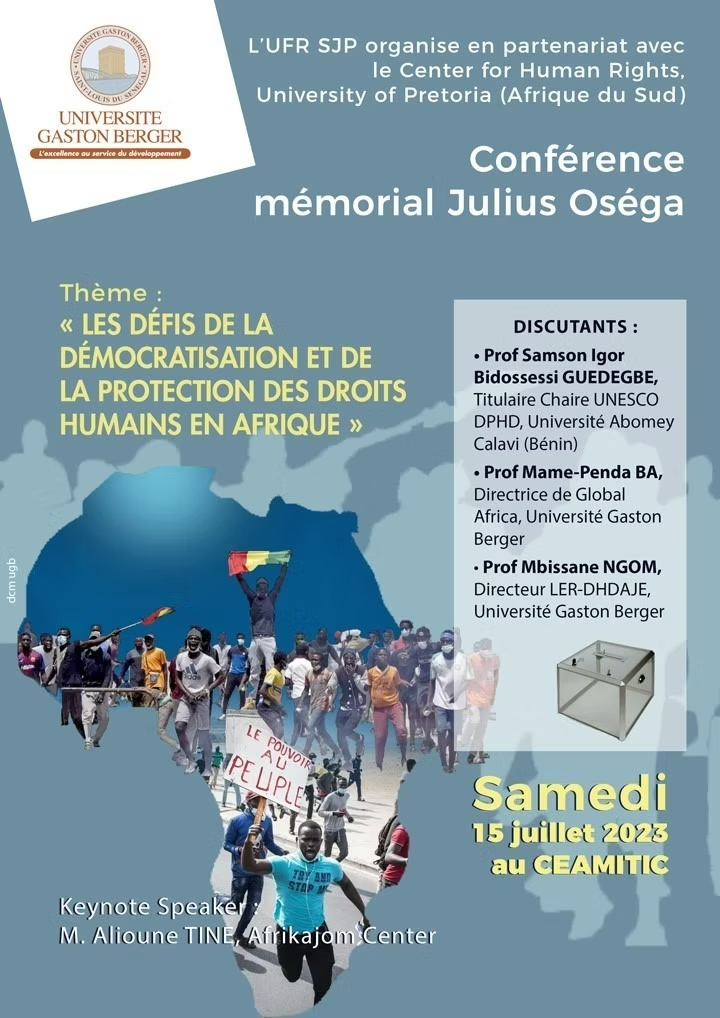
The UFR SJP of Gaston Berger University, in partnership with the Center for Human Rights at the University of Pretoria (South Africa), is organizing a Julius Oséga Memorial Conference on the theme “The Challenges of Democratization and Human Rights Protection in Africa” with the following participants: Keynote Speaker : Panelists :
66th ASA Annual Meeting, African Presences: Envisioning Africa in Text and Deed

In 2023, the African Studies Association (US) will host one of three congresses in the Sixth International Congress of African and African Diasporic Studies (ICAADS). It’s an excellent opportunity for reflection on the possibilities for African Studies to be a more inclusive and democratic project. The idea of African presences celebrates the multiple ways in which Africans have transformed the world. The Sixth ICAADS in 2023 also marks the 60th anniversary of the Organization of African Unity, an organization which at its founding sought to create solidarity amongst people across the continent and beyond in the search for substantive freedom and independence. In recognition of these aspirations, we invite participants to approach the question of African presences across time and space, with Africa being constituted in different kinds of bodies, locations, and moments, through many media: text, deed, visual culture, orality, and other modes. For more information : https://africanstudies.org/annual-meetings/asa-cfp/
Universities and Students in Africa: Dynamics, Discourses and Representations

International symposium Universities and students in Africa: dynamics, discourses and representations, January 11 – 13, 2024, Université d’Abomey-Calavi, Benin In choosing to reflect on “Universities and students in Africa: dynamics, discourses and representations”, the symposium raises a number of questions: what are the significant contributions of students’ “creative lives” to the original and successive configurations of African universities? How do they influence the design and content of knowledge-building and dissemination policies and strategies in African universities? In what artistic or discursive forms are the various aspects of life on African campuses expressed, and the interrelational dynamics of which they are the starting or deployment points? For more information: https://afriuniproject.blogs.bristol.ac.uk/events/colloque-abomey-calavi-benin-2024/
African Literatures and Ecology Congress, Cheikh Anta Diop University (Dakar), November 2nd, 3rd,…
Environmental issues have been a discreet but persistent factor in the development of African literature since the beginning of the colonial era. The ecological threats facing the continent as a result of global warming, extractivist predation and the consequences of armed conflict have strong literary repercussions. The aim of this congress, which will be held on the African continent for the first time since the founding of APELA (Association pour l’étude des littératures africaines), is to demonstrate the relevance of environmental concerns in African literature to major contemporary global challenges. For more information: http://www.apela.fr/2021/11/15/litteratures-africaines-et-ecologie/