

WANIDA Symposium
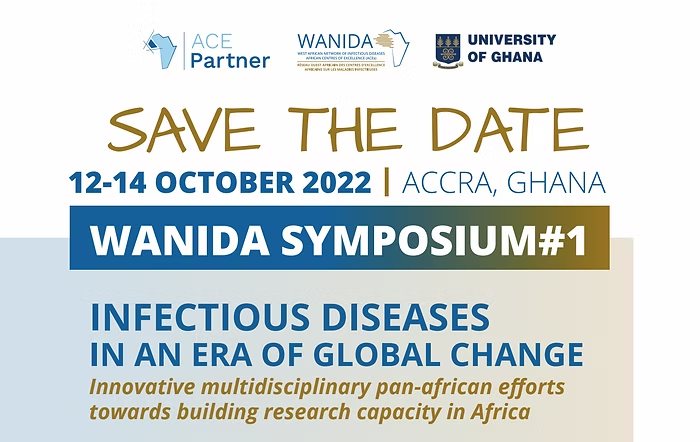
Accra, Ghana We are pleased to share with you the “Save the date” for the first edition of the symposiums of WANIDA (West African Network of Infectious Diseases ACEs”), which will be hosted by WACCBIP, the University of Ghana in Accra, from October 12th to 14th, 2022. Please find the attached visuals for more information.
Technology and Material Culture in African History
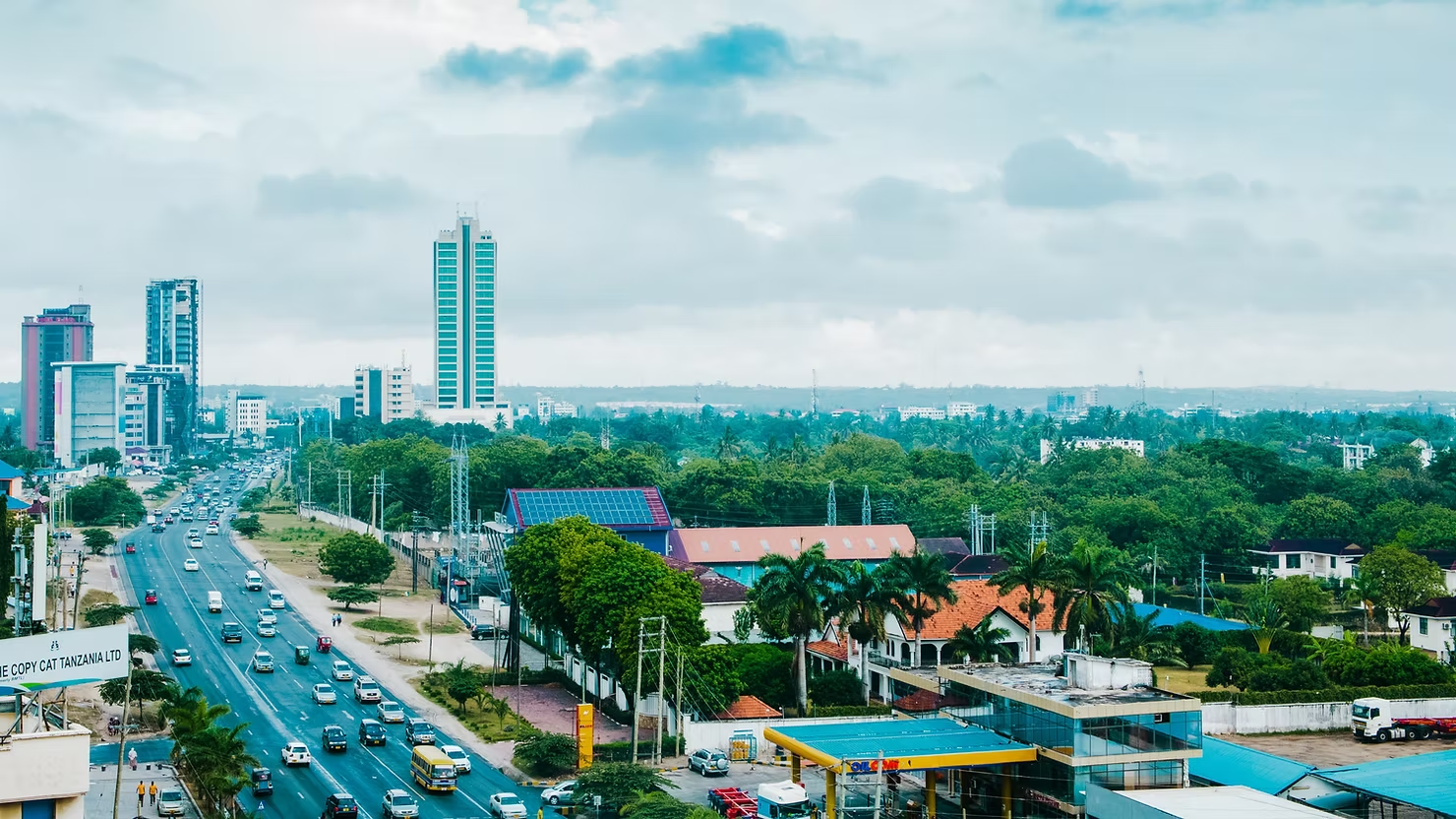
Challenges and Potentials for Research . . . Dar es Salaam, Tanzania The conference seeks to consolidate and foster the further development of history of technology and material culture in Africa. By gathering scholars from Tanzania and across Africa, as well as colleagues from other continents, the conference will demonstrate the discipline’s high degree of relevance—to the research and teaching of history and adjacent fields, as well as to contemporary political agendas. The organizers wish to use this event to discuss how historians of technology and material culture may contribute to the writing of a “usable past” for further generations. The organizers invite historians, archaeologists, anthropologists, geographers, sociologists, and urban scholars to discuss the potentials of interdisciplinary and international collaboration around present intellectual, social, technological, and environmental challenges in Africa and globally. In the recent past, African countries have increased citizens’ access to up-to-date mobility and communication technologies—electric household items, mobile phones, and engine-driven vehicles. As the variety of terms indicates—daladala, matatu, tro tros, bodaboda, bajaji, and so on—artifacts are not just simply imported, but constantly modified to fit local circumstances and needs. By and large, however, a historical understanding of these processes of domestication and reinvention is still lacking. That present-day historians of technology do not limit themselves to the study of modern, Western machines and systems, but include broader aspects of (pre-colonial, colonial, and post-colonial) “material culture,” also means the discipline plays a central role both in research projects and teaching programs. There have been growing initiatives to integrate Africa into the global history of technology and material culture, but such efforts rarely focus on issues of teaching. Considering the ongoing curricular review at African universities, it is a pressing concern to discuss the potentials of including the history of technology and material culture in Bachelor and Masters programs. The organizers are convinced that the discipline of history needs to include an African perspective and showcase Africa’s contribution to global history of technology and material culture. Therefore, the conference focuses on policies, practices, and use to rethink the historiographic role played by material artifacts and systems. We believe there is a certain urgency in researching, writing, and teaching the history of technology and material culture from a truly African perspective. The organizers hope that the workshop will provide important additions to the nationalist and materialist views which have dominated African history research, writing, and teaching since independence. By giving participants an opportunity to discuss existing research projects and teaching programs, the organizers aim at laying the foundation for an international network of historians of technology and material culture in Africa. We thus ask interested teachers and researchers from Africa and beyond to contribute with standard workshop sessions and papers, roundtable discussions, and further innovative formats. Proposals may be on any thematic area in history of technology and material culture, for example: Please submit 300-word proposals and one-page CVs to: no later than August 31, 2022. This unique event will be organized by the History Department at University of Dar es Salaam in collaboration with the ERC-funded research project “A Global History of Technology, 1850-2000” at the Technical University of Darmstadt in Germany, the Society for the History of Technology (SHOT), and the Foundation for the History of Technology in the Netherlands. The event will take place on site in Dar es Salaam, Tanzania. Lodging and main meals are provided by the organizers; a one-day excursion is also included. Participants from Africa are invited to apply for travel grants. Selected applicants will be notified Sept. 15, 2022, and they will be requested to submit preliminary conference papers (min. 2,500 words) by Nov. 15, 2022. Representatives of leading scientific journals will be present at the event. Contact Info: Professor Mikael Hård ERC Project “A Global History of Technology, 1850-2000” Institute of History Technical University of Darmstadt Schloss, Marktplatz 15 64283 Darmstadt Germany Read more
Innovations Within Public Services in Francophone Africa
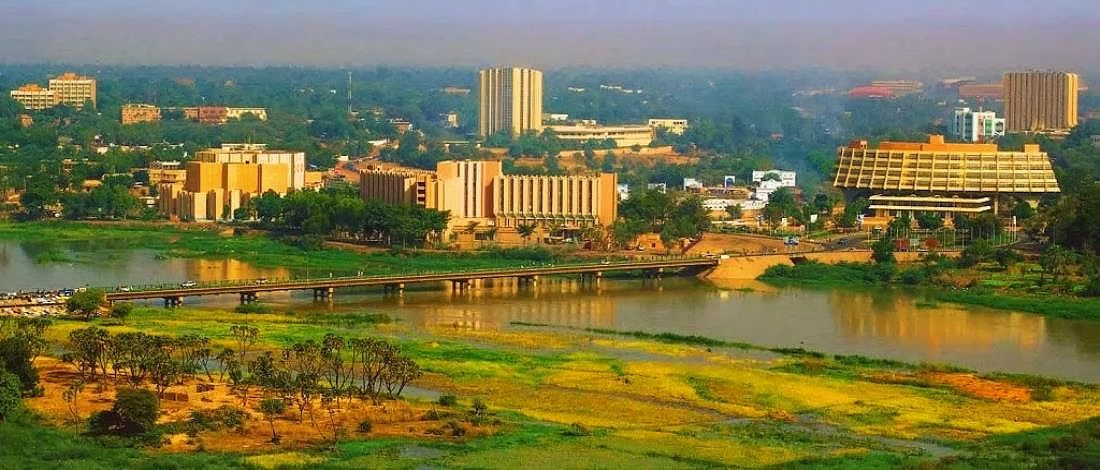
This symposium organized by LASDEL, Niamey, Niger aims to exchange ideas on innovations in administrations and public services in Africa, in order to build a common network dedicated to this theme. This symposium organized by LASDEL, Niamey, Niger aims to exchange ideas on innovations in administrations and public services in Africa, in order to build a common network dedicated to this theme. While there have been many studies focusing on local innovations in peasant farming, the informal sector, and popular knowledge, this symposium seeks to shift the attention towards the professions within the state and the formal public sector. Researchers who are interested (including university professors, researchers from academic institutions, postdoctoral fellows, and doctoral students) are required to submit an application package that includes the following documents: 1/The submission of a research paper or research project focusing on innovations within an administration or public service (maximum 3 pages); 2/An updated CV. Proposals must be sent no later than November 30, 2022, at midnight to the following address: lasdel@lasdel.net. For any information: lasdel@lasdel.net
Open Access Publishing: a Development Challenge?
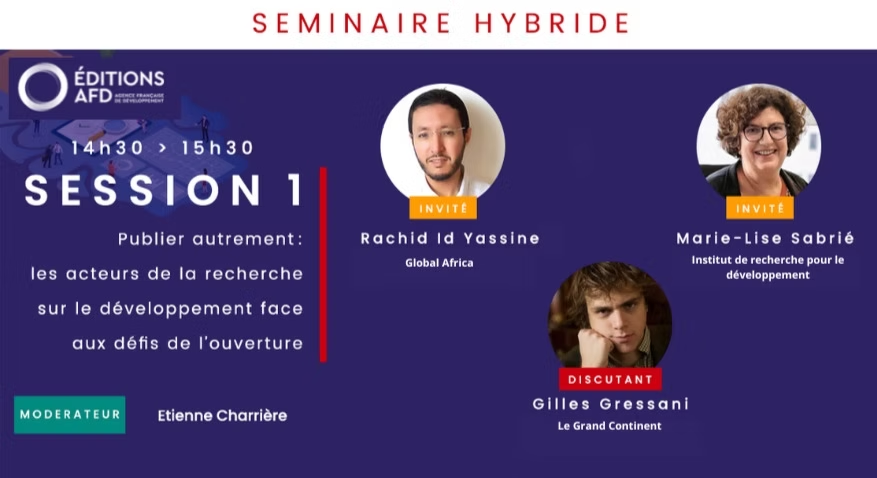
This seminar dedicated to open access publishing will be organized in two sessions. The first session (in French) will focus on the challenges of open science for the scientific publication of research on development, featuring a presentation on the Global Africa project by Rachid Id Yassine. The second session (in English) will center around the new models and audiences offered by open science for publishing in developing countries. Online registration : L’édition Open access publishing, a development challenge?an FDA Editions seminar | FDA-French Development Agency.
Global Scientific Francophonie Week

Cairo, Egypt The 2nd edition of the Global Scientific Francophonie Week will be marked by significant events: 1) the 1st Congress of Francophone Student Youth, 2) the 2nd Conference on Scientific Francophonie, with a focus on artificial intelligence, 3) the 6th Francophone Ministerial Conference. For information: https://www.auf.org/news/the-2nd-edition-of-the-global-scientific-francophonie-week-will-take-place-from-october-25-to-28-2022-in-cairo/
Second Edition of the International CMCL Conference

“Understanding public spaces through the lens of media discourse and practices: the case of Africa” From November 28th to December 1st, 2022, Lyon, France The international CMCL conference “Utopia of a Globalized Culture and the Reality of Local Communication Practices” aims to explore the encounter between a globalized technological offering, often Western-centric, and the local specificities of diverse territories. In doing so, it seeks to grasp the heterogeneity of uses, productions, and questions raised. The 2022 edition of the CMCL conference proposes to contribute to these debates by confronting phenomena arising from technological and cultural globalization with the reality of local media discourses and practices. This approach is based on the idea that surpassing the normative and political dimensions of the concept of public space is particularly fruitful in understanding contemporary societies, in Africa and elsewhere. While research focusing on the use of digital tools is highly anticipated, studies centered on other media platforms are also welcome in this conference. For information: https://cmcl2022.sciencesconf.org/
Open Science in the Global South: Research Data Management and Openness

Research Data Management and Openness: Overview and Perspectives Cotonou, Benin Meeting the challenges of sustainable development requires fundamental commitments from all stakeholders for the planet and societies. Least developed countries, such as those in sub-Saharan Africa, are particularly affected by the impact of these commitments due to their vulnerability. By aiming for the unrestricted dissemination of scientific outputs, the open science movement seeks to make the scientific process more transparent, inclusive, and democratic. In 2019, the first International Conference on Open Science in the Global South (Dakar) resulted in the production of the Declaration for Sharing and Opening Research Data for Sustainable Development. This declaration sets objectives for the proper management, valorization, and sharing of data, as well as principles of data governance. En savoir plus
Shaping Africa’s Future: International and Interdisciplinary Conference
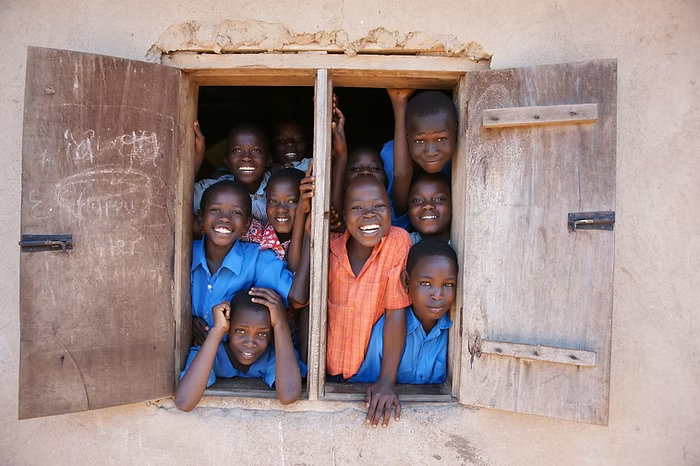
Cheikh Anta Diop University, Dakar This International and Interdisciplinary Conference aims to explore the question of Shaping Africa’s future. Behind this question lies an orientation that intellectuals from all perspectives continually reaffirm: the continent of Cheikh Anta Diop carries a sense of renewal and possesses an inexhaustible potential for rejuvenation. Africa, laden with negative (Afro-pessimism) and positive (Afro-optimism) connotations, or examined through the lens of strict scientific prudence, is an undeniable force. In this regard, UCAD (Cheikh Anta Diop University) appears to be mobilizing for the effective promotion of values symbolized by the black continent. The question also serves to precisely define the nature of the challenges between Africa and modernity, understood as a process of problematizing the relationship with tradition. Within the context of globalization, the interactions between civilizations take on various forms: contacts, exchanges, frictions, conflicts, and more. However, in the face of attempts at homogenization, the conference resolutely addresses the issue of diversity. It serves as a vast laboratory in which researchers will explore the question of the relationship with the other and the dialogue of cultures, focusing on enrichment rather than synthesis that erases all differences. These future-oriented questions will be at the center of the conference held at the Faculty of Arts and Social Sciences of Cheikh Anta Diop University in Dakar. Call for Papers: Communication proposals must be submitted no later than September 30, 2022, at 6:00 PM GMT on the conference website: https://shapingafrica’sfuture.sciencesconf.org/. Proposals can also be sent to the following email addresses: lamine.ndiaye@ucad.edu.sn, mariemehady.ly@ucad.edu.sn, in the form of a Word file titled: Communication Proposal “Shaping Africa’s Future”. For more information : https://shapingafrica’sfuture.sciencesconf.org/
Seminar: Sustainability, Water, Energy, and Well-being in Africa – at LASPAD
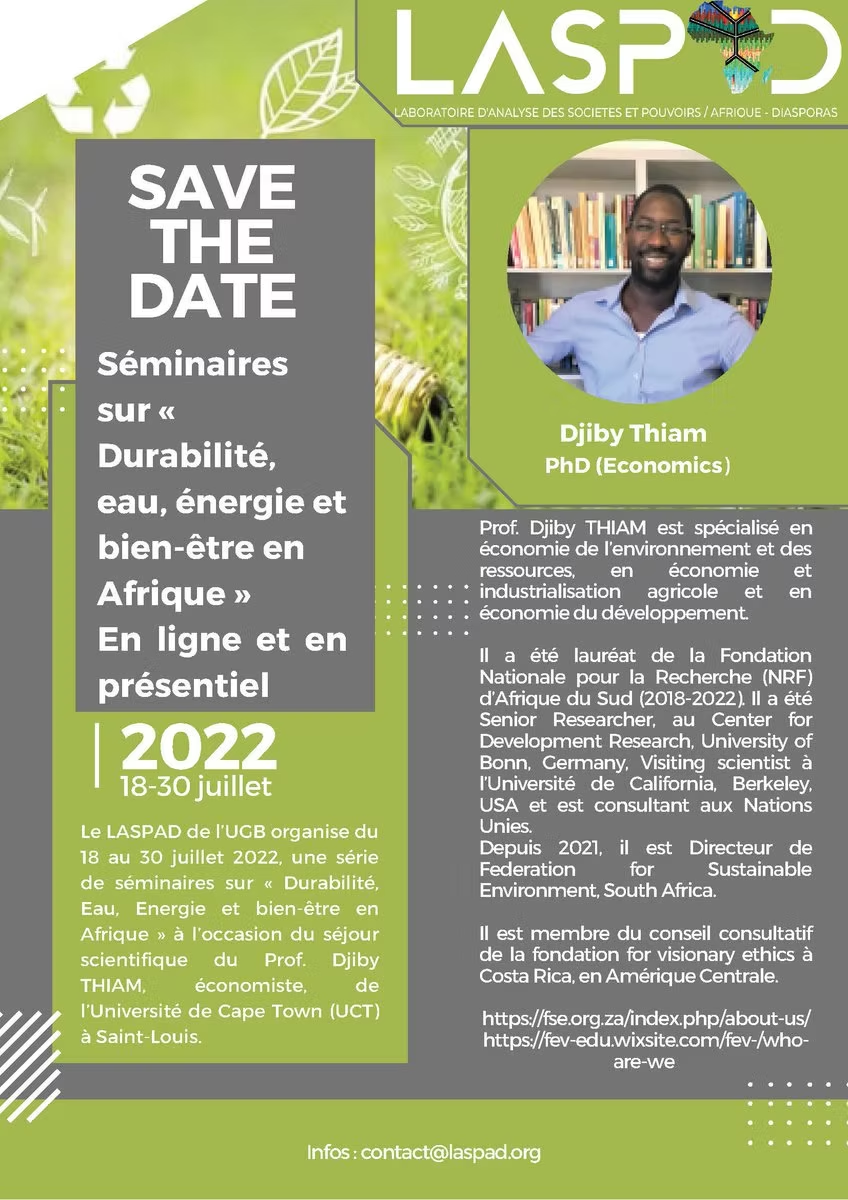
Venue: LASPAD, CRDS, former IFAN, Sud District, Rue Henni Jay, Saint-Louis, Senegal LASPAD at UGB is organizing a series of seminars on “Sustainability, Water, Energy, and Well-being in Africa” from July 18th to July 30th, 2022, as part of the scientific stay of Prof. Djiby THIAM, an economist from the University of Cape Town (UCT) in Saint-Louis. #africanresearch
Dakar Biennale 2022
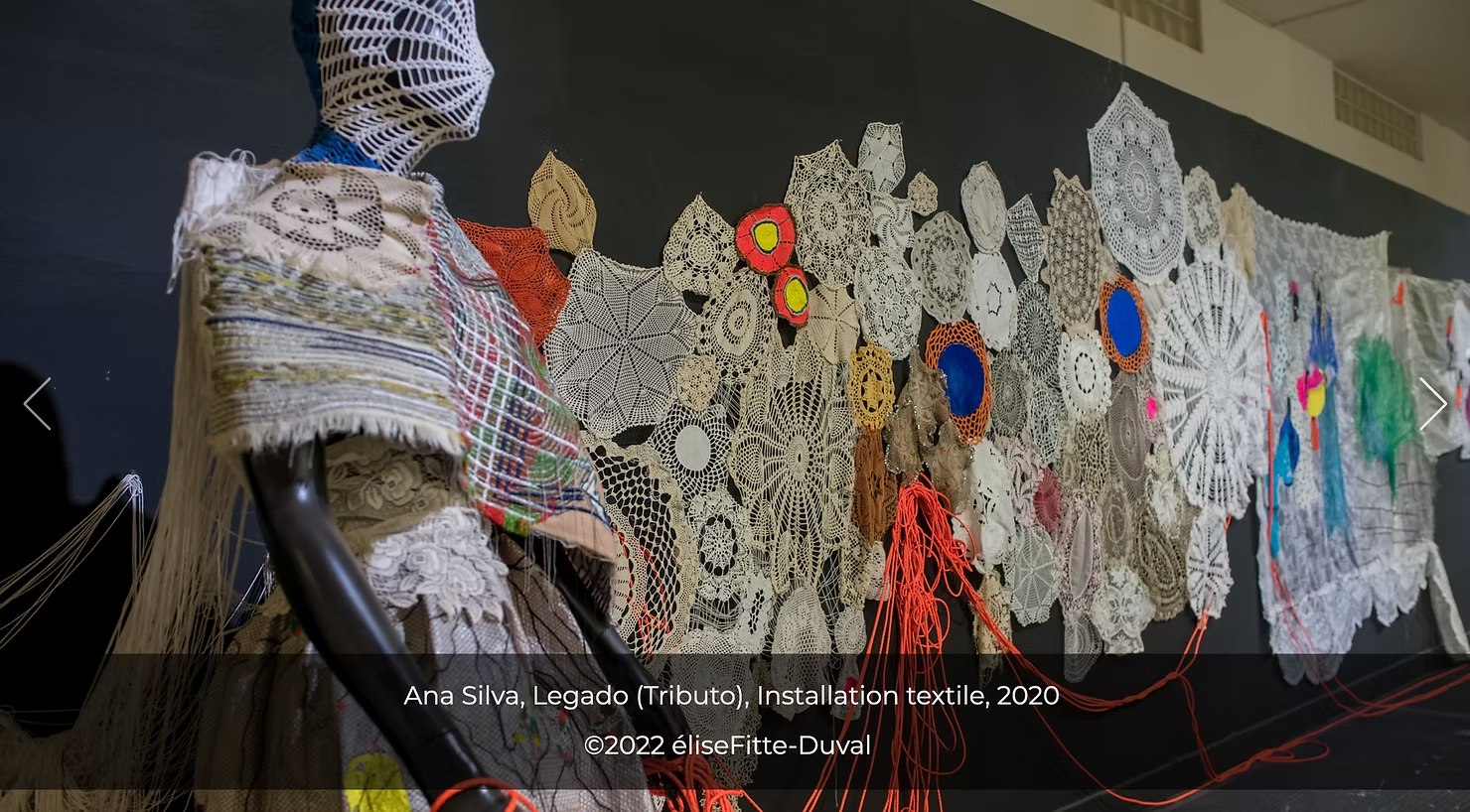
Dakar Biennale 2022: a call for expanding horizons for contemporary African art. The fourteenth edition of the Dakar Biennale of Contemporary African Art (Dak’art) took place from May 19th to June 21st, 2022, in Cap Manuel, the former court. This major cultural event featured the participation of 59 visual artists and artist collectives from Africa and the diaspora. The exhibition, centered around the concepts of creation, imagination, and invention, embraced the theme of Ī Ndaffa (in Serer), which translates to “to forge” or “Out of the fire,” inviting the forging of a shared destiny. To forge a new world Organized for the first time in 1990, the Bienniale of Contemporary African Art (Dak’art) is one of the largest African cultural events dedicated to visual arts, design, and digital arts. This Bienniale represents the ultimate framework for exchange, exhibition, promotion, and expression for actors in African culture. It is also a space for meeting and collaboration between cultural actors from the African continent and those from other continents. Hence the theme “Ĩ Ndafa,” which means “to forge” in Serer. Through this verb, the emphasis is placed on creation, kneading, and fusion. It is about invoking the spirit of innovation and creativity in artists to create a new world. An official selection highlighting various artists from diverse backgrounds For this fourteenth edition, the 59 visual artists and collectives chosen for the official selection mainly come from West Africa (14 visual artists), Southern Africa (12 creators), North Africa (6 artists), and Central and East Africa (6 artists). The Indian Ocean is represented by a Seychellois creator. The remaining 19 artists are from the diaspora. Furthermore, the most represented countries include South Africa with eight artists, Senegal with seven visual artists, Cuba with five creators, France and the United States (four artists each). Benin and Cameroon, on the other hand, are represented by three artists each. Finally, Tunisia and Morocco each have two artists. Highlighting the art economy The art economy is also emphasized during this fourteenth edition. In this regard, the first official edition of the Dakar International African Art Market (MIAD) was held at the site of the African Renaissance Monument, following the one organized in 2016 by the visual artist Kalidou KASSE, the project’s first initiator. Indeed, MIAD aims to be a platform for exchanging artworks both physically and virtually. To this end, the site of the African Renaissance Monument will serve as a sales showcase for works of artists from several countries (Senegal, France, Morocco, USA, Jamaica, Nigeria), as well as for partnerships.
7th Meeting of African Studies in France

Date: June 28th – July 1st, 2022. Venue: Toulouse, France The 7th edition in 2022, which will take place in Toulouse for the first time, will be an opportunity to bring together these specialists around a transversal theme (“Circulations in the Africas, Africas in circulation”) and non-theme workshops. NATIONAL YOUNG RESEARCHERS CONFERENCE IN AFRCAN STUDIES The REAF (Meeting of African Studies in France) and the National Young Researchers Conference in African Studies (JCEA) will take place on the same dates and at the same location, with a partially shared program. The JCEA have the particularity of being entirely conceived and organized by doctoral students and young researchers. A separate call for papers is launched by the JCEA network.
The 6th National Young Researchers Conference in African Studies

Venue: Toulouse, France On June 27th and June 30th, 2022, the 6th National Young Researchers Conference in African Studies (JCEA) will be held under the theme “Les Afriques face aux crises ? Ruptures et continuités” (“Africa Facing Crises? Disruptions and Continuities”). The event will take place on the campuses of Political Sciences Toulouse and the University of Toulouse Jean Jaurès, parallel and in connection with the 7th African Studies Meetings in France (REAF). All the details of the event can be found at this address: https://jcea2022.sciencesconf.org/