



Introduction
The study covers the history of women’s struggles between 1941 and 1974. The year 1941 is adopted as a watershed in the study of Wolaita women’s struggle (1941-1974) owing to its coincidence with the new policies of Emperor Haile Selassie, which dramatically affected the socio-economic and political lives of women (Proclamation, 1942; Proclamation, 1944). Secondly, it is also associated with the consolidation of the imperial power in Wolaita, an area which was not effectively controlled by the Ethiopian government before the Italian occupation (1936-1941) (Hodson, 1927, pp. 26-30; Stingand, 1910, pp. 297-298 ). The major historical event that led to the selection of 1974 as a reference point for this study was its coincidence with the downfall of the imperial system.
Following the liberation of Ethiopia from Italian colonial rule in 1941, Emperor Haile Selassie initiated various socio-economic and political reforms aimed at modernizing the country in line with the prevailing domestic and international realities (Zewde, 2002, pp. 189-209). However, the post-liberation condition in Wolaita, one of the peripheral areas of southern Ethiopia, was markedly distinct from the pre-1936 period, particularly in terms of political stability, cultural interactions, and economic transitions. The anarchy that emerged after the defeat of the fascist Italian forces created a vacuum that necessitated rapid administrative reorganization to safeguard both expatriates and locals from rising criminal threats (ASZWAO, 1951 E.C.; Pankhurst, 1968, p. 102).
During the Italian occupation (1936-1941), Wolaita had been identified as one of eight key commercial agriculture areas that attracted Italian agri-entrepreneurs, leading to the initial introduction of mechanized farming. Although subsistence agriculture remained dominant, the seeds of commercial agriculture and land commodification had already been planted (ASZWAO, 1963 E.C.; Larebo, 1990, p. 318; Marcus, 1994, pp. 150-151; WMMAC, 1950 E.C.). Despite these economic changes, Wolaita society remained largely underprivileged in all aspects of economic, political, and social life. Nonetheless, exposure to foreign actors, missionaries, anti-fascist combatants, settler-colonial administrators, and traders brought new social ideas and global outlooks to the region. International allies of Ethiopia, particularly Britain, exerted pressure on the emperor to protect Protestant religious rights, but women’s rights were conspicuously absent from the diplomatic agenda (Donham, 1986, p. 45; Pankhurst, 1968, p. 96; Proclamation, 1942; World Bank, 1948, pp. 57-58).
Haile Selassie’s post-war reforms largely neglected the particular socio-economic needs of ordinary Wolaita women, despite their active participation in resisting the Italian occupation. The imperial land reforms of the 1940s and 1950s did little to challenge or rectify deep-rooted gender inequalities (Babanto, 1979, pp. 44-46; Crummey, 1999, pp. 240-242; Guidi, 2013, p. 3). In reaction to these shortcomings, Wolaita women engaged in various forms of resistance, such as running away to the lowlands to escape serfdom, organizing protest demonstrations, and occasionally participating in acts of open defiance. The reasons behind these struggles were multifaceted, influenced by customary laws, evolving state policies, and changing societal expectations. Land-related grievances, particularly those excluding women from ownership and inheritance, were central to women’s movement in the imperial era (Berhane-Selassie, 1999, p. 222).
Yet, scholarly interpretations of Wolaita women’s resistance strategies remain divided. Some scholars such as Chema argue that Wolaita women uniformly opposed imperial reforms (Chema, 2012, p. 435), while others like Bisrat Lema suggest that some forms of collaboration with state actors and missionaries were equally present (Lema, 2011, p. 32). Such historiographical divergence underscores the necessity of reconstructing women’s historical agency in a way that includes both resistance and strategic alliances (Philps, 2005, p. 25).
Accordingly, this study questions prevailing narratives that depict Wolaita women only as victims or adversaries. Rather, it aims to explore the nuanced dynamics of their resistance and cooperation with the government, religious bodies, and political groups between 1941 and 1974. It explores critical questions regarding the political participation of Wolaita women, their reactions to gender-biased land tenure systems, the socio-cultural impact of modern education, and the motivations behind linking local resistance to broader national liberation movements beginning in the 1960s.
Research Method
This study was conducted in the Wolaita Zone of southern Ethiopia. Wolaita Zone is inhabited by more than 2,030,366 people, including females and males (Abbink, 2010, p. 1092; Central Statistics Authority, 2016; Dana et al., 2020, p. 7). Geographically, Wolaita Zone, the homeland of Wolaita people, is situated between latitudes 06°51′ and 07°35′ North, and longitudes 37°51′ and 38°51′ East (Haile, 2018, p. 4).
The term Wolaita denotes the people who speak the Wolaita language; part of an Omotic language group that belongs to an Afro-Asiatic language family (Abesha & Mohapatra, 2019, p.554). In the second version, the term represents a place where the people of Wolaita live. The position of Wolaita on the map of the Horn of Africa had been precisely located by Alessandro Zorzi and others since 1525 (Borelli, 1890, p. 361; Chrowford, 1955, p. 95; Krapf, 1860, p. 47 ). The people of Wolaita were governed by the Aruja, Wolaiyta Malla, Tigre Malla dynasties since ancient times (Amado, 2010, pp. 104-109). Lastly, the kingdom of Wolaita was converted to a vassal kingdom in 1894 during the period of King Tona (Bureau, 1990, pp. 51-53).
Like most societies in Africa, traditional Wolaita society was characterized by patriarchy, in which men’s social, economic, and political interests were prioritized (Chiatti, 1984, p. 108). The society celebrated the birth of males due to their importance in defending the community from traditional enemies. It was believed that the growing dominance of warriors (heroes) led men to regard women as inferior beings (Babanto, 1979, pp. 44–46; Chiatti, 1984, p. 108; Crummey, 1999, pp. 240–242; Guidi, 2013, p. 3).
However, pre-colonial Wolaita society managed to minimize discrimination against women through parallel gender institutions. These included Ayyatetta (honoring motherhood), Gimuwwa (women’s property ownership rights), and Çimatta (a women’s socialization union), which corresponded to men’s institutions such as Awatetta (honoring fatherhood), Dala (property rights), and Çaçça (friendship unions), respectively (Abbink, 2010, p. 1091; Hidoto, 2009, p. 168).
After the incorporation of Wolaita into Ethiopia in 1894, the value of these parallel gender institutions declined due to the lack of structural support from the state. Nevertheless, Wolaita women continued to practice these institutions informally, owing to the limited administrative control over the region and the resulting colonial disorder, which lasted until 1941.
Following this period, Haile Selassie initiated reforms that banned indigenous institutions, an action that symbolized a shift toward a more restrictive patriarchal system (ASZWAO, 1935a E.C.; ASZWAO, 1935b E.C.). Under the new policy framework, Wolaita women became subject not only to traditional patriarchy but also to the oppressive structures of the imperial state. De-colonial feminist theory argues that colonial patterns of gender-based marginalization were not dismantled after independence; rather, they were reproduced and reinforced by post-independence patriarchal state structures (Musingafi & Musingafi, 2024, p. 2).
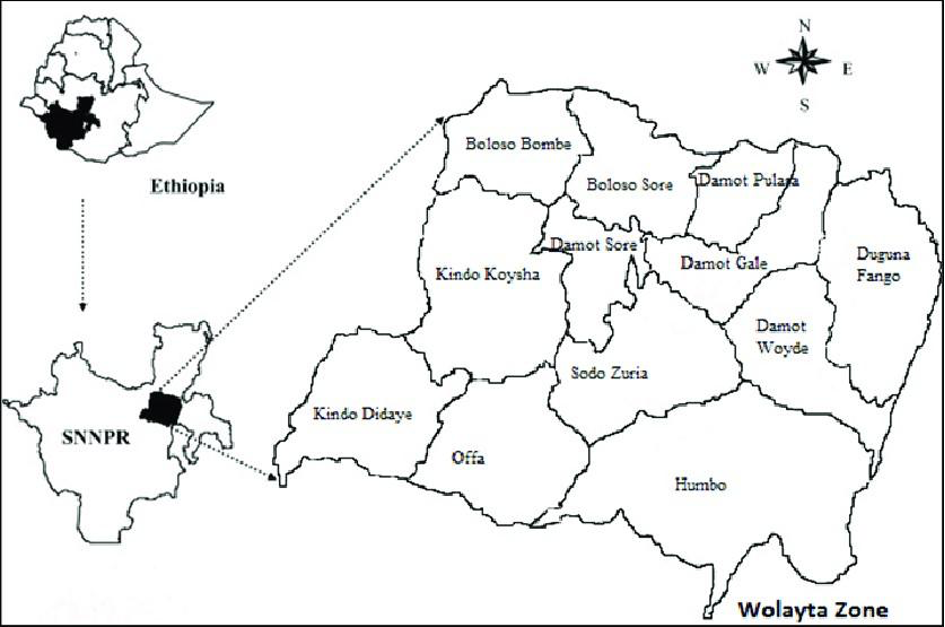
Source: https://www.researchgate.net/figure/Map-of-Wolayta-zone_fig1_331631333
A historical research methodology was employed, using both analytical and narrative approaches to understand and interpret the lived experiences of Wolaita women (Ali, 1991, p. 93; Borg & Gall, 1967, p. 188; Sandhiya, 2016, p. 36). Given the broad distribution of the population across twelve districts, purposive sampling was employed to select four female and four male informants from different social groups, including rural peasants, urban teachers, development agents, merchants, and veterans (Kothari, 2004, p. 59; McDowell, 2002, p. 91). Qualitative data were collected through in-depth interviews, oral testimonies, and archival analysis (McDowell, 2002, pp.114-115; Tosh, 2010, pp.120-121).
The analytical method was applied to interpret causal relationships, such as land alienation, forced labor, and cultural domination, which contributed to the rise of women-led resistance. At the same time, the narrative method was used to reconstruct life histories, significant events, and the overall evolution of women’s roles during the imperial era. This combined approach enabled a more nuanced understanding of both structural influences and individual agency in the historical struggle of Wolaita women (Tosh, 2010, pp. 157-158).
Main Findings and Discussion
Post-Liberation Reforms and the Marginalization of Women
The defeat of Italian fascism in Ethiopia resulted from a wide-ranging anti-fascist coalition comprising Ethiopian patriots, the British military, and African volunteers. This triumph greatly enhanced Emperor Haile Selassie’s political authority, presenting his rule as sovereign and unassailable in the newly liberated Ethiopia, including the Wolaita area. After dismantling the Italian administrative system, widely seen as a symbol of colonial domination, Haile Selassie aimed to rebuild a centralized and modern bureaucratic state, a vision he had long aspired to realize since the 1930s. His vision for governance extended beyond restoring peace and stability; it aimed to dismantle the entrenched power of regional lords and to replace it with direct imperial authority (Zewde, 2002, p. 203).
In the immediate aftermath of liberation, Haile Selassie reorganized local governance by establishing Wolaita Wäräda (district) under the larger Sidamo Awuraja (sub-province) (ASZWAO, 1935b E.C.). However, recognizing the impracticality of managing a growing and diverse population from a single administrative center, the Emperor upgraded Wolaita into a full-fledged Awuraja in 1946 (Haile, 2018, p. 67; WMMAC, 1950 E.C. ).This shift signaled the central government’s desire for deeper administrative penetration into peripheral regions. Several ministerial departments, including those of Police, Finance, and Justice, were set up in Soddo, which had been designated as the administrative center of the Awuraja (Abbink, 2010, p. 1092; Guidi, 2024, p. 289; WMMAC, 1938 E.C.). Furthermore, numerous police outposts were constructed along volatile border zones between Wolaita, Sidama, and Gamo to contain ethnic tensions and banditry (ASZWAO, 1963 E.C.).
Despite these structural changes, the imperial administration prioritized political consolidation over inclusive nation-building. While many Ethiopians had contributed to the anti-fascist resistance, including countless women, the post-war appointments were exclusively male. Haile Selassie appointed only male patriots, primarily from northern Ethiopia, to the key administrative roles at both the Awuraja and Wäräda levels.This patriarchal monopoly on power institutionalized gender inequality, denying women participation in formal governance. The contribution of Wolaita women during the liberation struggle was deliberately ignored, while the same contribution was rewarded in other places. As a matter of fact, women remained absent from key political institutions such as the Parliament and ministerial offices (Chema, 2012, p. 144; Guidi, 2013, p. 3; WMMAC, 1945 E.C.; Zewde, 2002, p. 195). This exclusion stemmed not only from systemic patriarchy but also from prevailing cultural assumptions that deemed women inherently inferior to men (Fargher, 1996, p. 162, Levine, 1974, p. 52). Yonas (2012) describes gender-based marginalization of the time, observing that “They (daughters and wife) were undermined and rendered as endowment to hero’s …” (p. 396).
Although Haile Selassie considered patriotism rather than gender when appointing administrative officials across Ethiopia, the practice became ethnically biased in Wolaita due to imperial ideology, which categorized peripheral regions as “primitive, without culture and effective government” (Donham, 1986, p. 40). For example, while female Arebäñočč (patriots) from central Ethiopia,such as Likelesh Beyan, Shewanesh Abera, Qalamawork Tiruneh, and Shewareged Gedle, were rewarded for their contributions during the five years of armed resistance, Wolaita’s female patriots, such as W/ro Desta and others, were marginalized after the war (Gabre Egziabher, 1968, p. 91).
Haile Selassie’s land tenure reforms were deeply detrimental to rural communities, particularly women. Designed to replace the pre-1936 Näftägna-Gabare landholding system, the reforms aimed to privatize land through a series of proclamations and tax impositions, including land, education, and health taxes introduced during the 1940s and 1950s (Zewde, 2002, p. 192). Instead of ensuring fair land distribution, these reforms strengthened the control of the imperial authorities.Land was frequently redistributed to northern settlers, the Orthodox Church, and local elites loyal to the emperor, effectively displacing indigenous peasantry (WMMAC, 1950 E.C.).
Women bore the harshest consequences, as legal and cultural rules excluded them from owning land. While some women had previously accessed land indirectly through kinship within communal systems, these connections were broken by the state’s move to privatize land (ASZWAO, 1935a E.C.; Bekele, 2021, p. 93).As a result, many women faced forced labor, heavy taxation, and loss of property. Letters submitted to the court highlighted how imperial tax reforms led to mass evictions and worsened rural poverty (ASZWAO,1951 E.C.; Hizkel, 2023, p. 60; Rahmato, 2007, p. 8; World Bank, 1977, p. 3). In Wolaita, repeated peasant protests erupted against land measurement campaigns during the 1940s and 1950s, reflecting mounting frustration over insecurity and economic disenfranchisement (WMMAC, 1938a E.C.; WMMAC, 1938b E.C.; WMMAC, 1939 E.C.). Instead of empowering rural women, Haile Selassie’s land policies mainly aimed to reward his political supporters and strengthen the emperor’s symbolic influence (WMMAC,1944 E.C.; WMMAC, 1950 E.C.).
Culturally, imperial efforts to homogenize Ethiopian identity through Amharization or assimilation policies further marginalized the Wolaita people. The imposition of Amharic as the sole language of governance, education, and even religious instruction effectively erased the cultural identity of non-Amhara groups (Donham,1986, p. 11; Guidi, 2013, p. 16). In Wolaita, this linguistic domination undermined local traditions and delegitimized indigenous knowledge systems, particularly those passed down through women. As Zebdiwos Chama contends, Amharization went beyond being just a language policy; it acted as a form of cultural erasure that dismissed and undermined the real-life experiences of Wolaita women (Chema, 2012, p .435; Yonas, 2022, p. 402). This cultural marginalization extended to religious institutions, where imperial directives enforced Amharic use even in missionary settings (Fargher, 1990, pp. 36, 243). The educational and legal systems also marginalized those who did not speak Amharic, leaving Wolaita women, who were already facing social and economic challenges, at a significant disadvantage (Guidi, 2024, p. 291). From 1941 onward, the consistent use of state law, education, and media to suppress local identities alienated peripheral communities and deepened gender inequalities (Zewde, 2005, p. 140).
In summary, the reforms following liberation under Emperor Haile Selassie, though presented as modernizing, failed to be inclusive or liberating for marginalized communities, especially Wolaita women. Instead, they focused on strengthening state control, upheld patriarchal authority, and deepened existing class and gender inequalities. Despite their sacrifices in the resistance struggle, Wolaita women were systematically excluded from governance, denied land rights, and subjected to cultural erasure. The legacy of these policies reveals the profound contradiction at the heart of the emperor’s modernization rhetoric: a vision of national unity that silenced the voices and erased the identities of those on the margins (Guidi, 2024, p. 73).
Forms of Resistance and Collaboration
Elite Women’s Cooperation with the Imperial Government
Wolaita women reacted to Emperor Haile Selassie’s policies in various ways, spanning from cooperation to outright resistance (Lema, 2011, p. 32). These responses were shaped by factors such as class and geography. Elite women who supported the imperial regime managed to obtain administrative roles and acquire rights to inherit land. These collaborators were usually daughters of local elites, northern landowners, and Orthodox clergy families who had adopted Amhara culture and lived in cities[1] (Guidi, 2013, p. 3). To incorporate local elites into the imperial system, the government established a new administrative role called Abägaze (district governor), which was held by chosen lords including the daughters of indigenous dignitaries (ASZWAO, 1935a E.C.; ASZWAO, 1935b E.C.). Although the Bisrat Lema notes that descendants of Wolaita’s hereditary nobility, known as Balabat, were appointed to lower-level positions within the imperial administration under this title. Among these were notable women such as Meaza Woldesenbet and Minalush Tantu, who were assigned as local administrators (Lema, 2011, p. 32).
One informant recounted that these elite women were not only appointed to administrative posts but also secured rights to inherit ancestral land, privileges typically denied to most women.[2] A letter dated Miyazia 1, 1944 E.C., from Bezunesh Wolde Amanuel to Fitawurari Desta Fiseha confirmed that she had inherited land from her father, Fitawurari (commander of the vanguard force) Wolde Amanuel. Similarly, in a document from the Ethiopian Orthodox Church, dated Tahisas 5, 1964 E.C., a letter addressed to Girazmach (army commander of the left) Tadese Woldeyes, governor of Boloso district, it is noted that women like W/ro Asegedech Frewu held considerable political and economic advantages despite prevailing gender expectations (ASZWAO, 1944 E.C.; ASZWAO, 1964 E.C.).
Some scholars argue that there was a sharp division between collaborators and rural resisters, and that the socio-economic and political advantages enjoyed by collaborators were often secured at the expense of communal interests (Balcha, 2016, p. 78). However, this interpretation is not entirely accurate in the case of Wolaita. Traditional elite women played an intermediary role between the imperial state and rural peasant women, rather than acting as agents of repression.
The offices held by female dignitaries, widely perceived as symbols of Wolaita’s semi-autonomous political status within the broader Ethiopian state, were also instrumental for the imperial government in managing and neutralizing local opposition. Since these elite women were compensated primarily for the administrative, legal, and security services they provided, their collaboration was motivated by survival and political mediation rather than by an intention to undermine rural resistance or communal interests[3] (Lema, 2011, p. 99).
Confrontation of Rural Wolaita Women to Imperial Reforms
In contrast, rural Wolaita women, who suffered most under imperial policies, chose resistance over collaboration. They resisted through migration, conversion to Protestantism, education, and support for nationalist movements (Donham, 1986, p. 45; Guidi, 2024, p. 89; WMMAC, 1941 E.C.). These acts of defiance often had the support of sympathetic imperial officials, such as Germame Neway, who served as governor of Wolaita in 1958. Recognizing that land inequality was a key source of exploitation, Neway organized the distribution of free government land for tenant farmers seeking to escape feudal servitude (Babanto, 1979, p. 41; Chema, 2012, pp. 320-321).This resettlement policy sparked a mass migration from the highlands to areas around Lake Abaya and the Omo River Valley. One informant described how her mother, W/ro (Mrs.) Ukune Halala, migrated from Buge village in Damot Gale to Abala Faracho in Humbo district in 1959[4] (Haile, 2018, p. 80). Similarly, W/ro Matafä Abota, a widow from Duguna Fango, moved to Abala Faracho to escape exploitation by landlords. Despite challenges, such as the difficulty of cultivating lowland soil using traditional tools, these women adapted to the new environment by familiarizing themselves with oxen-assisted plowing methods and training their daughters to do the same. W/ro Landame Abuye stands out as another example of a woman who defied both feudal and gender expectations [5].
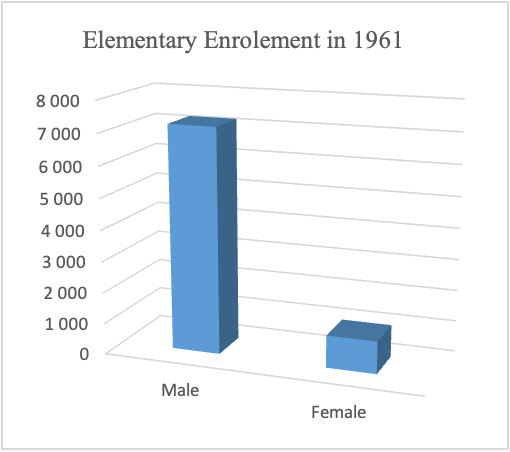
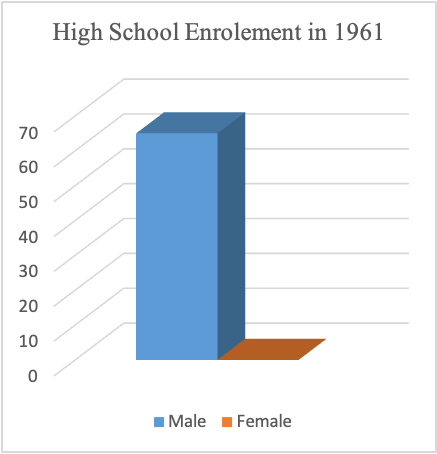
Although the emperor’s education policy, shaped by the Orthodox Church, formally supported girls’ education, rural access was severely limited. Schools were mainly located in urban centers, serving the children of wealthy elites (ASZWAO, 1949 E.C.; Guidi, 2024, p. 81; World Bank, 1948, p. 31). According to a 1961 government report, in Sidamo province (including Wolaita), the ratio of boys to girls enrolled was 7,199 to 1,035 in primary schools and 65 to 0 in secondary schools (Pankhurst, 1961, p. 67). The exclusion of rural women by both the state and the church pushed many to turn to Protestant missionaries, who offered alternative education and opportunities for empowerment (Guidi, 2024, pp. 326-328). When the imperial system was deposed in 1974, a substantial number of rural Protestant women had gained literacy (Masa, 2023, pp. 139-143).The missionaries provided not only basic literacy and vocational training, but also encouraged critical awareness of social inequalities. As noted by Donald Donham this grassroots education enabled women to confront feudal exploitation and reshape their social and political consciousness (Donham, 1986, p. 45).
Chart 1: The Number of Boys and Girls Registered at Wolaita Schools in 1961
Source: Pankhurst, 1961, p. 67.
The complex nature of Wolaita women’s struggle is clearly reflected in its role in facilitating the upward social mobility of peasant women. A considerable number of rural women who had received mission school education, such as W/ro Lili Galore, W/ro Hewan Bunaro, W/ro Birtane Hidoto, and others, gradually advanced to higher levels of education (Masa, 2023, pp. 139-143). Upon graduation, many of these women no longer advocated rural radicalism as they had during their earlier years. Instead, during the final decade of imperial rule, these early mission-educated rural women were transformed into middle-class professionals, serving in public institutions and non-governmental organizations as administrators, teachers, medical professionals, and development agents [6].
Wolaita was one of the southern Ethiopian regions where Protestantism expanded rapidly. The number of Protestant churches in Wolaita increased from 150 in 1945 to 493 in 1970, while the number of believers grew from about 15,000 to 81,000 during the same period (Cotterell, 1973, p. 171). The expansion of Protestantism in Wolaita was not solely the result of the activities of foreign and local missionaries; Wolaita women also made significant contributions. They emerged as key actors in extending the reach of the Protestant gospel, often demonstrating remarkable courage and commitment despite the threat of persecution from Orthodox Church authorities (Davis, 1966, p. 247).
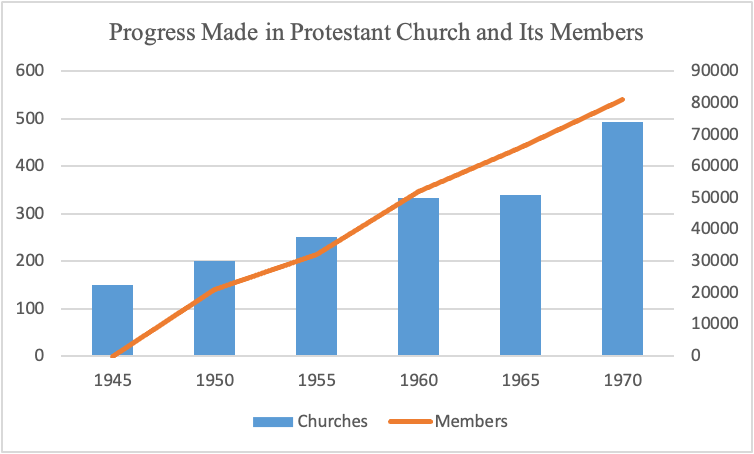
Source: Cotterell, 1973, p. 171.
Wolaita women were drawn to Protestantism not only as a means of resisting imposed imperial and royal policies, but also as a strategy to challenge harmful traditional practices enforced within their own communities in the name of culture. During the reign of Haile Selassie, Wolaita women were subjected to various forms of harmful traditional practices, including Laataa (inherited marriage following the death of an elder brother), Mishechuwaa (marriage to the younger sister of a deceased wife), Qatara (female genital mutilation), Dafaa (abduction), and Dawutta (polygamy), among others. These practices, which had been perpetuated by lower-level imperial officials, were openly condemned by Protestant missionaries (Amare, 2021, pp. 48-80; Masa, 2023, p. 117; Yonas, 2022, pp. 399-401).
As a result, large numbers of Wolaita women sought to escape such practices by joining Protestantism. The Protestant Church in Wolaita actively promoted the prohibition of harmful traditions, particularly polygamous marriage, and emphasized greater autonomy for women within the household. For instance, in 1945, two Wolaita women who converted to Protestantism and opposed polygamy were imprisoned in Soddo at the request of their husbands and local officials who were ethnic Amhara and Orthodox in belief. When missionaries learned of their imprisonment, they appealed to the court of Haile Selassie, which resulted in the women being released on bail (Davis, 1966, p. 145).
This incident not only enhanced women’s confidence but also strengthened their role in expanding evangelical activities among the Wolaita and neighboring communities of southern Ethiopia. During the 1950s and 1960s, Wolaita women evangelists such as Balote Aymalo, Faranje Buriya, Lareba Kanka, and Dorane Gambera preached Protestantism among the Goffa, Silte, Sidama, and Bale Goba communities, respectively. Other women evangelists, including Durete and Bazite, moved to Qucha, Boroda, and Dawuro. Despite their growing religious independence and empowerment, however, Wolaita women continued to face various forms of domestic violence, often resulting from the resentment and disappointment of their husbands (Balisky, 2009, p. 198; Lema, 2011, pp. 95-96).
The Contribution of Female Students to the Anti-Feudal Movements in Wolaita during the 1970s
Women comprised nearly fifteen percent of Ethiopia’s peasant population, including in the southern region of Wolaita. Under the imperial rule of Haile Selassie, the vast majority of peasants suffered systemic oppression and exploitation, and women bore a disproportionate share of this burden. Despite their critical presence in agrarian life, rural women, due to widespread illiteracy and socio-political marginalization, were unable to organize formal resistance (Yonas, 2022, pp. 405-413). In this vacuum, female students emerged as vocal advocates for justice, driven by empathy for oppressed tenants, subjugated ethnic groups, and women subjected to both gendered and class-based discrimination[7] (Zewde, 2024, p. 110).
Although the national student movement generally aimed at ending the feudal land tenure system, student activism in Wolaita shifted its focus to address more urgent local issues. Female students in the region prioritized resistance against criminal gangs, ethnic marginalization, and gender-based violence. This regional specificity in struggle revealed a deeper intersectionality, where class, ethnicity, and gender oppression converged. Far from being passive victims, Wolaita women became key agents in a wider resistance movement that sought to dismantle the local pillars of imperial repression[8] (Guidi, 2024, p. 168).
The 1970s marked a decisive moment in this resistance, with female students stepping into leadership roles. Alongside their male counterparts, they organized coordinated actions to challenge the local criminal networks and the complicity of corrupt officials. In the districts of Humbo, Sodo Zuria, and Damot Woide, gangs engaged in cattle theft, arson, and brutal assaults on innocent peasants. These groups, frequently acting without consequence due to the protection of the Chiqa Shum, the lowest level of imperial authority, regularly committed acts of rape, kidnapped girls, and instilled fear throughout whole communities. Initially, housewives were primary targets, but soon schoolgirls also became victims. In both rural villages and towns, female students were harassed and assaulted while traveling to school or market centers (Berehanu, 2006, p. 28; Guidi, 2023, pp. 10-11).Despite the prevalence of these crimes, the collusion between gang leaders and local officials meant that complaints rarely reached the courts, and when they did, they were dismissed due to bribery and political interference. As the judicial system became paralyzed, communities increasingly resorted to self-defense (Guidi, 2023, p. 18).
In this setting, both female and male student activists launched a courageous initiative called a campaign to eradicate thieves from January to April 1970. Recognizing the threat posed by the alliance between thieves and Chiqa Shum, more than a hundred students and several teachers from seven districts convened in the rural village of Borkoshe. On Megabit 22, 1963 E.C. (1970), they issued the Borkoshe Declaration, a resolution symbolically and practically advocating the physical punishment of thieves as a form of grassroots justice[9] (Chema, 2012, p. 198). This declaration galvanized widespread action. Peasants who had not even heard of the resolution independently took to beating and even spearing suspected thieves during local markets such as Hobicha Beda (Monday) and Dalbo (Thursday). The momentum of the movement transformed a localized student protest into a mass campaign against lawlessness and imperial negligence (Berhanu, 2006, p. 28; Guidi, 2013, pp. 10-11). Women of Wolaita not only suffered from the abuses of criminals and corrupt officials but also faced systematic violence from Haile Selassie’s Fetno Derash, the so-called Special Rapid Force (Chema, 2012, p. 199; Guidi, 2024, p. 160). The revolt, despite being ultimately crushed with many lives lost, created a lasting impact. It marked a pivotal moment in rural resistance and demonstrated the significant strength of coordinated grassroots activism.
The roots of this activism were nourished in part by the efforts of visionary educators like Bogale Walelu, who believed education could liberate people not only from ignorance but from domination. In the 1950s and 1960s, he successfully mobilized large numbers of Wolaita children to attend school, many of whom would later become leaders in student activism, particularly women fighting against ethnic and gender injustices (Chema, 2012, p. 188; Guidi, 2024, pp. 68, 326). The growing number of Wolaita students attending schools in the 1970s caused concern among local landlords, as their economic strength relied heavily on the unpaid work performed by peasant children. Their discontent was mirrored by their own children, many of whom were enrolled in Soddo, the only urban educational center in the region. Under the guise of defending Orthodox Christianity and the Amharic language, these elite students began to openly harass and insult Wolaita students, revealing deep-seated class and ethnic antagonisms (Chema, 2012, pp. 191-192).
Soddo High School became the epicenter of female-led student activism. While the original impetus for the student movement was land reform, the restoration of land to the tiller, it quickly evolved into a broader struggle marked by ethnic nationalism. In the local setting, social class distinctions were closely linked to ethnic identity: newcomers and northern elites typically supported landlord interests, whereas the ethnic Wolaitans were predominantly tenants (Guidi, 2023, p. 7). By the early 1970s, the immediate trigger for student protests was cultural domination and the systematic degradation of Wolaita identity. The children of Näfetäñña (northern settlers) frequently insulted and belittled Wolaita students, portraying them as threats to language, religion, and empire (Chema, 2012, pp. 191-192; Guidi, 2024, p. 330).
In response, Wolaita women began to articulate a political identity that connected gender oppression with ethnic and class subjugation. Following the first surge of resistance, numerous rural women adopted traditionalist political views, promoting regional self-rule with the slogan: “Wolaita for Wolaitans!” (Haile, 2018, p. 76). They supported influential local figures such as Sanga Dana Gebremedhin Bunare and Fitawurari Desta Feseha, who vehemently opposed the continued presence of northern landlords. Nonetheless, these initial rebellions were suppressed because they lacked unified coordination and support from broader national political networks (Haile, 2018, p. 76; WMMAC, 1939 E.C.).
At this pivotal moment, influential women in Wolaita started seeking wider alliances. One of Fitawurari Desta’s wives, herself of Somali origin, secretly forged ties with the Macha-Tulama Oromo Self-help Association (Haile, 2018, p. 76; Wagesho, 2004, p. 100). This was not an isolated gesture. In 1963, General Jagama Kello’s Oromo forces reached Soddo, rallying behind the motto “Manne Manenne Yaserale?” (Who imprisons whom?) to protect Wolaita dignitaries from imperial humiliation [10]. These alliances with Oromo and Somali nationalist movements reflected a broader strategy by Wolaita women: embedding their local resistance within the larger framework of national liberation.
Discussion
The above findings indicate that Wolaita women engaged in multidimensional resistance against the oppressive policies of the emperor. The primary motive behind this resistance was to end gender-based exploitation in all aspects of life, with particular emphasis on the right to land ownership, equal representation, and the elimination of cultural genocide (Chema, 2012, p. 198). However, these objectives were not fully achieved due to strategic shortcomings, despite successes such as the eradication of networks of corrupt officials, improvements in educational status, and the rising consciousness of women.
Before 1894, when Wolaita women encountered gender-based inequalities, they relied on their own cultural systems to address these challenges and make their voices heard (Abbink, 2010, p. 1092). This was due to a strong belief in Wolaita cultural values as effective mechanisms for resolving gender-based inequalities. After liberation, however, women’s willingness to use culture as a tool for defending their rights declined due to the undesirable legacies of imperial and colonial rule, as well as a growing distrust in indigenous institutions (Lema, 2011, p. 96).
Although Wolaita women struggled throughout the imperial period, they were unable to achieve gender equality (Donham, 1986, p. 45; Guidi, 2024, p. 89; WMMAC, 1941 E.C.). This was largely because the adopted strategies, based on Western cultural values emphasizing collaboration over integration and radical revolution over social harmony, were not well suited to addressing issues such as land ownership, wealth possession, and inheritance within a clan-based society. Furthermore, Wolaita women’s alliances with the state and revolutionary movements often relegated gender issues and feminism to secondary importance.
When Wolaita women relied on cultural values to address their economic and social concerns, they were accorded higher status within society. Before 1894, when women’s economic activities were based on indigenous ensete cultivation and animal husbandry, they experienced relative resource abundance. During this period, a woman whose cattle holdings reached 1,000 gained elevated status through the Gimuwwa ritual (Hidoto, 2005, pp. 68–78). She could also be invited to the royal palace and honored by the king with an ornament known as Çiçora Mogga in recognition of her economic success (Chema, 2010, p. 344). In contrast, when women shifted toward commercial crop production under imperial encouragement, the outcome was not prosperity but increased vulnerability to recurrent drought and greater economic dependence on their husbands.
Culturally, alliances with Western missionaries yielded limited benefits compared to the original goals of women’s struggle. Although many Wolaita women gained access to literacy, they did so at the cost of abandoning indigenous knowledge systems, which missionaries often labeled as “satanic practices,” resulting in a significant identity crisis. Similarly, alliances with radical male students led women to prioritize class struggle over gender issues (Guidi, 2024, p. 168).
In general, the weakening of Wolaita women’s reliance on cultural values as a tool to combat gender inequality prolonged their struggle and exposed them to a form of post-colonial double colonialism, characterized more by continued exploitation than by meaningful institutional transformation aimed at broad-based nation-building (Esawa & Mazrui, 1993, p. 454; Reta, 2012, p. 523 ). In Wolaita, the regime of Haile Selassie adopted elements of the Italian colonial administrative model, maintaining local dignitaries primarily as intermediaries responsible for controlling local populations (Donham, 1986, p. 37). This system largely excluded women, reflecting colonial attitudes toward gender and power similar to those of the Italian occupation (Chiatti, 1986, pp. 66–67; Reta, 2012, p. 523).
Conclusion
The experience of Wolaita women under Haile Selassie’s imperial reforms demonstrates that modernization without the inclusion of indigenous values breeds resistance. The emperor’s policies in Wolaita, though framed as state-building efforts, were deeply rooted in the double oppression of colonialism, characterized by patriarchal, ethnic, and class hierarchies. By excluding women from power and systematically denying them access to land, representation, and cultural recognition, the imperial regime provoked a multifaceted and complex struggle that involved strategic elite collaboration, grassroots resistance, religious shifts, and student activism.
Wolaita women’s resistance was shaped by the interconnected forces of gender, class, and ethnicity, deeply linked to struggles over land, cultural identity, and national self-determination. This resistance was marked by both complexity and adaptability. While some women pursued change by engaging with state institutions, others embraced religious, educational, or revolutionary paths. Women’s choice of these organizations was attributed to the prohibition of gender friendly parallel indigenous institutions. Their roles, spanning from grassroots organizing to ideological leadership, were integral to the wider history of resistance in southern Ethiopia. Wolaita women’s resistance, including student movements and rural revolts, played a critical but under-recognized role in shaping Wolaita’s modern political and cultural history.
Female student activism during this period was subtle, strategic, and deeply influential. It played a pivotal role in shaping the political consciousness of the region and set the stage for the revolutionary transformations of the post-imperial era. Their resistance was not merely reactive; it was visionary, rooted in an understanding of the interlocking systems of oppression they faced. The legacy of their struggle underscores the need to view gendered resistance as a fundamental part of Ethiopian political history. Therefore, the paper challenges traditional historiography that overlooks or simplifies women’s contributions and emphasizes the need for inclusive historical reconstruction.
Most existing studies have emphasized the ideological dimensions of Protestantism, while largely overlooking its significance in liberating women from gender-based violence perpetuated within their own communities. In particular, the role of Christian values in supporting Wolaita women’s struggle against polygamy remains underexplored, despite the fact that religious thought has played a multidimensional role in promoting women’s empowerment, fostering regional peace, and challenging harmful traditional practices prevalent among culturally related communities of southern Ethiopia. Therefore, this article holds substantial value for future researchers interested in conducting comparative studies on the evangelical activism of Wolaita women and the rapid expansion of Protestantism in southern Ethiopia in contrast to other regions of the country.